
‘Missouri as a proxy’: Supreme Court hears Schmitt-led case over immigration policy
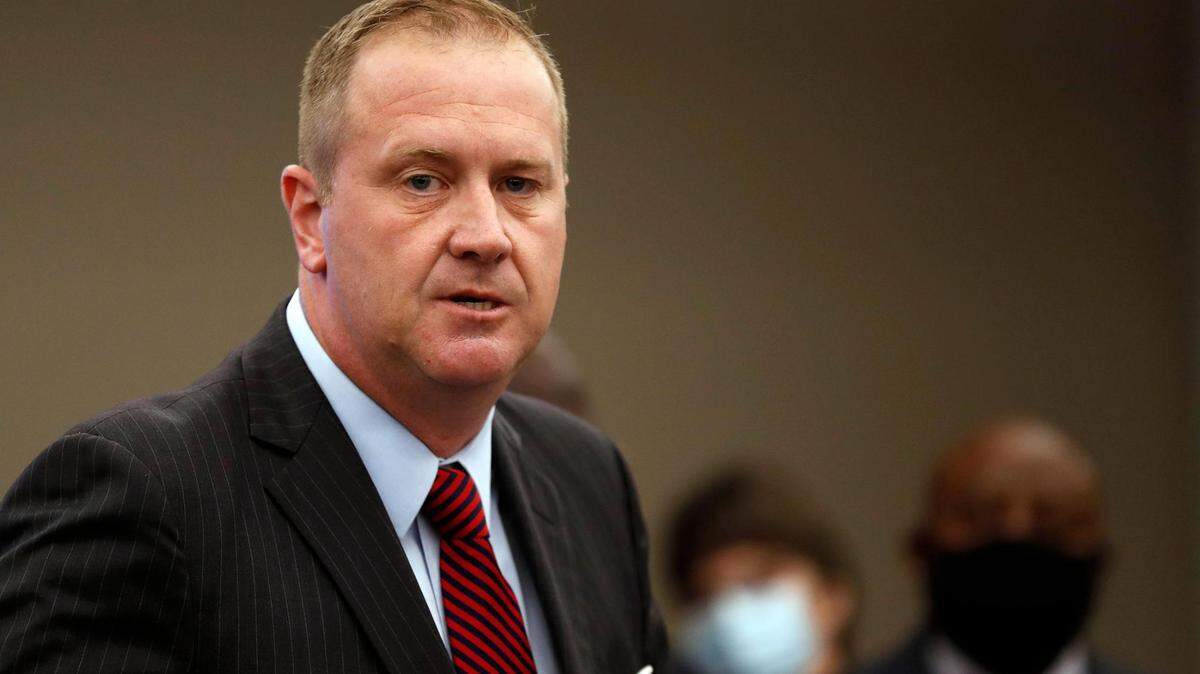
Missouri Attorney General Eric Schmitt stood on the steps of the U.S. Supreme Court on Tuesday and explained why a state elected official whose office is more than 1,000 miles from the U.S. border with Mexico is a party in a lawsuit over federal immigration policy.
“Every state is a border state, and I view Missouri as a proxy for all the other states that are impacted by the crisis we have at the border,” Schmitt said.
Schmitt is currently running in the Republican primary for U.S. Senate in Missouri, where he has made a hard-line stance on immigration one of his policy positions.
He has made two trips to the southern border and last April joined Texas Attorney General Ken Paxton in suing the Biden administration for lifting a Trump-era policy called “Remain in Mexico,” which forced people crossing the southern border by land to return to Mexico while they await their asylum hearings.
Schmitt did not argue the case before the court Tuesday. It was instead argued by Texas Solicitor General Judd Stone, who clerked for former Justice Antonin Scalia.
Conservatives have a 6-3 majority on the U.S. Supreme Court, and their decision on the case, which will come later in the year, will determine whether the Biden administration has to continue to enforce a policy it says threatens the safety of migrants and harms foreign relations with Mexico.
The policy resulted in camps of migrants popping up on the Mexican side of the southern border while they awaited their trial, subjecting them to poor living conditions and the threat of violence and extortion from cartels. After a federal judge in Texas prevented the Biden administration from ending the policy, the U.S. and Mexico came to an agreement that said the U.S. must process claims within 180 days.
Federal immigration law, which was last updated in 1996, says the Department of Homeland Security shall detain people who cross the border illegally while they await trial. But while Congress has made it clear they expect people to be detained at the border, they have not allocated enough money for the Department of Homeland Security to detain everyone who crosses.
No administration has been able to detain everyone crossing. The law also says the Department of Homeland Security can allow people to remain in the country if there is a significant public benefit.
The Biden administration argued that means the Department of Homeland Security needed to have the discretion to detain the people who are the most serious threats to the public and that they should be allowed to issue parole to others on a case by case basis. They said if they had to detain everyone who crossed, it would take up space for people who needed to be detained.
“The heart of this argument is what does significant public benefit mean?” said Justice Brett Kavanaugh.
Kavanaugh appeared skeptical of the Biden administration’s argument that the policy benefited the American public, given the sheer number of people who cross the border — 221,303 in March 2022 alone, according to the U.S. Department of Homeland Security.
As did Chief Justice John Roberts, who said it appeared the federal government did not believe there should be any limit to the number of migrants they allow into the country while they await an asylum hearing.
“You’re making it harder to do anything other than release the people detained at the border into the United States, even though the statute says there has to be a significant public benefit,” Roberts said.
But he also questioned whether the courts should be able to limit the federal government’s mandate on foreign policy, since the Remain in Mexico policy requires negotiations with Mexico about how to handle people who are sent back to the country and getting them back and forth over the border for their immigration hearings.
“The idea here is that there is a single district court in Texas that is mandating these negotiations,” said U.S. Solicitor General Elizabeth Prelogar. “This is not how our constitutional structure is supposed to operate.”
Schmitt has built his U.S. Senate campaign around the lawsuits he has filed as attorney general, from pushing back on public health restrictions that limit the spread of COVID-19 to lawsuits challenging the policies of the federal government. Schmitt joined Paxton in a lawsuit to overturn the results of the 2020 U.S. presidential election based on unfounded claims of widespread voter fraud.
The case is among a series of legal efforts by Republicans to challenge the Biden administration’s policies on the U.S. border in accordance with the hard-line position taken by former President Donald Trump.
Schmitt also joined a lawsuit this year over Biden’s decision to end Title 42 on May 23, a Trump-era pandemic policy that expelled migrants based on the health risks posed by COVID-19. A federal judge prevented the Biden administration from lifting the policy Monday as the case continues through the courts.
When asked how immigration policy affected the day-to-day lives of Missourians, Schmitt talked about making two trips to the border and conflated the drug crisis with the number of immigrants crossing the border, claiming the Biden administration’s border policies led to overdoses from fentanyl and more human trafficking.
“Overdose deaths are the number one cause of death for adults 18-45,” Schmitt said. “The amount of fentanyl that’s coming across the border, the drug cartels are running the show, they’re in charge.”
This story was originally published April 26, 2022 at 4:34 PM.