Kansas expects large revenue growth, setting stage for renewed push to cut food tax
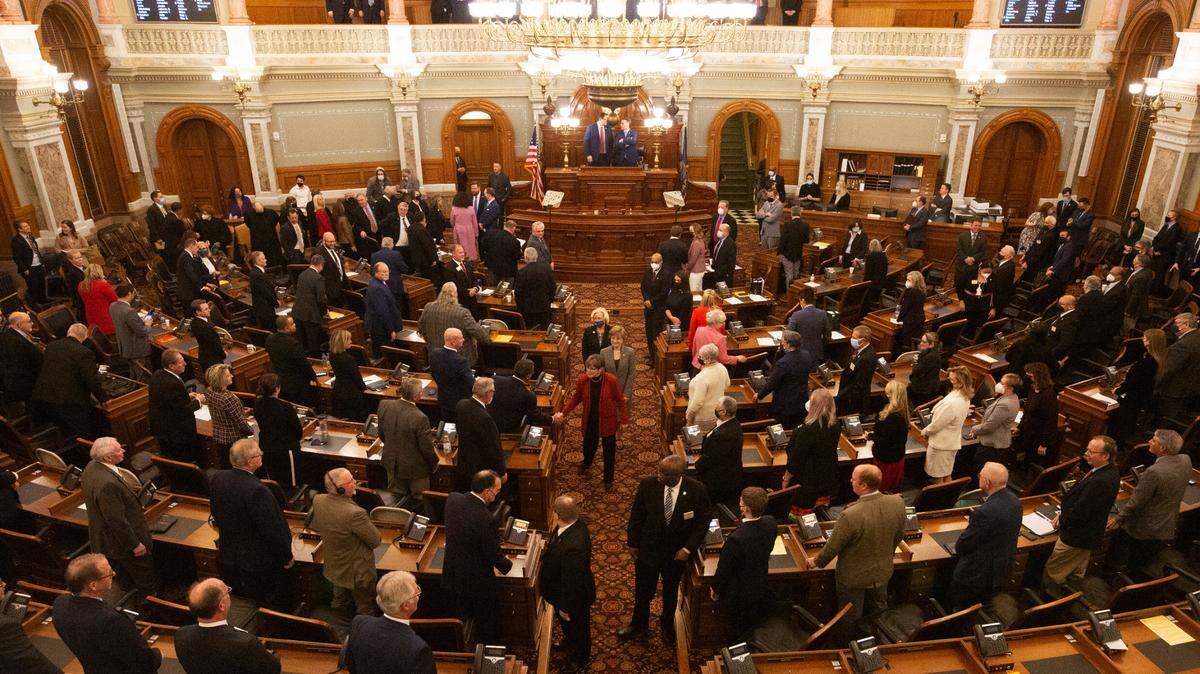
Gov. Laura Kelly and lawmakers are primed for a final fight this year over cutting Kansas’ sales tax on food after new projections show hundreds of millions in additional revenue flowing into the state.
Tax revenue is poised to grow by $408 million in the coming fiscal year, swelling the state’s anticipated budget surplus to $3.1 billion next year, according to preliminary estimates released Wednesday. Kansas ended the last fiscal year with just over $2 billion in the bank.
The anticipated revenue growth sets the stage for a final struggle over the sales tax on food.
Both Republicans and Democratic lawmakers are on record wanting to reduce or eliminate the 6.5% sales tax rate Kansas levies on groceries, among the highest in the nation. Kelly, a Democrat heading into a tough campaign for re-election in November, has made eliminating the tax a central component of her legislative agenda this year.
But actually making progress toward cutting the food tax has proven difficult. The idea has become entangled in fights over whether to pass a standalone bill, as Kelly and other Democrats want, or pair a reduction with other tax changes as some Republicans support.
All sides are expected to use the improved forecast to bolster their case. Kelly has said repeatedly that Kansas can afford to eliminate the tax on food all at once. The tax on food generates about $400 million a year.
“This does reaffirm the governor’s position that we can, clearly and immediately, repeal the entirety of the state-level food sales tax on groceries in Kansas,” said Adam Proffitt, the state budget director.
At a news conference, Democratic lawmakers reiterated their support for eliminating the tax in light of the revenue forecast.
“It’s clear from the revenue estimates that we just got that we can easily afford to axe the food tax and we should go to zero now, we should not wait,” said House Minority Leader Tom Sawyer, a Wichita Democrat.
The projected $3.1 billion ending balance for the next fiscal year is expected to change as lawmakers approve additional spending or tax cuts. Changes in the economy, such as a recession or long-term inflation, could also reduce future revenues.
The revenue forecast was released hours after Kelly signed a budget that places $500 million into the state’s rainy day fund, providing an extra cushion if tax collections fall in the future. It provides $65 million in new funding for housing over two years, including the development and renovation of moderate-income housing and fully funds the state’s water plan for the first time since 2008 as Kansas continues to fight the depletion of the Ogallala Aquifer, among other priorities.
“This budget delivers on promises I made when I was first elected, including investing in our economic development tools, funding higher education, stopping the irresponsible practice of robbing from our highway fund, and much more,” Kelly said in a statement. “Kansas is stronger than it was four years ago, and as a result, we can confidently make critical investments in our state while at the same time eliminating the state food tax to help Kansans have more room in their own family budgets.”
Attorney General Derek Schmidt, Kelly’s likely Republican opponent, released a statement urging lawmakers to resist going on a “new spending spree” and urged them pay down pension debt, fully fund public schools, reduce or eliminate the food sales tax and save the rest. Earlier in the day, Schmidt and the Republican Governors Association circulated a report that purports to show that the sales tax on food would have been nearly eliminated by now under legislation Kelly vetoed in 2019 that included a stair-stepped reduction.
The legislation included numerous tax changes, including provisions that would have held down corporate taxes. At the time, Kelly said the bill would have created a “senseless fiscal crisis” just as Kansas’ fiscal situation was stabilizing.
“When Governor Kelly says she wants to ‘axe the food tax’ she’s not being up front about the fact Kansans would be paying close to zero right now in grocery taxes if she hadn’t vetoed House Bill 2033 in 2019,” Schmidt said in a statement. “I would have signed that bill into law, and as a result Kansans would already have some relief from Joe Biden’s out of control inflation at the grocery store. Once again, the Legislature is left to clean up Laura Kelly’s mess.”
This year, Kelly and the Legislature have already approved some tax cuts. Last week, the governor signed into law roughly $310 million in tax cuts and credits over the next three years. The package included reduced property taxes and established exemptions and credits for special interest groups, including homeowners, veterans, teachers, and the aviation industry.
But neither the House nor the Senate have voted on a proposal this year to eliminate the food sales tax. The Legislature will reconvene on Monday for what’s called the “veto session” — traditionally a short session of a few days to consider overriding vetoes by the governor.
But no deadlines exist on how long the session can actually last and some years they stretch for several weeks, even into June — plenty of time for lawmakers to reach either a compromise on the food sales tax or for Republicans to pass a proposal and see whether Kelly signs or vetoes it.
The current Republican food sales tax proposal falls short of what Kelly has asked for. Citing a need for financial responsibility, Republicans have agreed on a plan that would drop the rate from 6.5% to 4% on January 1, by 2% the following year and fully eliminate it on January 1, 2025.
When the Legislature returns next week, lawmakers are expected to debate “big ticket” tax reductions, including an increase in the standard deduction, a child care tax credit, cuts on retirement income taxes and an elimination of the utility sales tax.
Kelly has sought to increase pressure on lawmakers in recent days by holding events throughout the state promoting her plan to fully eliminate the tax on food. On Wednesday, the governor traveled to Norton, near the Nebraska border. Nebraska exempts food from sales tax.
Kansas grocers have said lower tax rates in neighboring states puts stores close to the border at a disadvantage.
The Star’s Katie Bernard contributed reporting
This story was originally published April 20, 2022 at 6:40 PM.