
PACs on the attack, self-funding candidates: MO senate candidates file quarterly report
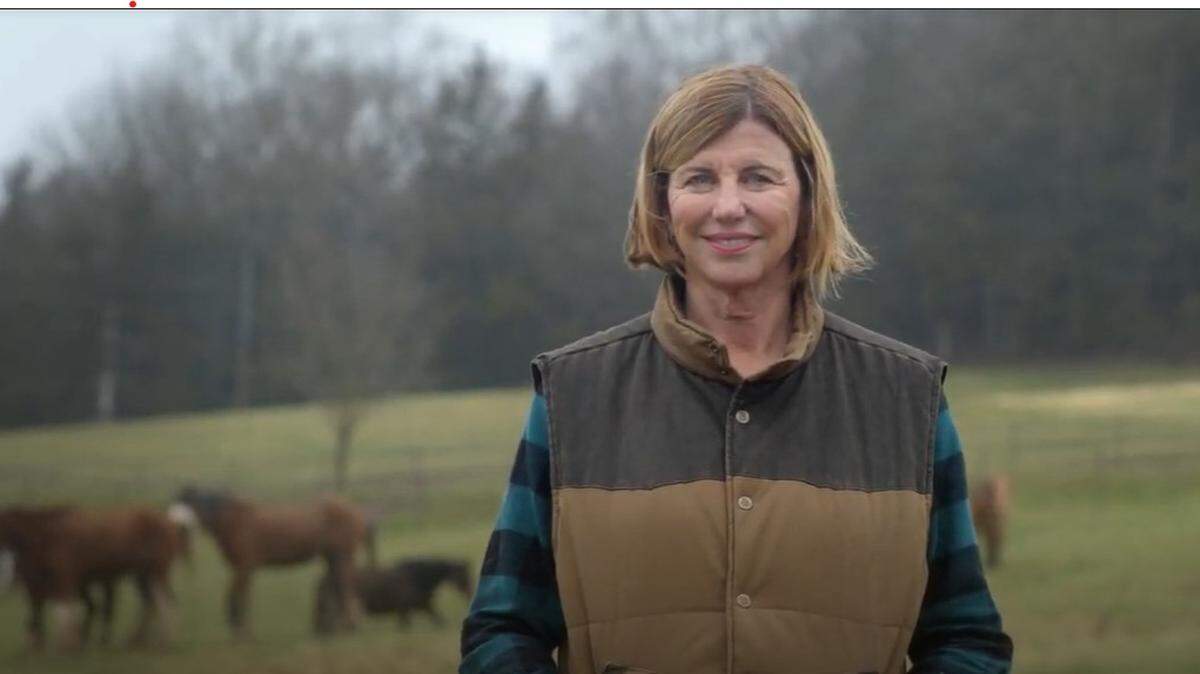
If Missourians were hoping to learn anything about how much money Democratic candidate Trudy Busch Valentine is willing to invest in her campaign for U.S. Senate, they’ll have to wait a little longer.
According to her most recent campaign finance report — which was due Friday and covered any money raised or spent between January and March — Busch Valentine spent just $894 on her campaign after she filed for office at the last minute on March 28.
All that $894 came out of her own pocket and covered a subscription to a software service, renting a P.O. Box and filing fees.
A philanthropist and heir to the Annheuser-Busch fortune, Busch Valentine quietly entered the Democratic primary in March, prompting the withdrawal of former state Sen. Scott Sifton. Positioning herself as a moderate who pledges to try and turn down the temperature on the country’s heated political rhetoric, she’s been collecting support from some establishment Democrats who see an opportunity to pick up a Senate seat if former Gov. Eric Greitens were to win the Republican primary.
But first she has to take on lawyer and retired Marine Lucas Kunce, who has been in the race since the summer of 2021 and has been campaigning as an economic populist who promises to take down the country’s elite institutions he says have left working people out to dry.
Kunce has proven to be an adept fundraiser and continued to out raise the rest of the field, both Republicans and Democrats, bringing in $850,675 in the first quarter of 2022. He’s spending at a rapid clip, around 71% of the money he’s raised, and has $942,035 on hand.
While campaign accounts are not a great indicator of which candidate has the most support in an election, they can illustrate whether or not they have the money to run a competitive, expensive campaign where they’ll need to travel the state and buy advertising to boost their name recognition with the public.
Among the candidates in the Republican primary, U.S. Rep. Vicky Hartzler had the most money in her campaign account, with $1.5 million at the end of the quarter. She raised $497,224 in the first quarter of the year.
While that’s more than the $480,928 raised by Attorney General Eric Schmitt ($1.3 million on hand), the $378,635 raised by former Gov. Eric Greitens ($342,162 on hand) and the $215,615 raised by Billy Long ($500,466 on hand), unlike the other candidates Hartzler does not have an alternative committee set up to raise money for her campaign and attack her opponents.
Greitens has always employed a number of alternate fundraising committees to boost his fundraising abilities. His joint fundraising committee, called The G Team, raised $174,610 in the first three months of the year. It transferred $98,404 to Greitens’ campaign account and another $54,825 to another group supporting his campaign, called Missouri First.
It is difficult to tell whether the allegations that Greitens had physically and mentally abused his ex-wife and children had a significant affect on his ability to raise money because Greitens has pulled in large amounts from a small pool of donors throughout his campaign.
A PAC supporting him already started attacking Schmitt and Hartzler before the allegations were made.
Team PAC, funded by Richard Uihlein, the heir to the Schlitz beer fortune, spent $372,779 opposing Schmitt and $308,924 opposing Hartzler in March. It had $1.7 million on hand as of March 31.
Greitens’ PAC isn’t the only one going on the offensive. Schmitt’s PAC, called Save Missouri Values, started attacking Greitens in February and spent $24,695 opposing Greitens in the first quarter of the year. It also spent $716,302 in support of Schmitt.
Save Missouri Values raised a total of $1.8 million from several prominent donors, including Missouri investor Rex Sinquefield, who donated $1 million in March, and Las Vegas casino magnate Stephen Wynn, who put in $250,000 in January.
Long’s PAC, called WinMO, got $60,000 from four people and spent $115,000 on a media buy in support of Long. It hasn’t attacked any other candidates.
Long was able to secure a statement of support from former President Donald Trump in March (who specified in the statement that it was not an endorsement). While Long and Trump talk on the phone from time to time, Long has also employed former Trump adviser Kellyanne Conway throughout the campaign. He’s spent $225,000 on her consulting fees.
State Senate President Dave Schatz, who has run a relatively quiet campaign, put another $1 million in his own campaign account, bringing the total he’s self-funded to $2 million. He hasn’t spent much over the course of the campaign, just $117,299, so he still has more than $2 million to spend.
St. Louis attorney Mark McCloskey continues to struggle to keep up with the rest of the field in fundraising. He raised $70,840 in the first three months of 2022 but spent $131,997, leaving him with just $38,195 in his campaign account.
Kansas 3rd Congressional District
U.S. Rep. Sharice Davids faces a tough re-election bid in a year where Republicans are expected to take back control of the U.S. Senate. Though she beat her likely opponent Amanda Adkins by 10 percentage points in 2020, the Republican legislature has redrawn the lines of the 3rd Congressional District, removing some Democratic voters and adding more Republicans.
Davids has raised $776,242 between January and March and has $2.8 million on hand, which is nearly double the amount Adkins has for the race.
Adkins brought in $377,609 in the first quarter. She’s raised a total of $1.6 million over the course of the campaign and has spent $453,835 on the race. She has $1.2 million just as the race is beginning to heat up.
Missouri 4th Congressional District
In the Republican primary to replace U.S. Rep. Vicky Hartzler, State Rep. Sara Walsh, who is close with Hartzler, is struggling to raise money to keep up with the rest of the field. She raised just $23,754 in the first quarter and has $67,954 on hand.
She’s trailing other Republican candidates like Kalena Bruce, who has $170,131 on hand; Mark Alford, who has $340,351 on hand; Taylor Burks, who has $260,451; and Bill Irwin, who has $203,572, though nearly half of his money was loaned to his own campaign.
Other incumbents
U.S. Rep. Sam Graves, who represents the northern part of most of Missouri, including the northern part of Kansas City, raised $292,559 in the first three months of 2022 and has raised $1.2 million for his re-election bid this year.
Graves’ campaign is rather quiet — his best financed challenger is Democratic candidate Henry Martin, who has just $15,818 in his campaign account.
That said, Graves spent $49,568 on direct mail fundraising in his district and $14,029 on Axiom Strategies, his campaign consulting firm. He also spent $4,382 on a line item labeled “The Grand Cafe.” While the item did not have an address, there’s a restaurant by the same name in Jefferson City.
Kansas U.S. Rep. Jake LaTurner raised $160,750 and has $638,667 on hand. Missouri Rep. Emanuel Cleaver raised $118,127 and has $1 million on hand.