Redrawn map puts federal funds for Wyandotte County at risk, aide to KCK mayor testifies
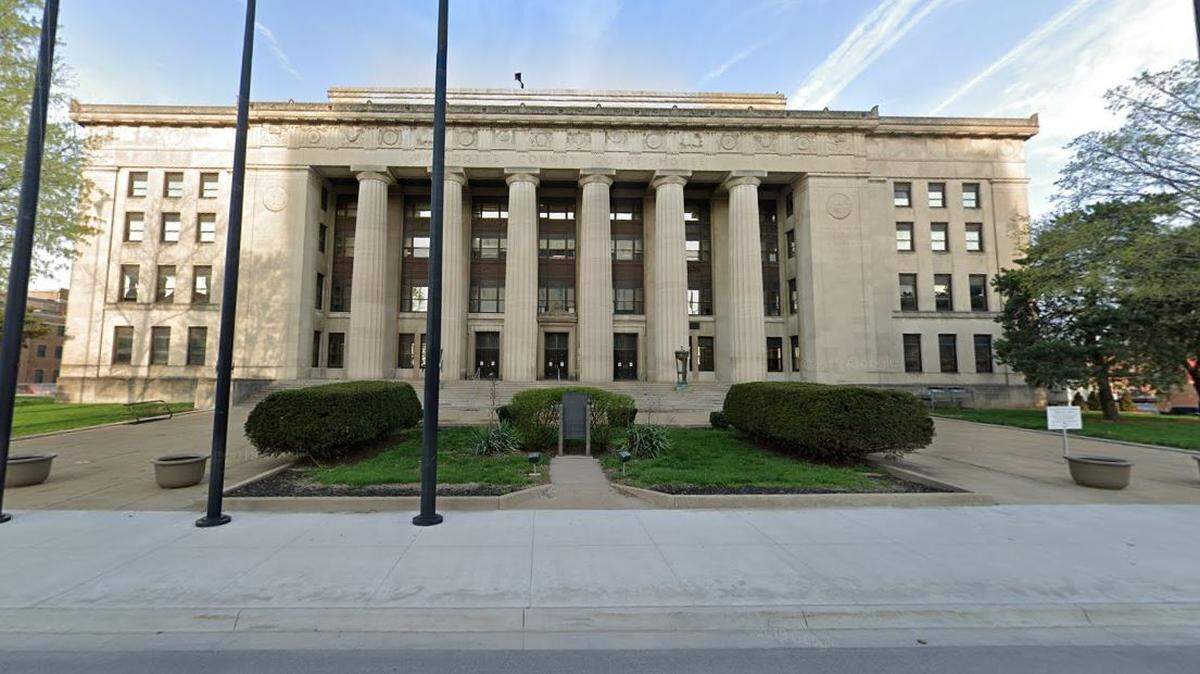
Congressional maps splitting Wyandotte County along Interstate 70 would “devastate” the county’s northern half, a top staffer to Kansas City, Kansas, Mayor Tyrone Garner testified in court on Tuesday.
Mildred Edwards, Garner’s chief of staff, took the stand on the second day of a trial in Wyandotte County District Court challenging the new map. The northern region of the county, she said, has higher poverty rates and older infrastructure than other parts of Wyandotte.
The county is slated to receive $9.5 million in federal dollars for infrastructure and other needs, Edwards said. But the funding would be at risk if the county has to establish a relationship with a new congressional representative unfamiliar with urban communities.
“I think it would be the straw that breaks the camel’s back in north Wyandotte County,” she said.
Groups of Kansas voters are suing to overturn the Republican-drawn map, which divides Wyandotte into the 2nd and 3rd Congressional Districts. Currently, the county is entirely within the 3rd, represented by Democratic Rep. Sharice Davids.
They allege the map is racially and politically gerrymandered — violating the Kansas Constitution’s guarantees of equal rights, suffrage and free speech. The bench trial started Monday with hours of testimony from expert witnesses who analyzed the new map, as well as a Democratic state senator who said the Legislature’s Republican supermajority forced the map through to passage in a “thuggish way.”
Tuesday’s testimony focused largely on Wyandotte, the state’s most diverse county, and the impact the split would have on the community. The northern half of the county would join rural portions of eastern Kansas in the 2nd District, currently represented by Republican Rep. Jake LaTurner.
Witnesses called by plaintiffs Tuesday argued the map would harm congressional representation for urban and minority voters in Kansas by separating part of Kansas City, Kansas, from the KC Metro and grouping northern Wyandotte County with rural white voters.
“We really rely heavily on our representative to understand the needs of an urban community as diverse as Wyandotte County,” Edwards said.
Nearly 23% of county residents are Black and 30% are Hispanic or Latino, according to the U.S. Census. Kansas as a whole is 6% Black and 12% Hispanic or Latino.
KU Political Science Professor Patrick Miller, an expert witness for the plaintiffs, said 75% of the voters in the portion of Wyandotte County that would be moved into the 2nd Congressional District are minority — meaning that a historically redlined community would be separated from the rest of the county. Meanwhile, the remainder of Wyandotte and Johnson Counties — areas more diverse than much of the state — would be grouped with counties where the population is more than 90% white.
Though the 2nd would become more diverse as a result, Miller said, it would be Republican — meaning that Wyandotte County voters would likely have very little impact on the outcome of Congressional elections.
“Those minority residents in Northern Wyandotte county then border on electoral irrelevance,” Miller said. “Race and partisanship go hand in hand.”
In testimony Tuesday state Rep. Tom Burroughs, a Kansas City Democrat, spoke to the county’s diversity and connection to Northern Johnson County and the Missouri side of the metropolitan area.
Burroughs said Republican leaders chose to split the county down “a main artery” without consulting the Democratic party or listening to the requests of citizens at town halls and hearings. The new map, he said, was “greased to go” and “muted” the county’s minority voices.
“It would be very difficult for a minority member of my community to ever run for state or federal office,” Burroughs said.
Anthony Rupp, an attorney representing the state, said lawmakers were “left with a very challenging choice” when Census data showed Johnson and Wyandotte Counties had grown too much to be kept together in their entirety.
Republican lawmakers, Rupp suggested, chose to keep Johnson County whole. Meanwhile, he pointed out that a map proposed by Burroughs during the process included a first district stretching from the Northwest corner of the state to the Southeast, essentially “packing” Republican rural voters together.
That map, he said, “carefully avoids moving any Democratic votes into the 1st District.”
The Star’s Jonathan Shorman contributed reporting
This story was originally published April 5, 2022 at 1:55 PM.