‘Gut-wrenching’: Kansas City’s only LGBTQ-centered homeless shelter denied federal funds
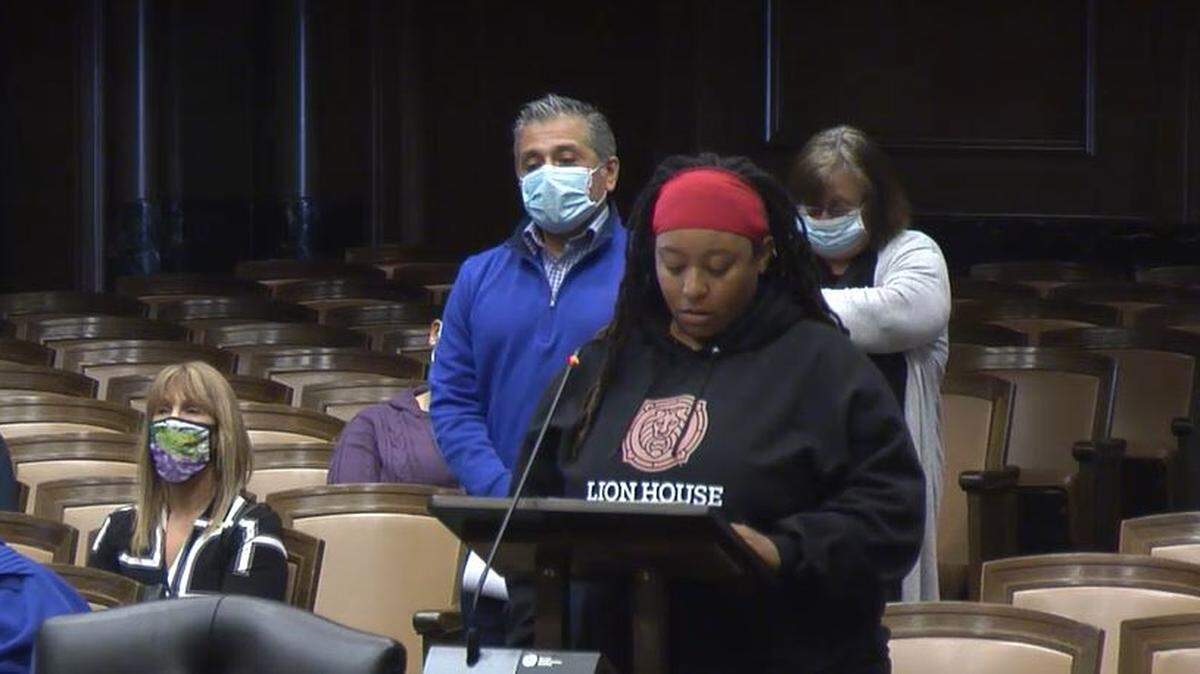
As a young adult, Star Palmer, a gay Black woman then experiencing homelessness, said she was denied service at one of Kansas City’s largest shelters because of who she loved and how she looked.
Now, two decades later, she is founder and executive director of Our Spot KC, the only LGBTQ-focused housing organization in Kansas City.
But when she applied to the city for funding allocated by U.S. Department of Housing and Urban Development (HUD) she was denied three times, an experience she called “gut-wrenching.”
“What I’m seeing here is KCMO would rather give homeless dollars to anyone but queer people,” she said Wednesday at the City Council’s Special Committee on Housing Policy, calling the city’s prior public statements in support of the LGBTQ community “performative.”
Members of Kansas City’s LGBTQ Commission and the the city’s Houseless Task Force raised concerns this week at the City Council’s Special Committee on Housing Policy, asking why one of the city’s most vulnerable communities is again being left out.
Through Resolution 220162, the committee is charged with dispersing $15 million in HUD money, primarily to support homeless prevention services and housing initiatives, in accordance with the National Affordable Housing Act. So far, an initial draft of the proposed allocation has been released.
Palmer, who asked for $887,300, said she had hoped to use the money to expand emergency and transitional housing opportunities for LGBTQ adults and families, which are currently lacking. So far, she hasn’t received an explanation as to why she was denied.
Jane Brown, the city’s Director of Housing, did not offer a clear answer in a statement Thursday.
“As Kansas City’s new Housing Director, I take all concerns seriously,” Brown said. “HUD requires strict guidelines be followed in the grant selection process, with many reviews at all levels. On our part, we will ensure that happens fairly and equally for all organizations who apply.”
Over the past month, Anton Washington has worked to help shelter several unhoused LGBTQ community members in Kansas City, including a few trans women. Washington, a gay Black man who previously experienced homelessness himself, knows it’s not easy. And it can be dangerous — sometimes fatal.
Last year was the deadliest recorded year for the transgender community nationwide, with 57 known homicides reported by the Human Rights Campaign. The actual number is likely much higher, and Black and Latinx transgender women were most often the victims.
Multiple studies, including one by UCLA, have found that LGBTQ youth are more at risk of becoming homeless, and more likely to stay homeless longer than non-LGBTQ people.
“Our LGBTQ community has been on the backburner for years,” Washington said.
Only some shelters are accepting, especially of LGBTQ couples hoping to stay together. And those shelters are often full.
“When these organizations come to the council again and again for support and don’t receive it, it just goes against everything we are trying to work for,” JD Besares, housing commissioner for Kansas City’s LGBTQ Commission, told the committee, which is chaired by Councilman Dan Fowler, 2nd District at-large.
Kansas City’s LGBTQ Commission has penned a letter to the commission, asking that they take another look at funding, and reconsider giving a portion to Our Spot KC.
Historically, a handful of shelters in Kansas City, including City Union Mission, have set guidelines for those hoping to use their services. For example, LGBTQ couples are not allowed to stay together at the shelter. Because City Union Mission is a religious organization, it didn’t qualify for the HUD money and therefore didn’t apply. But its name came up frequently during Wednesday’s testimony.
“We’re extremely disappointed to see that LGBTQ+ grassroots organizations are not receiving support from the City of Kansas City,” the letter read. “The collective understanding that religious spaces are not safe or supportive means that LGBTQ are not going to seek out services from any provider with a religious affiliation, or worse yet, be wary of all service providers.”
“I’m not arguing that city Union Mission doesn’t do great work,” commissioner Justin Short told The Star after the meeting. “We just need to make sure that the work that we’re providing for the houseless community is inclusive of all of those who seek it, not just the individuals that a different organization deems worthy of services.”
Short said they hadn’t been given a reason yet from the city for the funding denial to Our Spot KC.
Marqueia Watson, executive director at the Greater Kansas City Coalition to End Homelessness and a member of the Houseless Task Force, said during Wednesday’s meeting that the community needs to put more financial and intellectual resources into the houseless LGBTQ community.
“I think when we’re talking about housing, we need to be talking about affirmation,” she said, adding that society needs to “decouple the notion around sex and sexuality from the human right to housing.”
James Moran, who has served as the Education Coordinator for the Kansas City Anti-Violence Project, a nonprofit that serves survivors in the LGBTQ community, said he knows of discrimination against LGBTQ people experiencing homelessness ranging from denial of services to verbal abuse and physical assault. In the same vein, he said, many church-based shelters have religious-based requirements.
“In order to have a roof over their head, an LGBTQ person might have to listen to hours of proselytizing about how they’re evil or sick,” he said. “There are lots of people who would choose not to accept those terms for housing.”
He implored the city to reconsider their decision.
“What I see from Kansas City is that instead of funding a program to target and serve this vulnerable population, this group has been turned away, ridiculed and shut out of most every opportunity for safety and stability,” Moran said. “This city would rather give more money to the programs that exacerbate our community’s struggles.”
Community members will have an opportunity to make public comments for a second and final time at the committee’s March 23 hearing at 4 p.m. From there, the committee will take a vote on the resolution.
This story was originally published March 11, 2022 at 1:23 PM.