Clay County residents wanted an audit of their government. The final report shows why
Clay County’s former commission made questionable purchases with taxpayer dollars, allowed a commissioner to single-handedly spend millions of dollars in contracts and violated the Missouri Sunshine Law, according to a state audit released Wednesday.
Following a years-long audit initiated by citizens in 2018, the Missouri State Auditor’s Office rated Clay County’s overall performance as “poor” — the lowest ranking that shows its government needs to “significantly improve operations.”
Among the findings, auditors said former commissioners did not document decisions about a controversial annex project. Just one commissioner, Gene Owen, approved more than $12 million in contracts awarded for the project, which “resulted in a loss in transparency.” The county has also incurred at least $2.8 million in the project that “may not be recovered.”
The audit also determined county officials made questionable and potentially unnecessary purchases, including $5,000 on food for five social events. Other charges for receptions and employee appreciation events totaled $4,185.
“County officials provided no explanation of how any of the events benefited the county,” according to the audit.
Auditor Nicole Galloway presented her audit Wednesday before the three members of the commission: Jerry Nolte, Megan Thompson and Jon Carpenter.
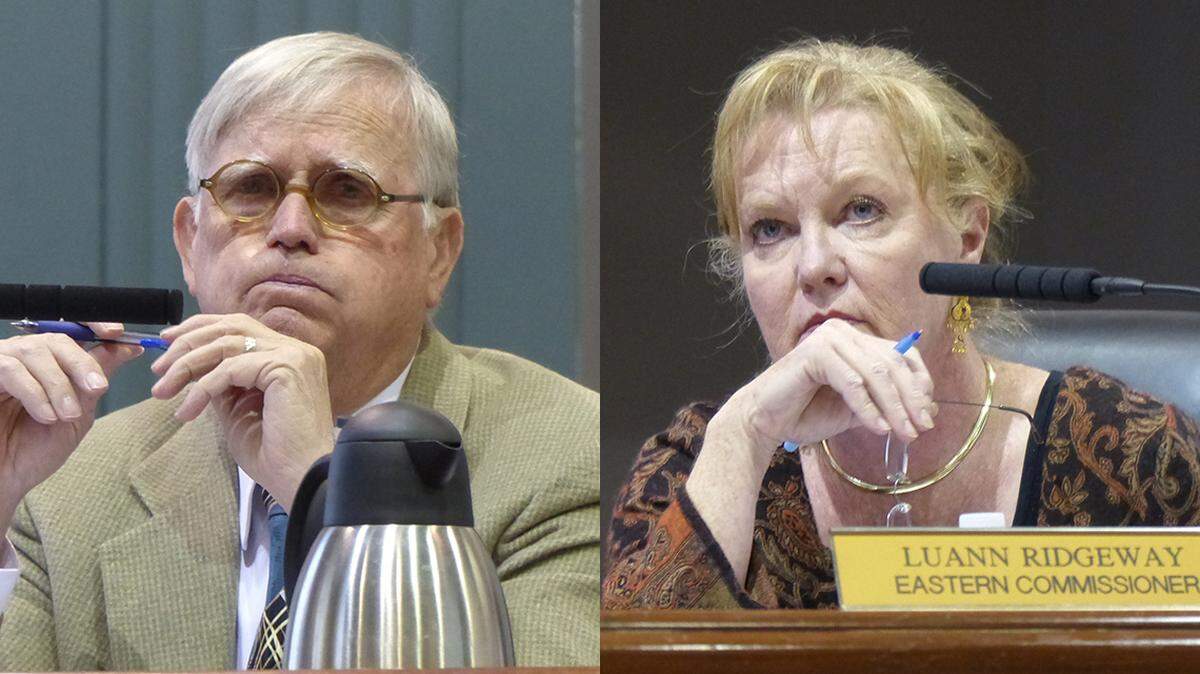
The tone and direction of the commission has changed drastically since former commissioners Luann Ridgeway and Gene Owen – who often voted in tandem against Nolte – were replaced in early 2021.
“Today, the citizens of Clay County are finally getting the answers they have sought for years,” Galloway said in a news release. “Two former county commissioners actively worked to prevent taxpayers from seeing how their money was being spent, not only by trying to impede this audit but by regularly conducting public business outside public view.”
Galloway’s office launched the audit in December 2018 after more than 9,000 county residents signed a petition requesting her involvement. Residents suspected county officials of wasting taxpayer resources and shielding government records.
The audit noted that until July 2018, Clay County employed an administrator who was in charge of day to day operations of the county. But upon Dean Brookshier’s resignation, the commission approved raises for three assistant county administrators to take over his duties. All three earned six figures and two were given rent-free housing from the city at Smithville Lake.
Galloway’s audit said the county had no policy authorizing employee housing and did not report the value of the rentals to the IRS, as the law requires.
Likewise, Clay County awarded generous severance agreements to a former county administrator and assistant county administrators. Those severance payments went beyond the benefits outlined in employment contracts.
County officials impeded the audit with “delays, roadblocks and evasive responses,” Galloway has said. A Missouri judge in 2020 ordered Clay County to comply with subpoenas issued by Galloway’s office for records and testimony in its examination.
The audit said county officials began answering outstanding questions in December 2020, just a few weeks before the departure of Ridgeway and Owen, along with appointed county staff who left around the same time. Around the same time, the county started to withdraw legal action it had taken against the state auditor.
Recommendations
The audit made a series of recommendations for how the county should improve, including creating a housing policy if putting up county employees is necessary.
Auditors also said procedures over purchasing cards needed improvement, considering the county had not monitored monthly purchasing card limits. Some were “excessive,” the audit found.
In 2017, county expenditures from those cards totaled $950,000. They increased each year, and by 2020, had reached more than $3 million.
About 50 cards were assigned to various people. Their monthly limits ranged from $500 to $225,000, according to the audit.
The audit also made mention of a previous fight that took Clay County to court.
In 2019, then-Sheriff Paul Vescovo sued the Clay County Commission when Owen and Ridgeway voted to cut his budget, leaving him unable to pay vendors that provided food and medical care to inmates at the county jail.
Vescovo believed that the budget cuts were political payback arising from his office’s initial investigation into record tampering by an assistant county administrator. A judge later ruled that the commission had to pay nearly $1 million to restore the budget cuts.
State auditors made no recommendations about the issue since it has been resolved.
Sunshine violations
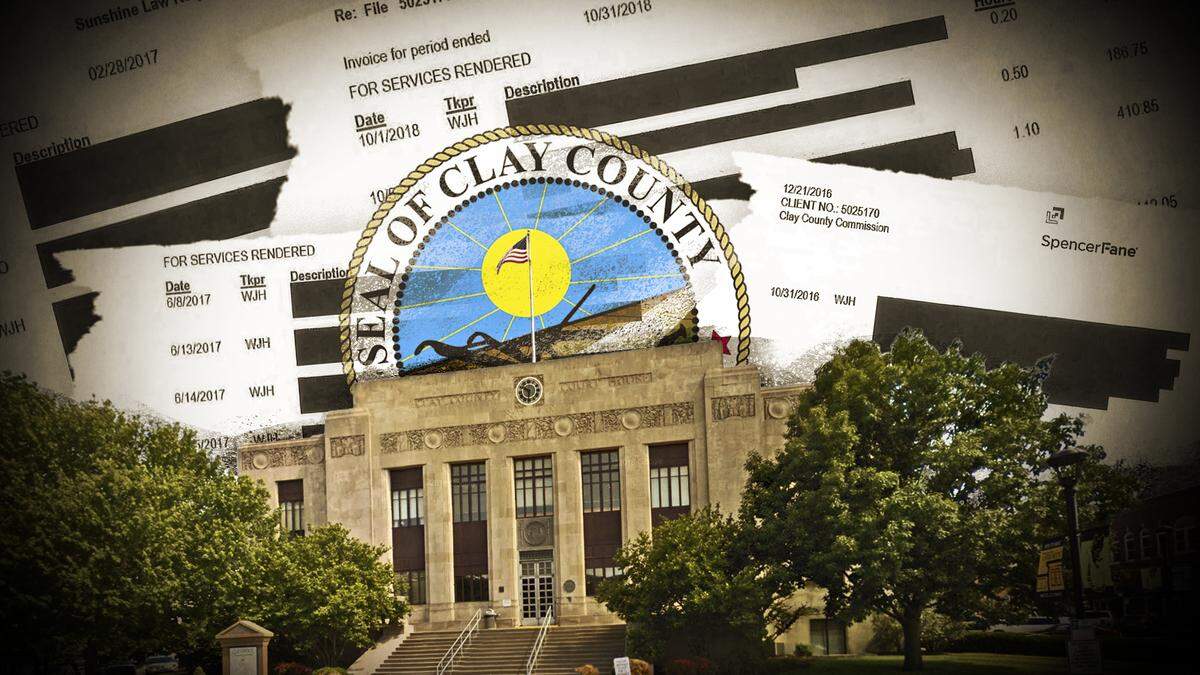
In 2019, The Kansas City Star sued Clay County after a private lawyer representing the county said a reporter would have to pay $4,200 to review legal invoices that his law firm submitted to the county.
A judge in 2020 ruled that by charging such a fee, Clay County violated the Sunshine Law, which is intended to give the public access to most government records.
After the change of commissioners, the county dropped its appeal of The Star’s lawsuit and released the records.
Galloway’s auditors found the county did not comply with the open records law when it came to closed commission meetings.
The county could not provide auditors with minutes for a November 2017 closed meeting or unredacted minutes for 10 meetings earlier that year. The county redacted parts of the minutes, citing attorney-client privilege related to its then-lawsuit against the auditor’s office, but once the litigation was resolved, the county clerk could not locate some of the unredacted versions.
Auditors also learned that some topics, such as terminating contracts, were voted on during closed meetings that were not allowed under the Sunshine Law.
The auditor’s office recommended the county maintain complete minutes for every closed meeting and make sure issues discussed are allowed by state law.
In January, the county commission responded that it shared the auditor’s concerns about closed meetings and the previous commission’s actions.
“The current County Commission is committed to compliance with Missouri’s Sunshine Law, maintaining complete minutes for closed meetings, and only discussing topics in closed meetings which are specifically authorized by Missouri law,” county counselor Kevin Graham wrote.
This is a developing story. Check back for updates.
This story was originally published March 2, 2022 at 1:30 PM.