Lawrence residents file lawsuit challenging new Kansas congressional maps
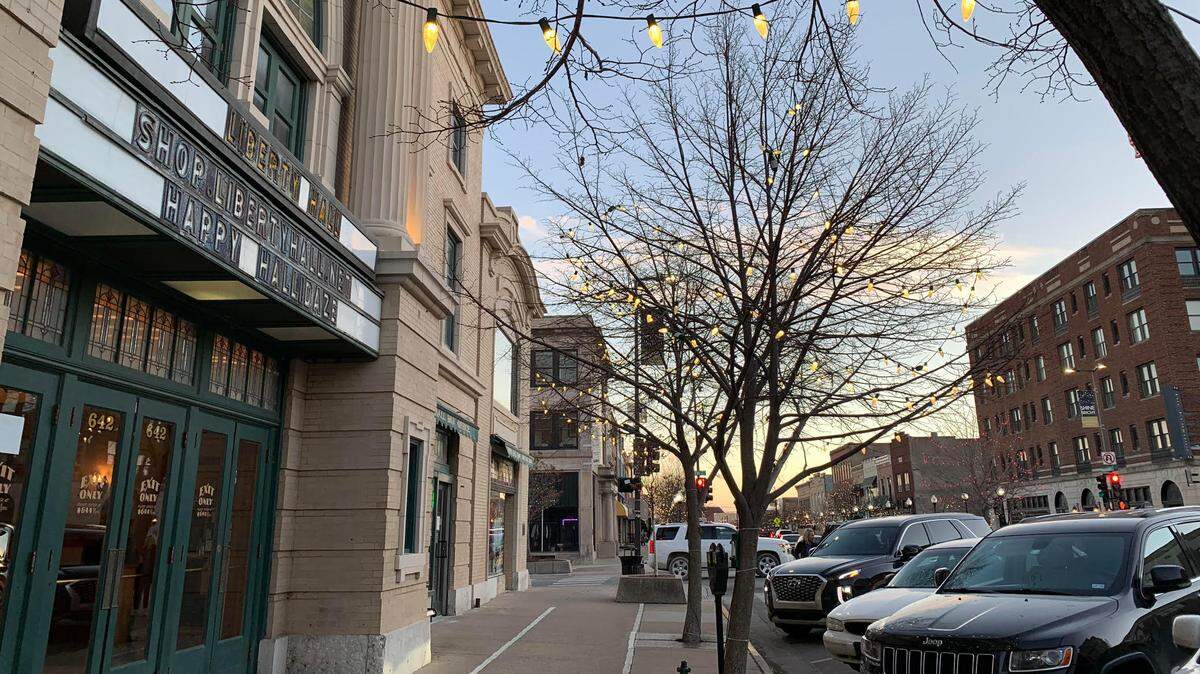
Lawrence Democrats are suing to block enforcement of newly-drawn Kansas congressional maps, alleging lawmakers intentionally set the boundaries to prevent a Democrat from representing the left-leaning college-town.
In a lawsuit filed in Douglas County District Court Tuesday, they argue that Kansas Republicans unlawfully diluted their voting power in a “purposeful partisan political gerrymandering” by carving Lawrence and the rest of Douglas County out of the 2nd Congressional District. It was combined with the 1st District, which stretches through rural central and western Kansas.
Lawrence has never been shifted to that part of the state. The 2nd District, represented by Republican Rep. Jake LaTurner, tends to lean Republican but is traditionally seen as competitive for Democrats. The 1st District, represented by Republican Rep. Tracey Mann, is heavily Republican.
The suit was filed and paid for by Patrick Schmidt, a Democratic congressional candidate in the 2nd District, and four Democratic residents of Douglas County. It names Secretary of State Scott Schwab and Douglas County Clerk Jamie Shew as defendants.
“I think Kansans and Lawrencians deserve to not just be a pawn in a political game,” Schmidt said. Schmidt is a Topeka resident who would still be able to run in the 2nd District under the new maps.
The action is the third filed seeking to block enforcement of the maps, which were passed by a GOP supermajority over Gov. Laura Kelly’s veto last month.
Two were filed last month in Wyandotte County District Court alleging partisan and racial gerrymandering in the Legislature’s decision to split Wyandotte County along Interstate 70, cutting the state’s most diverse county in half.
Wyandotte County residents north of I-70 were moved from the 3rd Congressional District, represented by Democrat Rep. Sharice Davids, into the 2nd Congressional District.
“It targets Democratic and other non-Republican voters in Lawrence and the University of Kansas, thus “cracking” or deliberately dispersing voters of a disfavored party across multiple districts to minimize and diminish the strength of their voting block and political influence on the candidates,” the lawsuit said. “By doing this, Republican legislators strived to ensure that the Second District could withstand a non-Republican voter influx from the Third District’s new boundaries.”
Republican lawmakers said they moved Lawrence to the 1st Congressional District to combine it with Kansas’ other large college town, Manhattan.
In a court filing in Wyandotte County last month, Attorney General Derek Schmidt asked the Kansas Supreme Court to toss out the lawsuits, arguing that state courts have no jurisdiction in congressional redistricting.
While litigation over congressional maps in Kansas is not unusual, challenges have played out in federal court. The three redistricting lawsuits are the first in recent Kansas history to land in state court.
Redistricting experts told The Star that map opponents would face an uphill climb in federal court because the U.S. Supreme Court in 2019 stopped the federal judiciary from reviewing districts for partisan gerrymandering. The court last month also signaled it may weaken protections against racial gerrymandering by allowing an Alabama map to go into effect despite a lower court decision that it must be redrawn to increase Black voting power.
The lawsuits could reach the Kansas Supreme Court. A majority of justices on the high court were appointed by Democratic governors.
This story was originally published March 1, 2022 at 3:20 PM.