
East side, west side: Missouri House panel disagrees on Kansas City maps as deadline looms
Population loss in Black neighborhoods on Kansas City’s east side — and growth on the west side — are among the factors complicating a Missouri panel’s attempt to meet this month’s deadline to redraw districts for the state House of Representatives.
The House Independent Bipartisan Citizens Commission has until Jan. 23 to agree on a map that 14 of its 20 members approve, or the task gets turned over to a panel of appellate judges.
A new state Senate map will be drawn by a panel of judges appointed by the Missouri Supreme Court later this month, after the commission tasked with drawing those boundaries deadlocked along party lines in late December.
House commissioners submitted two tentative maps in December, one backed by Republicans and one by Democrats, to the Secretary of State’s office to meet an initial deadline in hopes of continuing negotiations.
“We couldn’t come to an agreement by the deadline date that had been imposed upon us,” Democratic commissioner Mark Schaeperkoetter said during a public hearing Monday. “What our hope was that we could eliminate as many conflicts for whoever in the process is going to decide this next.”
The parties have agreed on 112 of the 163 districts that will comprise the state House for the next decade. Republicans currently hold two-thirds of those seats. Most of the disagreements are concentrated in urban and suburban areas where Democrats see opportunity in future elections.
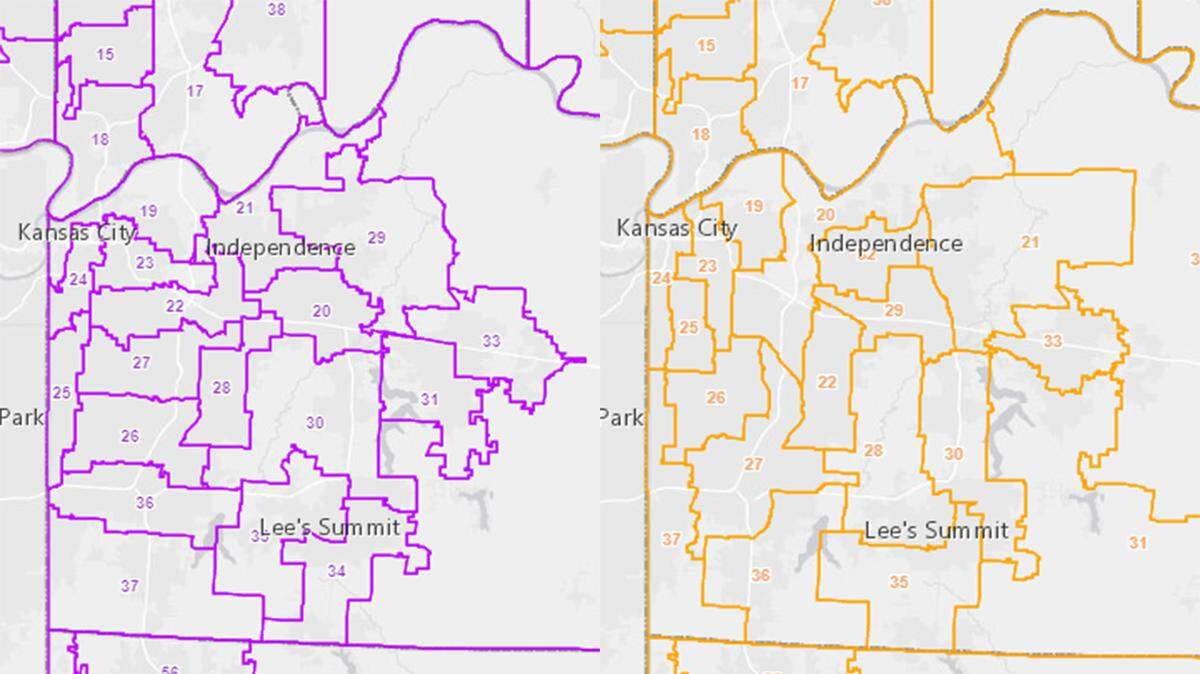
In the Kansas City area, the parties disagree on most of Jackson County.
There, population growth on Kansas City’s west side have led commissioners to propose narrowing the districts that stretch north-south along the state line.
In the Republican plan, only two districts would touch the western border in Jackson County–one stretching from the River Market through the County Club District, and the other from 63rd Street twelve miles south to the edge of Cass County.
At their narrowest in Kansas City, those districts would be about four city blocks wide. The maneuvering allows other parts of the west side to be paired with majority-Black East Side neighborhoods which lost population in the 2020 Census.
The Democratic plan proposes more horizontal districts that stretch from East Side neighborhoods eastward into the suburbs.
Michael Smith, an Emporia State University political science professor and Kansas City resident, proposed at a hearing to receive public comment Monday that commissioners draw districts from the state line westward into the East Side instead.
“A lot of us in our community believe there’s got to be a better way to preserve diversity and representation than just squeeze and squeeze and squeeze the West Side of Kansas City against the state line,” he said.
But commissioners said that would dilute African American votes in those districts.
The parties also disagree on how to split up Independence. Under the Democrats’ plan, downtown Independence would be paired with Sugar Creek to the north. Republicans would give that area its own district, while tying Sugar Creek to an area of Kansas City as far southwest as the Vineyard neighborhood.
Other areas of disagreement include Springfield, Columbia and the St. Louis suburbs.
The two parties agree on most of the districts in the Clay and Platte counties, which both saw among the state’s highest rates of population growth over the past 10 years.
Both plans would add a House seat in Clay County that takes in areas such as Claycomo and Pleasant Valley, currently represented by Liberty Democrat Mark Ellebracht.
Under the proposals Liberty would be more fully encompassed into its own district while Kearney and Excelsior Springs, currently in two separate Republican districts, would be joined.
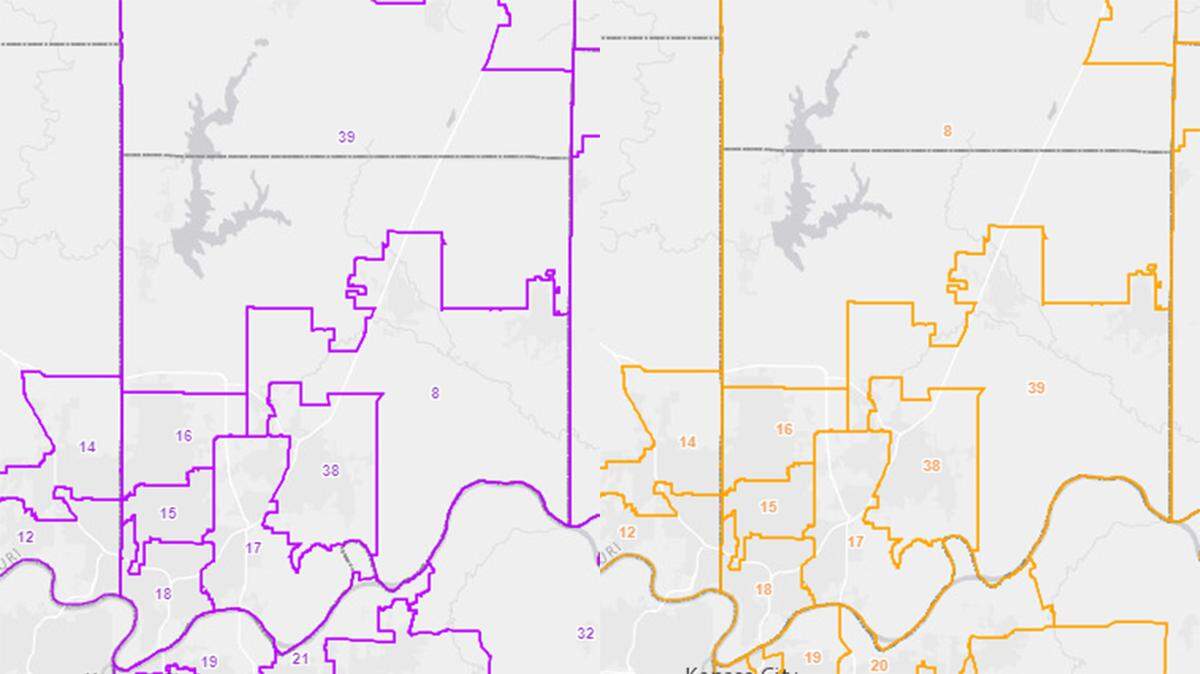
The parties also have agreed on adding a district in southern Platte County. Currently Kansas City Democrat Ashley Aune represents a portion of southeastern Platte while Republican Sean Pouche represents a chunk, including Parkville and the Kansas City International Airport, that ends just south of Platte City.
Under the proposed maps, the southern half of Aune’s district would be paired with Parkville to the west. Another east-west district would lie north of there, and all areas north of the airport would be in another district that includes part of Buchanan County to the north.
The commissioners plan to hold another public hearing and are continuing to take public comments ahead of their Jan. 23 deadline to submit a final map to the Secretary of State.
If they deadlock like the Senate redistricting panel, lawmakers may need to delay candidate filing for the 2022 election cycle, which begins Feb. 22. Judges would have until late April to complete the maps.
Primary elections for the General Assembly are slated to be held in August, which means county clerks across the state need to certify ballots and match voters to their new districts by late May.
Greene County Clerk Shane Schoeller, president of the Missouri Association of County Clerks and Election Authorities, warned commissioners delays could be burdensome for local elections officials.
“Late maps in many counties and counties will severely strain staff capacity, leading to increased stress, burnout and indeed resignation from staff who will not choose to be part of another extremely stressful election similar to 2020,” he said.
The public is asked to submit comments here.
This story was originally published January 3, 2022 at 5:15 PM.