Kansas state mental health hospitals reach ‘crisis level’ with low staffing, capacity
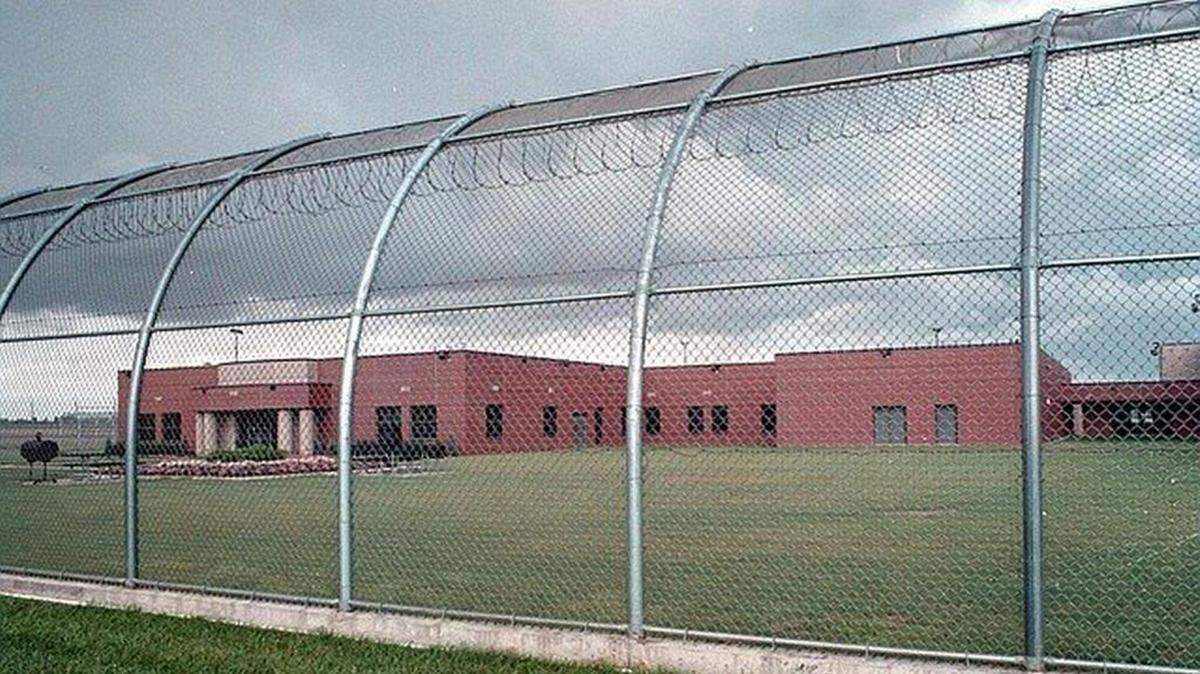
The brutal attack came when staff weren’t looking.
Dalton Bledsoe was a patient at one of Kansas’s three state-run mental health hospitals when, on Oct. 22, 2018, another patient began beating him. Word had gotten around that Bledsoe had been charged with crimes against children. He suffered a traumatic brain injury that left him unable to speak, according to a lawsuit his guardians later filed against the state.
At the time, one out of every five mental health technician positions at Larned State Hospital were unfilled, the lawsuit said. Those who were there sometimes worked 16-hour shifts.
Staff only learned of the assault when the attacker proudly left a room, declaring “I killed him,” the lawsuit alleged. Anthony Ruiz-Hernandez later pleaded guilty to attempted first-degree murder. Bledsoe was eventually treated in a Texas neuro-rehab center and discharged in 2019 with severe cognitive and linguistic deficiencies, according to his lawsuit.
In October, Gov. Laura Kelly and top lawmakers quietly approved a $500,000 settlement in the suit, brought against the agency that oversees the state hospitals, the Kansas Department of Aging and Disability Services. At the time of the attack, it was under the control of Gov. Jeff Colyer.
But the staffing problems that plague Larned and Kansas’s other state hospitals — with sometimes catastrophic consequences — have continued.
A review of state data and interviews with officials, lawmakers, union leaders and others with knowledge of the state hospitals shows a troubled and stressed system struggling to cope with the demand for intense, in-patient psychiatric care. Long-running challenges at Larned and Osawatomie, the state’s other large facility, have been exacerbated by the pandemic as Kansas grapples with the same workforce shortages that have gripped the national economy.
Those worried about the situation at Larned have grown increasingly desperate. Last week a coalition of 59 sheriffs, many from western Kansas, told Kelly in a letter that the hospital had hit a “crisis level.” They called for a change in leadership, but didn’t elaborate.
The letter detailed difficulties getting patients admitted and concerns about the hospital’s response to a Pawnee County criminal investigation when a patient escaped, allegedly with the help of three staff members. Sheriff Bryan Bellendir of Great Bend was the lead signatory.
“Almost every law enforcement agency in Western Kansas continues to have problems with services at the state hospital,” the sheriffs wrote.
‘They are not stats, they are us’
Last week, 38% of direct-care staff positions — those workers who are involved directly in a patient’s treatment — were unfilled at Larned. It’s an improvement over the 45.4% vacancy rate at the end of September, but far from adequate.
KDADS spokeswoman Cara Sloan Ramos said in an email the agency is seeking to resolve the issue with contract staff and increased pay and overtime for employees.
In July, Kelly authorized raises for a variety of state hospital staff, raising direct care workers wages to $16.16 per hour. Existing staff problems at the hospitals, Ramos said, have been made worse during the pandemic amid a national shortage of health care workers.
But Sarah LaFrenz, president of the Kansas Organization of State Employees, said the raises offered aren’t enough to fix the problem and safety for workers is becoming a bigger and bigger concern.
“They have really severe unsafe conditions for staff,” said LaFrenz, whose union represents employees at the hospitals. “It’s truly abysmal and terrifying for the people that work there.”
“They had to deal with COVID, their wages are low, the staffing is out of control, it’s no wonder that people don’t want to go work there and people are leaving in droves.”
Larned State Hospital has been in a tough recruiting environment for years. Located in Pawnee County southwest of Great Bend, the city of Larned has fewer than 4,000 residents. Wichita is a two-hour drive away.
The city has launched LarnedCares, a polished website aimed at attracting workers for the state hospital. “For more than 100 years, the Larned State Hospital has served those who need us because they are not stats, they are us,” the site reads.
Mayor William Nusser said the community had made progress in drumming up interest in the state hospital. Then the workforce difficulties that hampered businesses and organizations nationally hit Larned, too, he said.
The rural community loves agriculture, he said, but the hospital is the linchpin of the local economy. “The viability of the community,” as he put it.
Responding to the sheriffs, KDADS Secretary Laura Howard wrote that the current staffing problems at Larned are “unprecedented” in the decades she’s worked in human services.
“These have been unprecedented times with both law enforcement and the State Hospital managing under pandemic protocols, serious workforce shortages, and increased demand for mental health and substance use services,” Howard wrote in a Nov. 3 letter.
On Thursday, Kelly said there’s only so much her administration can do to address the sheriffs’ concerns about admissions at Larned.
“We cannot put patients or staff at risk so there’s really not a lot we can do about that at that particular facility,” Kelly told reporters “We have been working to increase the number of crisis beds available regionally so those folks do have someplace to go.”
‘Dis-service to Kansans’
The sheriffs say, however, that because of problems getting patients admitted, officers are sitting in lobbies and offices for hours or days with those beset by mental health crises and waiting for a bed.
“This is a dis-service to Kansans in need of help,” they wrote.
Ed Klumpp, a longtime Kansas law enforcement lobbyist, described similar issues at Osawatomie State Hospital. It’s not unusual for someone to wait up to a week to get into the facility, he said.
The situation is frustrating to everyone, both law enforcement and patients, he said.
“There’s no facility to hold them in, so we end up sitting with them in hotel rooms, in offices, in emergency rooms, wherever the case happens to lead us. So that carries on today,” Klumpp said.
The state is moving towards lifting a six-year moratorium on voluntary admissions to Osawatomie State Hospital, allowing individuals to once again get treatment without a court order. Since 2015, Osawatomie, about 50 miles south of the Kansas City metro, has only taken court-ordered patients.
Before the moratorium, the Centers for Medicare and Medicaid Services had found serious problems. A January 2015 inspection report said the hospital failed to provide 24-hour nursing service for a patient who died from a bacterial infection that caused a blockage of the intestines. The hospital has made a series of upgrades and changes in the years since.
Lawmakers believe ending the moratorium will increase capacity for mental health treatment in Kansas. But law enforcement and the union representing state workers fear it will cause more problems unless more staff positions are filled. As of last week, 37.2 percent of direct care positions at Osawatomie were vacant.
According to a website used by Kansas to track mental health treatment capacity, Osawatomie State Hospital had seven beds available and Larned had none as of Thursday afternoon. “Bed availability changes rapidly,” Larned’s entry read.
In Wyandotte County, Sheriff Donald Ash said he has 18 inmates waiting for a bed in a state hospital, one for 290 days. He’s been dealing with these sorts of waits since 2012 or 2013, he said.
Staff in the Wyandotte County Sheriff’s office is not adequately trained to care for mentally ill inmates for months at a time, Ash said, and longer waits delays justice for inmates and victims.
Meanwhile it is not uncommon for those inmates, incarcerated for anything from low level charges to murder, to incur more charges while they’re waiting on help because they attack a guard or fellow inmate, Ash said.
“There’s no good thing that happens, I’ll tell you that, with all of these delays. It’s really problematic,” Ash said. “(The State’s) deferring their costs and abdicating their responsibilities to the local jails.”
Sloan Ramos, the KDADS spokeswoman, said capacity issues are an outgrowth of staffing issues. In order to ensure safe conditions and good care for staff and patients, she said, capacity is adjusted.
The severity of mental illness among patients admitted to state hospitals has also increased in recent years, she said.
KDADS told lawmakers this fall the state was moving closer to lifting the moratorium on voluntary admissions to the Osawatomie State Hospital. Central to the agency’s strategy of ending the moratorium and expanding capacity is enrolling hospitals around the state to offer beds that serve as alternatives to treatment in a state hospital.
Seven hospitals have so far joined the program, called State Institution Alternatives, or SIAs. The agency said SIAs are vital to reducing the burden on law enforcement, decreasing wait times for care in addition to allowing voluntary admissions to resume at Osawatomie.
“It’s been a long road. I’m very happy,” Rep. Will Carpenter, an El Dorado Republican, said of the anticipated end of the moratorium. “It should have been done, but then COVID came along.”
He added that using local hospitals to provide care for the state could solve many existing capacity issues.
“With these provider beds in these other hospitals, those folks are able to stay closer to their families. I think anytime we can get the private sector involved versus the expense of running a hospital ourselves and provide these few beds that we need, it’s just a win-win,” Carpenter said.
LaFrenz and Klumpp, however, both said the prospect of reopening Osawatamie to voluntary admissions concerned them.
Klumpp worried the inclusion of voluntary admissions at Osawatomie filling bed space would, once again, make it more difficult for law enforcement to place criminal defendants or other involuntary admissions.
LaFrenz said staff safety could be at risk.
“It’s pretty hard to lift the moratorium if you don’t have enough people to staff the place,” she said. “If you do start sending more patients in there you put the staff at a high degree of risk for more battery, injury or potential death.”
This story was originally published November 5, 2021 at 5:00 AM.