Would a luxury hotel increase Kansas City population? That’s the latest developer pitch
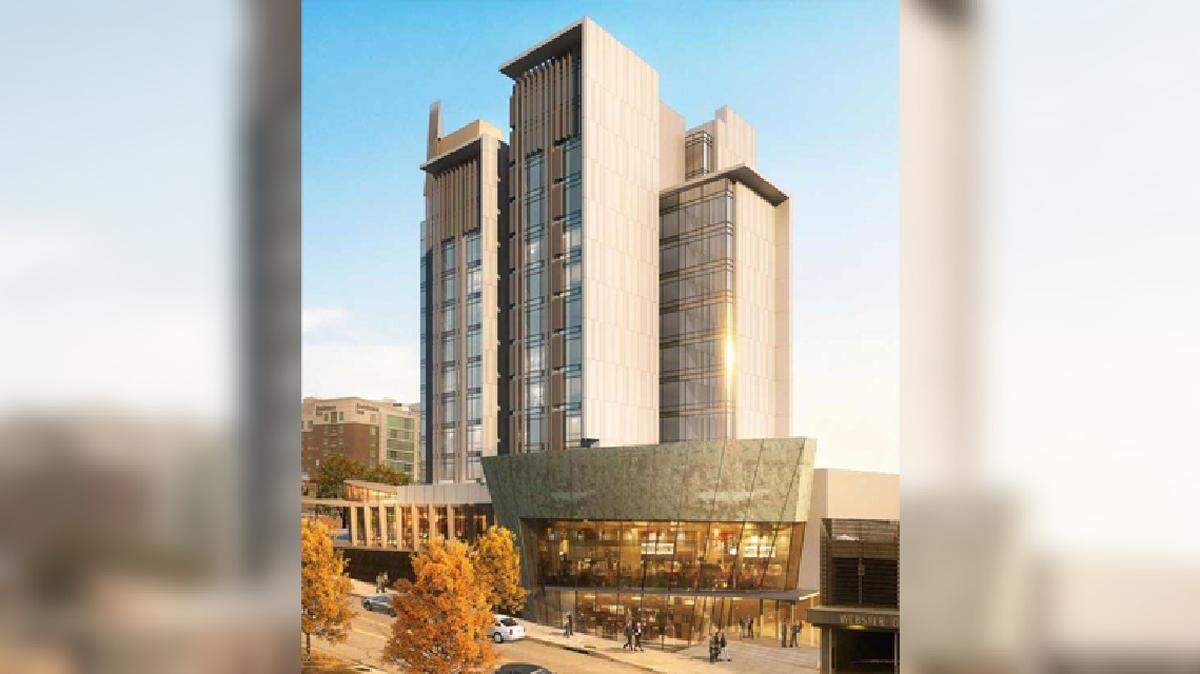
Developers who have been pushing plans for a luxury hotel in the Crossroads Arts District for more than two years once again brought their plans to City Hall, urging the Kansas City Council to approve massive tax breaks to bring the hotel to life.
While the presentation on the so-called Hotel Bravo was familiar to insiders, its backers did bring a new argument to the table on Wednesday, claiming that their project could help boost Kansas City’s population growth.
Jim Bowers, an attorney representing the hotel developers, said booming cities like Nashville, Denver, Portland and Austin all have higher rates of upscale hotels. While Kansas City’s population grew 11% since 2010, those cities have seen much faster growth. Denver, for example, saw its population increase by nearly 20% over the last decade.
“There’s a direct correlation between population growth and upscale hotels,” Bowers said during a meeting of the council’s Neighborhood Planning and Development committee.
The hotel project has struggled to gain political support for more than two years now. And developers received another icy reception on Wednesday.
“It is a little off putting to suggest that the reason Kansas City isn’t growing is because we don’t have five-star hotels,” said Councilman Lee Barnes, who represents the 5th District. “I mean it wasn’t said directly in that manner but that’s the inference that we received.”
“Did the growth happen and then the hotels came?” asked Barnes, chair of the committee. “Because I don’t think any city’s going to necessarily grow because you have more four- or five-star hotels.”
Councilwoman Andrea Bough, who represents the 6th District, said she supported the concept of a new hotel to neighbor the Kauffman Center for the Performing Arts.
“I would love to have this hotel. I think it would be great for the city,” she said.
But Bough said she was concerned about the level of incentives requested by the developers to build the project. She said there’s no guarantee the hotel would earn five stars. And she also doubted that a luxury hotel would lead to population growth.
“I don’t necessarily think if we build a five-star hotel we will become Nashville or become Austin or we will become any other city,” Bough said.
Developers Eric Holtze and Whitney Kerr Sr. have been pushing plans for a new luxury hotel near the Kauffman Center for years now.
They argue that the recent hotel boom around downtown hasn’t brought the high-end experience in demand among “vanguard” travelers.
“It’s like if you went in to buy a car and you wanted to get a Mercedes and they didn’t have a Mercedes dealer,” Holtze said in 2018 when unveiling plans for the project.
The Kansas City TIF Commission in October 2019 recommended denying the developers’ request for tax increment financing. A negative recommendation from that board, which is usually friendly to development interests, means the project must receive a super majority — 9 of the 13 votes on the council — to pass.
Developers expect the hotel and an accompanying rehearsal hall for the Kauffman Center to cost about $132 million. To help fund the project, they’re seeking more than $50 million in tax incentives.
In the summer of 2020, the developers held a press conference and forecast that they had garnered enough support on the council to get the TIF, only to learn otherwise when enough members said publicly that they opposed the project.
On Wednesday, the council committee heard opposition from Visit KC, the Hotel & Lodging Association of Greater Kansas City and the Loews Kansas City Hotel. All of those entities cited plummeting hotel occupancy rates as a result of the coronavirus pandemic.
“The hotel is not needed today,” said Steve Rattner, a New York financier with Loews. He said the city should not provide any more TIF funding until hotel occupancy rates improve.
Teresa Loar, who represents the Northland’s 2nd District, made a motion to move the project to the full council with a recommendation for approval. But Loar, a longtime champion of the downtown hotel, did not receive a second from any other members.
Ultimately, Barnes recommended the body move the issue to the full council with no specific recommendation. That will allow the full council to weigh in next week.
The developers have tried to sell the project by highlighting the fact that the city won’t have to put any upfront investment into the project. And they said the currently empty lot, which sits on Wyandotte Street between 16th and 17th streets, would contribute more to public coffers with a high value development like Bravo.
For the first 20 years of the project, developers propose redirecting property taxes to offset the cost of the project. In the 21st year of the project, they expect the hotel could bring $4 million in new tax revenue to local taxing jurisdictions like the city, schools and library.
But a Kansas City Public Schools official said local students should not bear the financial burden of high-end projects in wealthy parts of the city.
Kathleen Pointer, the school district’s senior policy strategist, said the school district is already subsidizing several very nice hotels downtown.
“Your decision isn’t really about whether or not you need to add another publicly funded fancy hotel downtown,” she said. “It’s about is this city ready to start actually saying no to truly outrageous incentives?