
Feds say KCPD, Missouri police are cutting off ATF from evidence in gun crimes
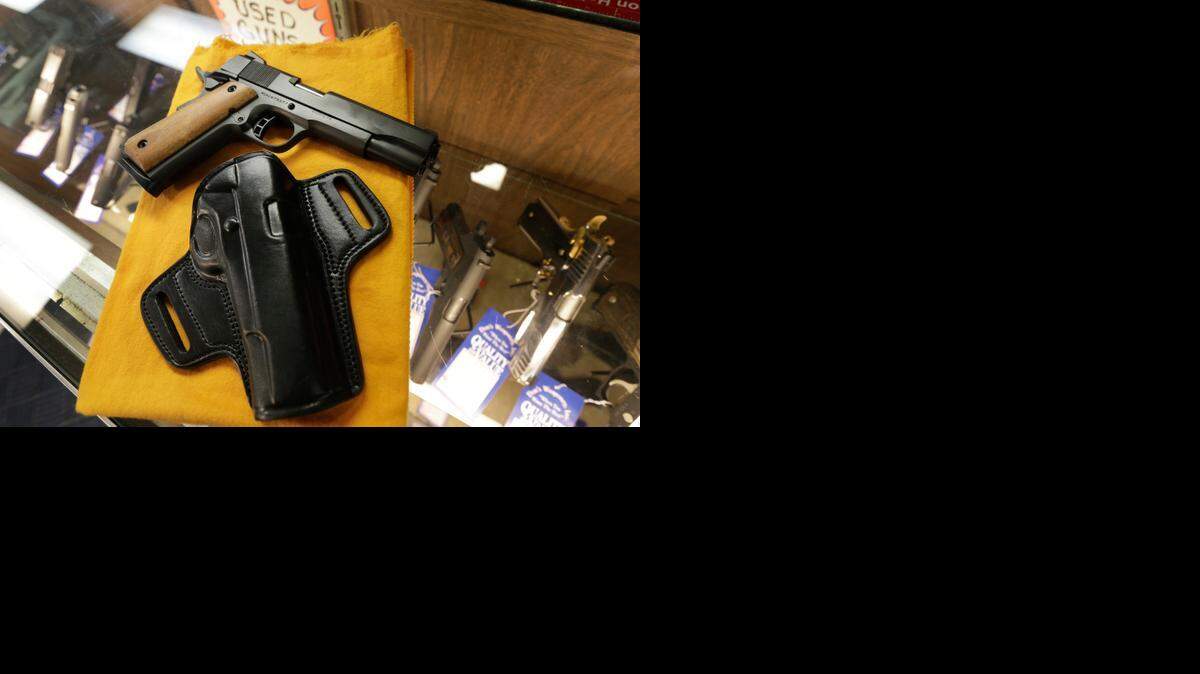
Kansas City police and some other Missouri departments are cutting off federal agents’ access to evidence in gun crimes under a new state law banning local enforcement of certain federal firearms laws, the U.S. Department of Justice said in a court filing Wednesday.
The evidence includes background on potential suspects and ballistics information from crime scenes that the federal Bureau of Alcohol, Tobacco, Firearms and Explosives uses in a national database to solve violent crimes.
Twelve of the 53 local police officers across Missouri assigned to work with the ATF have pulled out of those partnerships, the Justice Department said.
The new gun law, Missouri’s two federal prosecutors wrote, “undermines these critical partnerships and harms collective law enforcement efforts as a result.”
Those withdrawing include three Missouri State Highway Patrol troopers and two O’Fallon police K-9 officers, as previously reported by The Star. Also withdrawing are four police officers in Columbia, two in Sedalia and one deputy from the Johnson County Sheriff’s Office, an ATF agent said in the court filing.
“By withdrawing state and local officials from ATF task forces, ATF is no longer able to fulfill its duties as effectively, including preventing, investigating, and assisting in the prosecution of violent offenders,” said Frederic Winston, ATF special agent in charge of the Kansas City field division.
Columbia Police Department spokesman Jeff Pitts declined to comment. Kansas City Spokesman Sgt. Jacob Becchina said the department does work with the ATF on investigations “regularly.”
Winston’s division covers all of Missouri and four surrounding states. It has 69 agents and 22 investigators who work with the 53 local police officers assigned to its task forces.
The revelations of canceled partnerships came in a statement of interest filed by the federal prosecutors’ offices — based in Kansas City and St. Louis — in a lawsuit against the state originally filed by St. Louis and St. Louis County. The local officials assert that the new law undermines their ability to work with federal agents. Jackson County later joined the lawsuit, arguing it is at unfair risk of liability because of its 87 law enforcement officers “who regularly enforce federal gun laws.”
The local governments are asking a Cole County judge to overturn the law. A hearing is scheduled for Thursday.
Gov. Mike Parson signed the new gun law in June, delivering a victory to gun-rights activists who had pushed for the Second Amendment Preservation Act for nearly a decade. The movement to pass the law gained new momentum this year after the election of Democratic President Joe Biden, who has issued executive actions to more tightly regulate homemade “ghost guns,” which lack serial numbers, and a device that allows a pistol to operate more like a rifle.
The state law, which went into effect immediately upon signing, declares “invalid” many federal gun regulations that don’t have an equivalent in Missouri law. These include statutes covering weapons registration and tracking, and possession of firearms by some domestic violence offenders.
And it bars local and state police departments from enforcing them, or risk being sued for $50,000. They also are prohibited from assisting federal agents in enforcing “invalid” laws and from hiring former federal agents who had enforced them.
Sponsors of the law have said they don’t expect it to protect criminals or affect current police relationships with the federal government — rather, they have called it a protection of Missourians’ gun rights against further regulation by the Biden administration. But the law has sparked confusion and concern for police across Missouri, who have evaluated whether they can continue working in task forces with federal agents.
Federal agencies such as the ATF and the FBI run a variety of task forces related to guns and drugs across Missouri, and often provide extra funding for local departments. Last year the Justice Department launched Operation LeGend in Kansas City and St. Louis, in response to record gun violence in Missouri. The ATF Strike Force also focuses on violent crimes committed with firearms or explosives in St. Louis. Parson appointed two state troopers to that effort in 2019.
The Star reported last month that federal agencies were surveying local police on whether they could continue cooperating in investigations. In June, the office of Teresa Moore, U.S. Attorney for the Western District of Missouri, told local police in her jurisdiction that federal prosecutors would demand police cooperation through subpoenas, in an effort to shield them from potential penalties under the new state law.
In the court filing, Winston said local departments’ cutoff of information to the ATF has hindered its ability to conduct its own investigations, “including those related to the criminal use, possession, and tracking of firearms.”
The State Highway Patrol has stopped giving the ATF background information on potential suspects. An evidence technician for the KCPD, which previously told The Star it would not stop officers from assisting in gun investigations, in late June told the ATF it will no longer give the federal agency access to investigative records or allow the ATF to inspect guns in its custody, Winston said.
Becchina, of KCPD, said the incident Winston described appeared to be “something related to a specific ongoing investigation,” and declined to comment further.
“We do work with ATF as well as our other federal partners regularly within the confines of federal, state and local laws as applicable in any given situation,” Becchina said.
Federal prosecutors say several departments have stopped contributing to the National Integrated Ballistics Information Network, a database of images and information about shell casings that the ATF uses to link shootings across the nation. The database generated 6,000 investigative leads in Missouri in three years, and identified 200 suspects from October 2019 to June 2021, Winston said.
The ATF installed a machine to input evidence at the Columbia Police Department this March, allowing the agency to link 15 recovered guns to shootings, Winston said, but the department took the computer offline in June after the Second Amendment law’s signing. Since then, according to his court filing, Columbia has not entered information about 22 shell casings and 21 recovered guns.
Winston said a combination of Columbia’s partnership with the ATF and use of the ballistics database led police to arrest a drive-by shooter who killed a woman celebrating her birthday in her home in March 2017. One suspect faces second degree murder charges and another has pled guilty to voluntary manslaughter.
This story was originally published August 18, 2021 at 3:12 PM.