
Parson vetoes bills amending Sunshine law, allowing lobbyist campaign committees
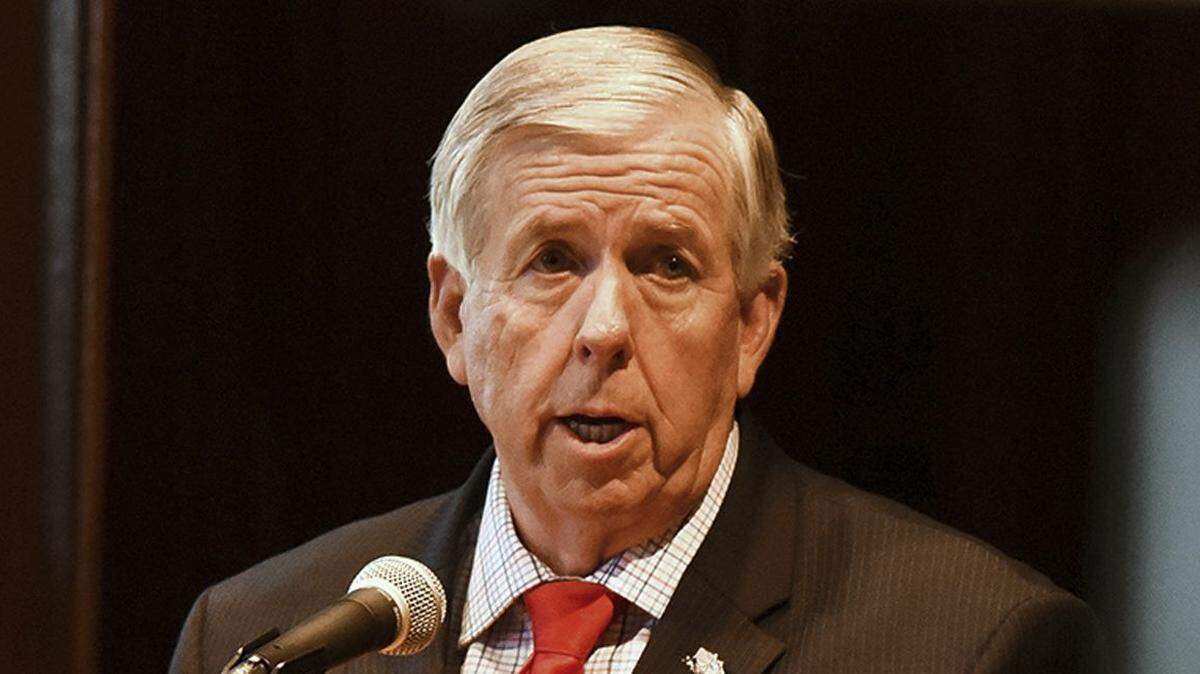
Gov. Mike Parson vetoed four bills Friday afternoon, including one that would have created new exceptions to the state’s open records law and another that aimed to allow registered lobbyists to maintain campaign committees.
House Bill 362, sponsored by Rep. Bruce DeGroot, R-Ellisville, would have allowed constituents’ contact information to be closed under Missouri’s Sunshine Law if it was submitted to a government body solely to receive routine communications such as newsletters, notifications, advisories, alerts and periodic reports. Redacting contact info is an issue both Gov. Mike Parson and lawmakers have previously been challenged on.
Over the course of the session the bill grew to include transparency provisions that would also shield individually identifiable customer usage and billing records from municipally-owned utilities, waive charges for defendants seeking a police report, probable cause statement or video footage related to proceedings before a municipal court, and establish a 30-day timeline for payment of fees to receive public records.
If a requester failed to provide the necessary fees, the records request would be considered withdrawn, and a government body would be authorized to request additional fees if a similar request was submitted within six months after the 30-day window, the bill stipulated.
In Parson’s veto letter, he cited the Missouri Supreme Court’s ruling last month in a lawsuit against his office, that found public governmental bodies cannot condition the provision of a date and time to receive records on payment of a fee.
An additional provision would allow the Office of the Child Advocate, which investigates complaints against the Children’s Division in the Missouri Department of Social Services and reviews allegations of abuse, to create a reporting system for Children’s Division employees to confidentially report info on the safety of children or staff.
Any criminal acts reported through it would be disclosed to the appropriate law enforcement entities. Another provision notes the office is not prevented from releasing findings on the professional performance of multidisciplinary team members that investigate allegations of child abuse and neglect, which can include prosecutors, Children’s Division investigators, police and more.
The Department of Social Services’ handling of cases of suspected abuse and neglect came under intense scrutiny this legislative session as lawmakers investigated the state’s lack of oversight of unlicensed youth residential facilities where substantiated reports of abuse and neglect had been found.
In his veto letter, Parson wrote the expanded authority the bill would have granted to the Office of Child Advocate fails to recognize the accountability local multidisciplinary team members provide and “unnecessarily undermines the existing administrative structure” within the Children’s Division. Parson deemed the provision duplicative of multidisciplinary team efforts and wrote that it “fails to strengthen protections for the children served by” the division.
Rep. Mary Elizabeth Coleman, an Arnold Republican who had offered the provision as an amendment to other legislation during the session, thanked the Office of Child Advocate for its work Friday.
“They step in when our child welfare system has failed,” Coleman wrote on Twitter. “They are a trusted partner helping keep kids safe and holding people accountable when it hasn’t.”
Last week, Parson also vetoed a $2.1 million increase to the Department of Social Services’ budget that would have provided a three percent pay increase to Children’s Division case workers and supervisors — an area that often sees high turnover.
The bill would also establish the “Government Lending Transparency Act,” and require government agencies to annually report on lending and credit support programs to the State Auditor’s office.
Parson wrote that the Auditor’s office already has the authority to ensure state funds are properly accounted for and that with an effective date of Aug. 28, requirements in the bill that specify reports are submitted by August 30 are “impractical.”
Parson also vetoed House Bill 685, sponsored by Rep. Jason Chipman, R-Steelville. The bill, which included provisions altering the requirements to run for local office, was vetoed due to a provision that would have allowed a registered lobbyist who holds or is campaigning for an elected municipal or school district position to maintain their candidate campaign committee.
The provision would have only affected a small number of lobbyists, like Columbia Mayor Brain Treece, who has also been a registered lobbyist since 1996. A complaint filed with the Missouri Ethics Commission in 2019 requested the commission investigate whether he was violating state law that said registered lobbyists were required to dissolve campaign committees and disburse the funds.
Parson said in his veto letter he strongly opposed the provision.
“I do not believe that such special laws, which are designed to benefit a few, should guide our state policy,” Parson wrote. “Although this provision would create a narrow exception for registered lobbyists holding elected office, it would inevitably lead to increased potential for conflicts of interest in local offices and open the door to additional exemptions in the future.”
This story was produced by the Missouri Independent, a nonpartisan, nonprofit news organization covering state government, politics and policy.