After rolling blackouts, some in Independence look again to fossil fuel for electricity
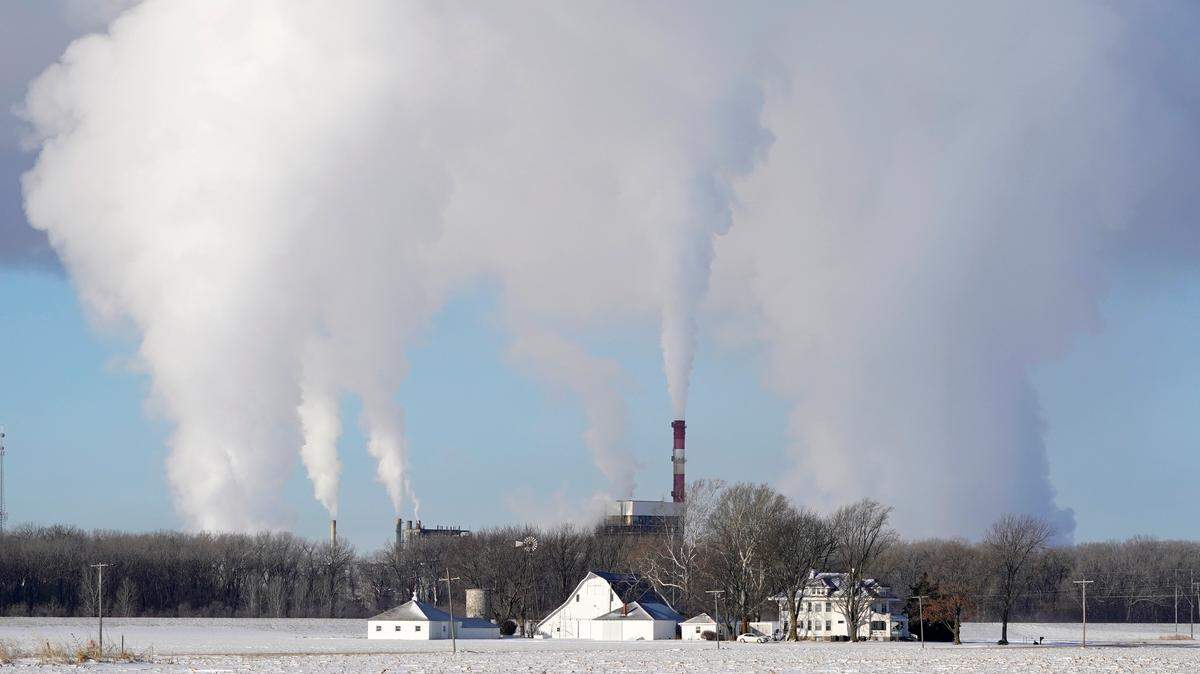
Just two years after the Independence City Council passed a resolution to become the “greenest city in America” by promoting renewable energy development, some city leaders want to invest in fossil fuel energy generation following last week’s historic cold snap that caused rolling electricity blackouts across the area.
Temporary power outages affected 33,000 homes and businesses in Independence — about half the city’s customer base — during a historic deep winter freeze that spared few across the Midwest from electric service interruptions.
Independence council members Mike Huff and Mike Steinmeyer seized upon the blackouts, as well as a widespread energy crisis in Texas, to push city-owned Independence Power & Light to invest in a new “base load” electricity generating facility — meaning that it would provide a continuous supply of energy to ratepayers — powered by natural gas.
Huff, a former IPL employee of 35 years who has wanted Independence to invest in new electric generation for years, lauded the timing of last week’s crisis.
“I think it’s godsent, I really believe that,” Huff said in an interview. “It’s just crazy how timing works.”
It’s a proposal that a top city official said would likely result in higher electric bills for customers. It’s also an idea that fellow council members criticized for its timing so soon after a calamity and because it would likely add to the utility’s already high debt load. And others said the move would come as other utility companies are embracing renewable energy sources.
Huff claimed the closure of coal power plants across the country, a long-term trend as utility companies move toward cleaner and renewable energy sources like wind and solar, threatened the reliability of the electric grid.
“I would assume right now we’re going to see a lot of windmill companies go bankrupt and solar panel companies going belly up,” Huff said. “People are really waking up.”
Huff’s prediction runs counter to long-term plans by utility companies and trends that experts expect will continue.
Ameren, a major investor-owned utility company in eastern Missouri and Illinois, adopted a new business plan that looks to add 3,100 megawatts of wind and solar energy by 2030 while accelerating the retirement of its coal plants. The company cited climate change and improved efficiency of renewable energy as reasons for its new plan.
Coal accounts for 69% of Ameren’s generation currently, with 1% coming from gas and 5% coming from renewable energy. The rest comes from a nuclear plant it operates in Callaway County, Missouri.
By 2050, Ameren expects that it will derive no energy from coal or gas and instead get the majority from renewable sources.
Evergy, the dominant investor-owned electric provider in the Kansas City region, will submit its integrated resource plan by April 1 but it’s expected that the company will reiterate previously announced plans to make significant investments in renewable energy.
“Coal is declining quickly and companies are announcing shut downs. So, it is being replaced with renewables, for the most part, and gas,” said Jim Doull, executive vice president of power for Overland Park engineering firm Black & Veatch. “It’s a blend.”
Andy Knott, a deputy regional director of environmental advocacy group Sierra Club’s Beyond Coal campaign, said IPL would be an outlier in the utility industry under Huff’s plan.
“They’re going against the trends and common sense,” Knott said.
The Rocky Mountain Institute, an energy sustainability research group in Colorado, issued a report in 2019 that sounded a warning that new investments in gas-fired power plants will result in costs that can’t be recovered as renewable energy becomes increasingly economical.
“There are both significant cost savings opportunities if U.S. utilities prioritize clean energy over continuing their present rush to gas as well as existential risks facing investors that continue spending on new gas infrastructure,” the report said.
The cost of Huff’s plan could run well into the nine figures.
“Everybody is worried about $100 million or whatever the number is, it’s immaterial,” Huff said during a Tuesday meeting of the Independence City Council. “When you’re sitting in the cold with no lights, I don’t care what it costs.”
IPL shut down its Blue Valley power plant, which generated 90 megawatts, in 2020. IPL currently generates electricity through combustible turbines and a solar farm, owns a stake in a natural gas-fired power plant in Pleasant Hill and buys power from other utilities, such as Evergy and a utility company in Omaha, as well as two wind farms.
The city’s six combustion turbines are aging and inefficient. They are used only at times of peak demand, not for ongoing generation. The council and city have long talked about upgrading or replacing those units.
Huff believes federal regulations make it nearly impossible to build a new coal plant. Utility companies also shy away from coal because of environmental concerns and prefer the lower cost of natural gas.
He wants the city to invest big in natural gas. Specifically, he wants Independence to purchase gas combustion turbines from Finland’s Wärtsilä Corporation. Those can be quickly powered on to meet peak energy demand, Huff said, while also providing a reliable stream of electric generation.
IPL director Jim Nail believes the engines like those made by Wärtsilä or aeroderivative turbines might be a good long-term solution for the city. In addition to powering up quickly for peak demand, they’re also efficient enough to provide consistent power during non-peak times.
Huff thinks Independence could have avoided blackouts if it were able to generate an excess of its own power needs.
“If we had them running, I believe we would have been safe,” he said. “If we had them and SPP were to call us to fire them up, you could have generation on the line in 10 minutes.”
But Nail said even if Independence were to produce more than enough of its own electricity, it would have still been subject to blackouts because of agreements with the Southwest Power Pool, a regional transmission operator of the electric grid in 17 states in the Midwest, including Kansas and Missouri.
Although it would cost millions of dollars upfront, Huff thinks the investment could pay off over time.
“If we can sell the power out of there — and that’s an if, a roll of the dice — it won’t cost the taxpayers anything. Or very, very little,” he said. “If we don’t do this we are stuck in a place where we’ve lost all control.”
Steinmeyer also predicted that Independence could make money through the sale of energy to other utilities.
“I have a daughter who lives in Dallas and works for Goldman. She said to me today, ‘Gosh if you guys would have had your power plant up and running, you’d be printing money right now,’” Steinmeyer said. “Those were her words. That’s how much money we have lost out on by not being a generator of energy.”
But selling excess generation with the expectation of high earnings is a risky proposition.
While power prices did skyrocket last week, Nail cautioned that it didn’t necessarily mean utilities would make easy money. That’s because while the price for which energy could be sold increased, so did the cost to buy it in the first place. Natural gas was previously selling for about $4 a unit, but opened Wednesday at $6,000 per unit, he said.
“You have to draw a distinction between revenue and profit,” he said.
“People get enamored during these times about those articles that are published about Texas selling power for $9,000 a kilowatt hour and making a fortune,” Black & Veatch’s Doull said. “So it’s kind of like Bitcoin, right? I mean, don’t get enamored by an article that says I made millions of dollars. Those guys, they’re in it for the long haul and they don’t just come in and make it and then get out. It’s not like GameStop or something like that.”
Daniel Hobart, an Independence council member, was similarly skeptical about making money through selling power.
“You want to sell our power that we make into a grid to other people? Guess who we’re competing with?” Hobart said. “You’re competing with every single company on that grid, which includes private enterprise, which is proven to be more effective and more efficient at producing power.”
Councilwoman Karen DeLuccie doesn’t think the city can afford to invest in a new power plant. But if that’s the direction from the council, she said she at least wants a public vote to approve it.
“I buy for my home what I can afford. If I can’t afford a new power plant, I ain’t buying it,” she said. “And every person needs to have that choice.”
DeLuccie said she is open to discussing buying reciprocating turbines, which are less expensive than an entire plant but can still provide backup power. She rejected the idea that a power plant would be a money maker for the city.
“Let’s assume we build a power plant and we have excess power capacity of 50 megawatts. Well, if the Southwest Power Pool doesn’t want to buy it, they’re not going to buy it. What if they can buy it in Oklahoma for cheaper?”
DeLuccie criticized other council members who used last week’s events as pretense for making a generational spending decision in Independence.
“The worst time to make a decision that has a long-lasting impact is when you’re afraid,” she said.
And she said Tuesday’s discussion revealed a lack of understanding about the wider electric grid from Mayor Eileen Weir and some council members who linked Independence’s blackouts with its electric generating capacity.
“They don’t understand it,” she said. “And it doesn’t help when we have misinformation coming from the dais.”
Huff said he will make his case during a Monday council study session, when city leaders will also discuss the future of the electric utility. But he believes he already has enough votes on the council to approve his plans.
He predicted the new gas generation would cost $180 million for 250 megawatts of energy — more than enough to meet the city’s electricity demand.
Huff and Steinmeyer appear to have support from Weir. Weir said Tuesday that electric production is part of Independence’s identity.
“This weather, whether it’s extreme cold, extreme heat, extreme rain, extreme whatever, is a result of our changing climate, whatever you want to attribute that to, or the cyclical nature of our environment,” Weir said. “We’re not prepared for it, plain and simple.”
Others on the council offered skepticism to Huff’s idea. Hobart said Tuesday that IPL is deeply in debt and questioned whether it was worth adding to that after the region experienced temporary outages.
“I get that this is a great time to be opportunistic and to try to continue to scare the residents of Independence that we need to go as in debt as we possibly can right now, I get that,” Hobart said.
Independence City Manager Zach Walker said the city would have to issue new debt to pay for the project.
“And issuing debt means raising rates,” he said.
This story was originally published February 22, 2021 at 5:00 AM.