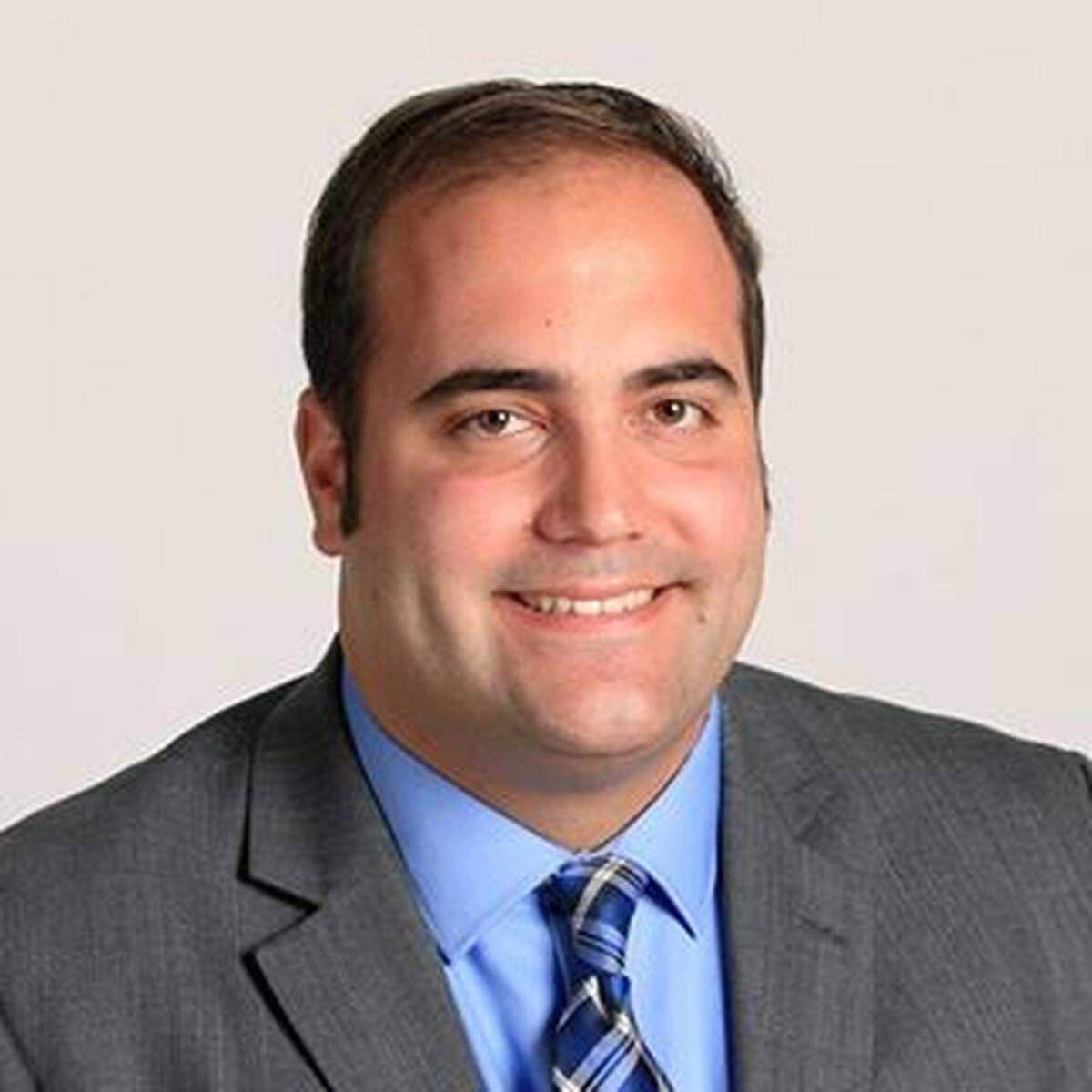
‘Time is not going to stand still.’ Cleaver has big goals for housing policy under Biden
The clock is ticking for Rep. Emanuel Cleaver.
For only the second time in his 17 years in Washington, his party controls the White House and both chambers of Congress. But it’s likely only a fleeting advantage. If the 76-year-old Missouri Democrat wants to achieve one of his biggest legislative goals, he has to do it now.
“The time element is real,” Cleaver acknowledged.
The president’s party traditionally loses seats in mid-term elections. With narrow majorities in the House and the Senate, Cleaver and other Democrats likely have just the next year to send legislation to President Joe Biden’s desk before Republicans recapture one of the chambers.
Even Cleaver’s seat isn’t guaranteed to be safe next year.
A former Kansas City mayor, Cleaver won re-election to the House in November by more than 20 points. But there is speculation that the Republican supermajority in the Missouri legislature could gerrymander his safe Democratic district to make it more competitive for Republicans when the state redraws boundaries later this year.
Cleaver was among the first in his party to back to Biden for president, a decision that should give him access to the White House. He’s hoping to use that influence to push for major reforms to housing policy, a deeply personal issue going back to his childhood in Wichita Falls, Texas.
“If you saw the projects, the public housing, where I lived as a boy, that alone would create some perspective about my obsession about affordable housing,” said Cleaver, who represents Kansas City’s urban core.
“My father paid five dollars a week for the shack we lived in. There was never a period in my life where I wasn’t thinking about housing.”
Cleaver, the first Black mayor in Kansas City history, was named chair last month of the House Financial Services subcommittee that oversees housing and community development. It’s not the highest-profile post, but for Cleaver it’s the dream job he’s been angling for since he was first elected in 2004.
His biggest ambition is to redefine how the federal government thinks about housing policy, and he wants affordable housing construction included in the massive infrastructure bill Biden will seek to pass this year.
“I believe that affordable housing should be a part of our definition of infrastructure. I don’t know of anything more significant than a house. You can put sidewalks and streets and plumbing and everything, but if there’s no housing there’s going to be no use of that infrastructure,” Cleaver said.
“Right now there’s no place in the country where you see new public housing units being built and it’s been that way for decades,” said Cleaver, who began his career as a pastor and civil rights activist.
Other Black leaders in Kansas City haven’t been shy about reminding Cleaver that time might be limited to accomplish his goals.
“You’ve been waiting to do this and the window is open now, but how long will it be open and what can you get through there right now?” Cleaver said, recounting a recent conversation with former state Sen. Kiki Curls and Freedom Inc. President Gayle Holliday.
Former President Barack Obama spent all but the first two years of his presidency with Republicans in control of at least one chamber, which thwarted much of his agenda. And former President Donald Trump saw most of his policy goals evaporate after his party lost the House to the Democrats in the 2018 mid-term election.
As a candidate, Biden released a housing plan that called for a $640 billion federal investment over 10 years to increase the supply, lower the cost and improve the quality of housing. But it’s unclear whether he’ll prioritize those proposals during the limited window he could have for passing legislation.
“Time is not going to stand still so we can do everything we need to do,” Cleaver said said. “This is the time you got to go do it and start right now, like tonight. As time passes, our ambitions can fade.”
‘This is a huge deal for Kansas City’
Cleaver’s call to treat housing as infrastructure is likely to face pushback from the political right.
“It sounds like it’s a ton of spending,” said Patrick Ishmael, director of government accountability at the Show Me Institute, a Missouri-based free market think tank founded by GOP megadonor Rex Sinquefield.
“I think the discussion should focus on the appropriate role of government and when we talk about infrastructure what we typically are talking about are things that are shared. Roads are shared,” Ishmael said. “The concern that I have with lumping housing into infrastructure is it isn’t necessarily a shared resource.”
Kansas City Mayor Quinton Lucas, who was elected in 2019 largely because of his campaign’s focus on housing, agreed with Cleaver on the need for more federal investment in affordable housing.
“I have lived in the Kansas City metro for almost my entire life… there’s always a plan to add a lane on I-35 or 69 Highway,” Lucas said. “We’ve spent far less money making sure we’re just keeping up with housing.”
Lucas said he was hopeful that Cleaver’s leadership of the subcommittee will provide a fast track for new funding opportunities.
“This is a huge deal for Kansas City. It allows not only to have our leading voice as part of every housing conversation,” Lucas said, noting Cleaver’s deep knowledge of the city’s individual housing developments and long-standing relationships with stakeholders on the issue.
Cleaver said the federal government has typically done one-for-one replacements of public housing units rather than expanding capacity.
This doesn’t mean he wants a return of the notorious public housing towers built in cities across the nation, an approach he called “stacking poor people on top of poor people.”
Instead, he wants an expansion of “scattered site housing,” weaving public units at lower densities throughout established neighborhoods. It’s a strategy that has proven more effective at integrating tenants into communities but which has also been politically tricky.
Cleaver is optimistic that Biden’s nomination of Ohio Democratic Rep. Marcia Fudge, a fellow member of the Congressional Black Caucus, for secretary of Housing and Urban Development signals that he’ll have allies in the administration on the issue.
“The federal government must figure out ways to incent housing development in the urban core and in the rural areas as well. The same problems that exist in urban St. Louis and Kansas City exist in Marshall and Higginsville,” Cleaver said.
Evictions
In the short-term, however, Cleaver’s focus is on securing more federal money for rental assistance during the COVID-19 pandemic and on clarifying the federal eviction moratorium.
A moratorium on evictions and foreclosures was enacted under Trump and has been extended by Biden’s administration through June. But many renters in Kansas City are still receiving eviction notices from their landlords, which Cleaver called a “psychological assault on people who don’t have income.”
Cleaver wrote to Biden chief of staff Ron Klain in January to ask for the Centers of Disease Control and Prevention to clarify the order to prevent courts from allowing eviction cases to move forward while the moratorium is in effect.
He’s been in regular contact with KC Tenants, the group protesting evictions in Jackson County.
KC Tenants director Tara Raghuveer said Cleaver has an “extraordinary opportunity” to deliver change for not only tenants in Kansas City, but across the country with his new position.
“We are optimistic that he will heed this call and take the steps that are necessary to cancel rent and mortgage payments, forgive rental debt, and expand and strengthen an eviction moratorium.”
Raghuveer said the long-term vision is one that pushes for a Homes Guarantee. That means transforming how the country thinks of housing, from a commodity to a public good.
“What we would like to see,” Raghuveer said, “is Representative Cleaver becoming a champion for a Homes Guarantee and using that vision to really drive forward a set of policies that doesn’t dance around the edges of this massive problem, but rather seeks to enact systemic overhaul and change.”
While COVID-19 has exacerbated the issues the country faces with housing, “it’s been urgent for a hot minute,” Raghuveer said.
“Right now, addressing our nation’s commitment to the people when it comes to housing is more urgent than ever,” Raghuveer said. “It’s not a new issue. It is newly urgent in a world on fire.”
This story was originally published February 18, 2021 at 5:00 AM.