Watchdog raises possible link to Trump family and $700M Treasury loan to JoCo firm
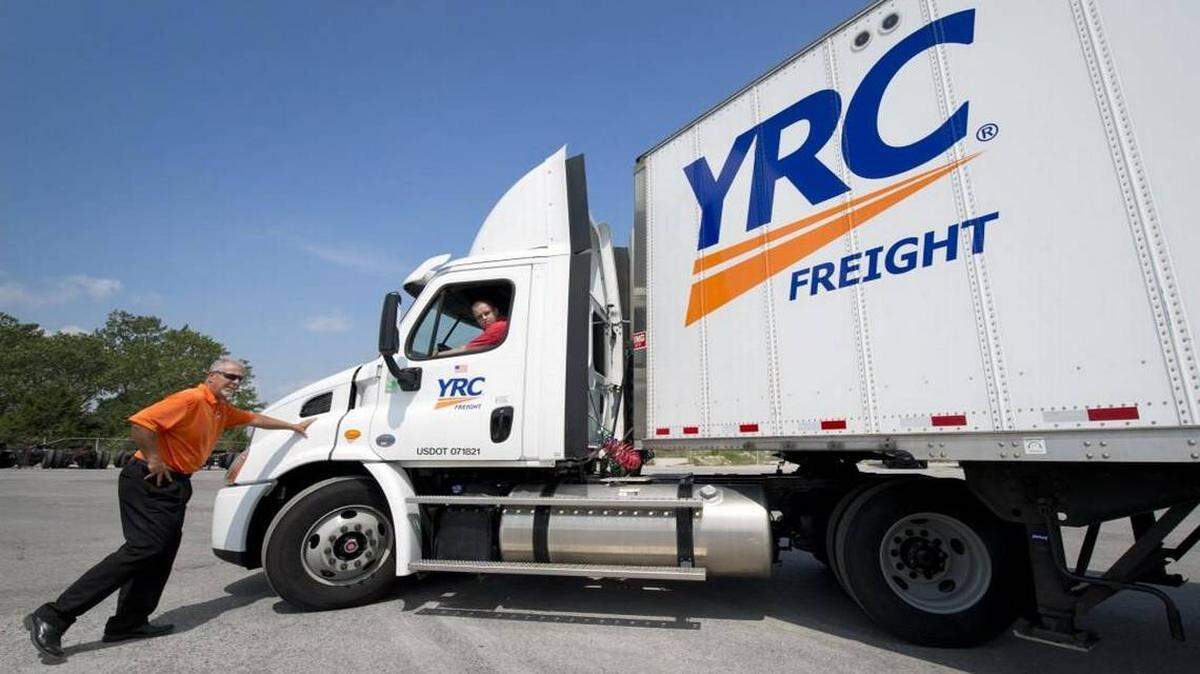
A member of a congressional oversight commission this week suggested that cronyism involving President Donald Trump’s family factored into the U.S. Treasury’s decision to fast-track a $700 million loan to near-bankrupt Overland Park trucking firm YRC Worldwide earlier this year.
Bharat Ramamurti, a member of the congressional commission that oversees Treasury and Federal Reserve spending in response to the coronavirus pandemic, quizzed Treasury Secretary Steven Mnuchin on Thursday about the propriety of the loan and the ties that YRC’s largest creditor has to Trump’s son-in-law, Jared Kushner.
The Treasury authorized the $700 million loan under the Coronavirus Aid, Recovery and Economic Security Act, a $2 trillion stimulus package meant to shore up the U.S. economy as it was pummeled by the pandemic. YRC received the loan under a part of the CARES Act to help businesses that the Defense Department deemed critical to national security.
YRC is a contractor to the Defense Department and ships military supplies. Its largest creditor prior to receiving the Treasury loan was private equity firm Apollo Global Management, which last year was the lead lender on a $600 million loan agreement that gave YRC more liquidity. Apollo also previously loaned $184 million to the real estate development firm Kushner Companies.
If YRC had gone bankrupt, which Mnuchin acknowledged was a possibility, Apollo may have had exposure on the $600 million loan agreement.
“Look, I think at best this is a loan, as some of my colleagues have said, that puts nearly $1 billion of public money at risk with minimal protections and that helps a private equity giant that was sitting on billions of dollars of its own money,” said Ramamurti, who was an economic adviser to Sen. Elizabeth Warren’s presidential campaign. “And at worst, I think this generous loan was rushed into place to benefit a firm with close personal ties to the president’s family and I think that this warrants further investigation by this commission.”
A request for comment from Apollo was not returned. A YRC spokesman also did not provide a comment.
Mnuchin said he had no communications with Kushner or anyone on his staff regarding the YRC loan.
The Oversight Commission has scrutinized the Treasury’s loan to YRC on a number of fronts, primarily that YRC was on the brink of bankruptcy before getting the loan and that taxpayers were at risk because of the nature of the loan’s terms. It has also questioned how important YRC is to national defense.
Rep. French Hill, an Arkansas Republican, said YRC has been shrinking since 2007 and needed a government-imposed debt-for-equity swap in 2009 to avert bankruptcy in the aftermath of the 2008 financial crisis.
“The only way YRC has survived for the last 10 years is through bailouts by the government and the private equity industry,” Hill said. “...Having analyzed this data, reviewed the collateral, it makes me realize were I still in finance, I would not have made this loan.”
The Treasury received 30% of YRC’s common stock in return for the loan. Mnuchin said the Treasury’s equity in the loan was worth $100 million.
“That’s because the stock has increased because the Treasury has now made this loan and I agree the company was certainly near bankruptcy before the credit,” Hill said.
The General Accountability Office issued a report this month that said the Treasury approved the YRC loan three months before executing any other loans under the program. The Treasury has responded that it went quickly with the YRC loan because of its financial circumstances, including the possibility it would go bankrupt.
“Although I think because the economy has recovered taxpayers will do very well on this loan, I want to acknowledge this was a risky loan,” Mnuchin said.
Mnuchin said he wanted to help preserve YRC’s jobs. YRC employs about 30,000 workers across the country, many of them Teamsters.
Mnuchin said he would advise whoever succeeds him as Treasury Secretary in 2021 to sell the YRC loan because he did not think the Treasury should be in the business of holding such loans for the long term.
This story was originally published December 10, 2020 at 7:24 PM.