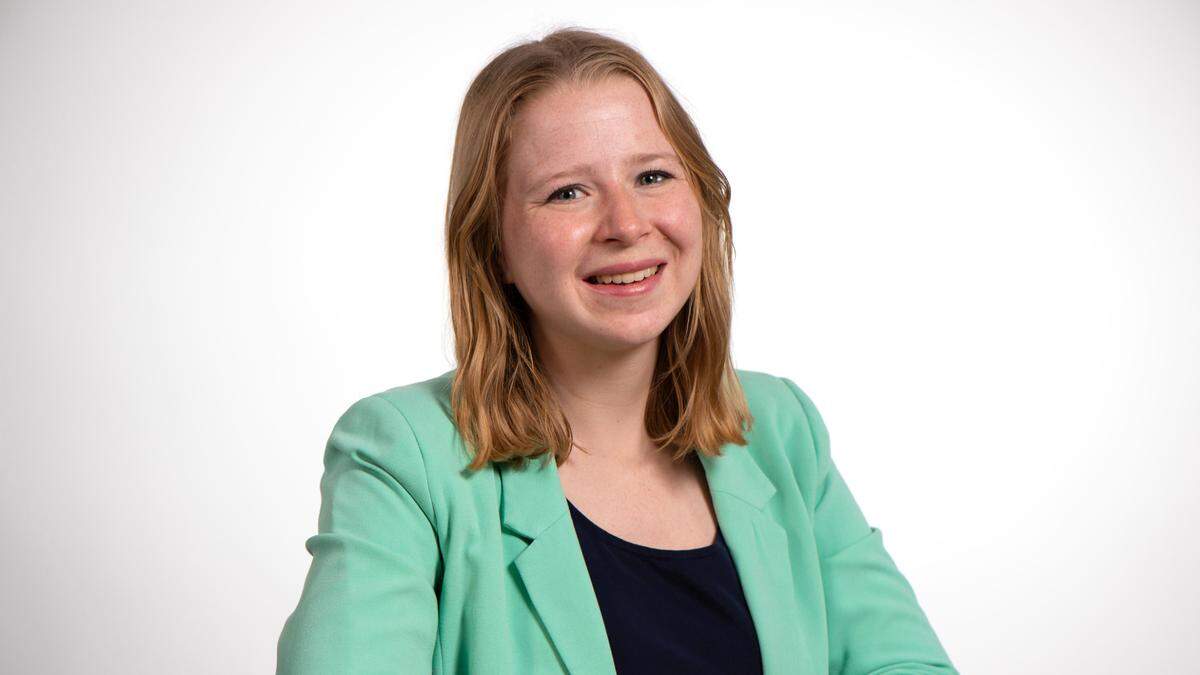
From Kansas GOP insider to first-time candidate, Adkins fights to reclaim Kansas 3rd
In January of 2009, the Kansas Republican Party party was a shambles.
Despite a 2-to-1 registration advantage, Democrats controlled the offices of governor, attorney general, treasurer and the 3rd Congressional District seat. The party was $150,000 in debt and facing an audit from the Federal Election Commission.
Within two years of Amanda Adkins taking over as chair in 2009, Republicans occupied every statewide office and congressional district in Kansas— including the 3rd district, which she now hopes to represent.
The Kansas GOP was helped by a mid-term backlash against then-President Barack Obama, which led to Republican victories nationwide. But those involved with the state party’s 2010 comeback credit Adkins with righting its finances and crafting a common message that enabled Kansas Republicans to capitalize.
It was an impressive turnaround, which kicked off eight years of Republican dominance in the state. Ten years later, Adkins faces an even more difficult challenge in her first campaign for office, against Democratic Rep. Sharice Davids.
After a successful run as a Republican operative and executive at Cerner, Adkins, 45, finds herself an underdog in a GOP-leaning district that has trended Democratic in recent elections.
In 2018, Davids unseated Rep. Kevin Yoder, one of the Republicans Adkins helped to elect in the party’s 2010 clean sweep. The freshman Democrat heads into the final weeks of the election with a 20-point lead, according to an internal GOP poll.
Election forecaster FiveThirtyEight gives Davids a 97 % chance of winning re-election as of Saturday. She enjoys a nearly 6-to-1 cash advantage over Adkins: roughly $2.5 million to $430,000 as of September 30.
The Johnson County Republican said she’s making up the shortfall with a stepped-up ground game.
While Davids has largely relied on digital and phone-based appeals because of the COVID-19 pandemic, Adkins has embraced more traditional in-person campaigning with some safety measures.
She sees this as a significant difference.
“In the ground war, she is completely absent on multiple fronts. I myself have shown up in person to multiple rallies with police officers, with parents, with teachers related to some of the issues they’re concerned in the midst of the crisis. Multiple times,” Adkins said.
“In addition, the Davids campaign is not walking door to door. The Adkins campaign is hitting thousands upon thousands of doors— of course with a mask on, backed away from the door— and we’ve had fantastic and just wonderful responses from people,” Adkins said. “Because people right now they want to talk and it does matter that you show up.”
Clean sweep campaign
Adkins grew up in St. Joseph, Missouri and planned to become a doctor after studying biology at the University of Kansas. Instead, her involvement with College Republicans at KU led a job as deputy finance director for Sam Brownback’s 1998 Senate campaign.
“To be blunt, it was somebody who I thought I would be working for down the road,” said George Stafford, Brownback’s former political director who hired Adkins. He was impressed by her ability to quickly digest data.
Six years later, Adkins managed Brownback’s 2004 Senate campaign. Six years after that, she led the party through the 2010 election when Brownback became governor.
Stafford considers 2010 to be Adkins’ masterpiece, recalling how she rebuilt a party apparatus that had disintegrated under her predecessor, Kris Kobach, because of distrust between the state GOP’s moderate and conservative wings.
“She went out here and talked to everybody and rebuilt it person by person. I remember talking to her and she’d be out there in western Kansas, southeast Kansas,” Stafford said.
The party’s message presented Republicans as a check on Obama’s power. Candidates toured the state with the slogan “the Kansas way, not the Obama way.”
Former Gov. Jeff Colyer, who attends St. Michael the Archangel in Leawood with Adkins, praised her for fixing the party’s “financial mess” and crafting a consistent message for candidates.
“I think she was very important for uniting the party and the way she did that was going and talking to everybody on some common themes,” said Colyer, elected lieutenant governor in 2010 on Brownback’s ticket. “She had a big impact.”
But Adkins’ 2010 triumph is being used against her as a candidate. Davids and national Democrats have hammered Adkins for her decades-long association with Brownback, who left the governorship in early 2018 with low approval ratings after a prolonged — and largely self-inflicted — budget crisis triggered by massive income tax cuts in 2012.
“Sam Brownback was her Sherpa. And now, he’s gone… She’s asking the existential questions, who am I?” said Chris Reeves, Kansas’ Democratic National Committeeman. “With Sam Brownback being unpopular in this district those are big questions and she doesn’t seem to have any answers.”
During this period Adkins chaired Brownback’s Children’s Cabinet, an advisory panel that oversees the state’s early childhood programs.
“She didn’t always win the budget fights, but she carried her weight a lot more than anybody else,” Colyer told The Star. “She got funding increases. She got programs that were more focused with results.”
Asked about Brownback, Adkins said it was during his Senate tenure that she reported directly to him. She praised his work in those years on human rights issues, which brought attention to the genocide in Darfur and abuses in North Korea.
She’s mostly sought to distance herself from Brownback’s time in Topeka. Last week, however, during an event in Kansas City, Kansas, she noted the irony of a Davids attack ad that featured a photo of her and the former governor as they swept the state in 2010
“I find that really humorous, because the one thing I want to remind her, this... was right just on the edge of the Republican Party in the state winning absolutely everything,” Adkins said.
In 2010, Kansas Republicans were able to run against Obama. Now, Adkins is a candidate in the only Kansas congressional district that went for Hillary Clinton in 2016 —with Republican President Donald Trump in the White House and on the ballot.
Asked if she would accept an endorsement if offered, Adkins voiced respect for the president but said she’s chosen to run a locally-focused campaign, not a national one.
House Minority Leader Kevin McCarthy, a California Republican, visited Kansas last week to campaign for GOP candidates in the 1st and 2nd District. He did not join Adkins in the 3rd, but said during a Topeka event he thinks the race is winnable.
National Republicans aren’t as hopeful. After investing heavily in the district two years ago, they have spent little money on Adkins.
“Sharice will win by double digits. I think Republicans know it. Republicans have bailed out,” Reeves said. “I think all Republicans are hoping is that the defeat isn’t so huge that it doesn’t help create the wave to carry (Senate Democratic nominee) Barbara Bollier and burn up their statehouse prospects.”
‘Daily life experience’
During the primary and general election campaign, Adkins has repeatedly pointed to her role as a mother, drawing a tacit contrast to GOP primary rival Sara Hart Weir and incumbent Davids.
“So many of the decisions that we make are really informed by being a parent. I myself know what it feels like to sit and discuss budget, future, providing a direction to my own children about the decisions they might make,” said Adkins, who has a 15-year-old son and 14-year-old daughter.
“That just daily life experience has been so important to everything I am in life that it really has fed into the campaign because one of the major themes in my race is building a successful path for kids.”
One Adkins spot focuses on the impoverished childhood of her mother, Grace Landes, who the ad says sold items from a wagon as a girl.
It doesn’t mention Adkins’ father, Alan Landes, the recently retired president of St. Joseph-based Herzog Construction, who steered more than $300,000 into a super PAC in support of her candidacy in the primary. A pair of blind trusts named for each of Adkins’ parents, which together equal $5 million in value, are Adkins’ biggest assets, according to her financial disclosure.
“My dad came from the farm in northwest Missouri and my mom came from poverty, complete poverty. They got a married at a young age. Had a great marriage, three kids. My dad came up through the business ranks. Building billions of dollars in business in the heavy construction industry,” Adkins said.
She credited her father with fostering her interest in politics.
“In my family, when we were young we would sit at the dinner table and we would talk about issues,” Adkins said, noting that she does the same thing with her own children.
Dick Flanigan, a senior vice president at Cerner, who has worked closely with Adkins, marveled at her ability to balance her children, her career and her civic activities.
“As a boss, sometimes you’re like, ‘She’s really busy. How’s she getting this all done?’ She was more than full time at Cerner and stayed organized to do all of her outside work and family stuff,” said Flanigan, who noted he’s a registered Democrat.
Since 2004 Adkins has held a series of high-level jobs at the health care IT giant, the Kansas City region’s largest employer. Before taking a leave of absence to campaign, she was vice president for strategic growth.
Adkins asserts that her experience in the health care industry makes her uniquely suited to the current moment, as the nation faces a dual health and economic crisis.
“I’ve worked across all 50 states. I’ve got perspective on other countries as well. What I know is health care is local, so plans and programs need to be focused at the community level,” Adkins said.
Flanigan said Adkins is adept at persuading potential clients and other executives of her view without being disagreeable, a quality that could serve her well on Capitol Hill.
“She has a very nice way of getting you to think broader about a position without telling you, you’re being narrow-minded,” he said.