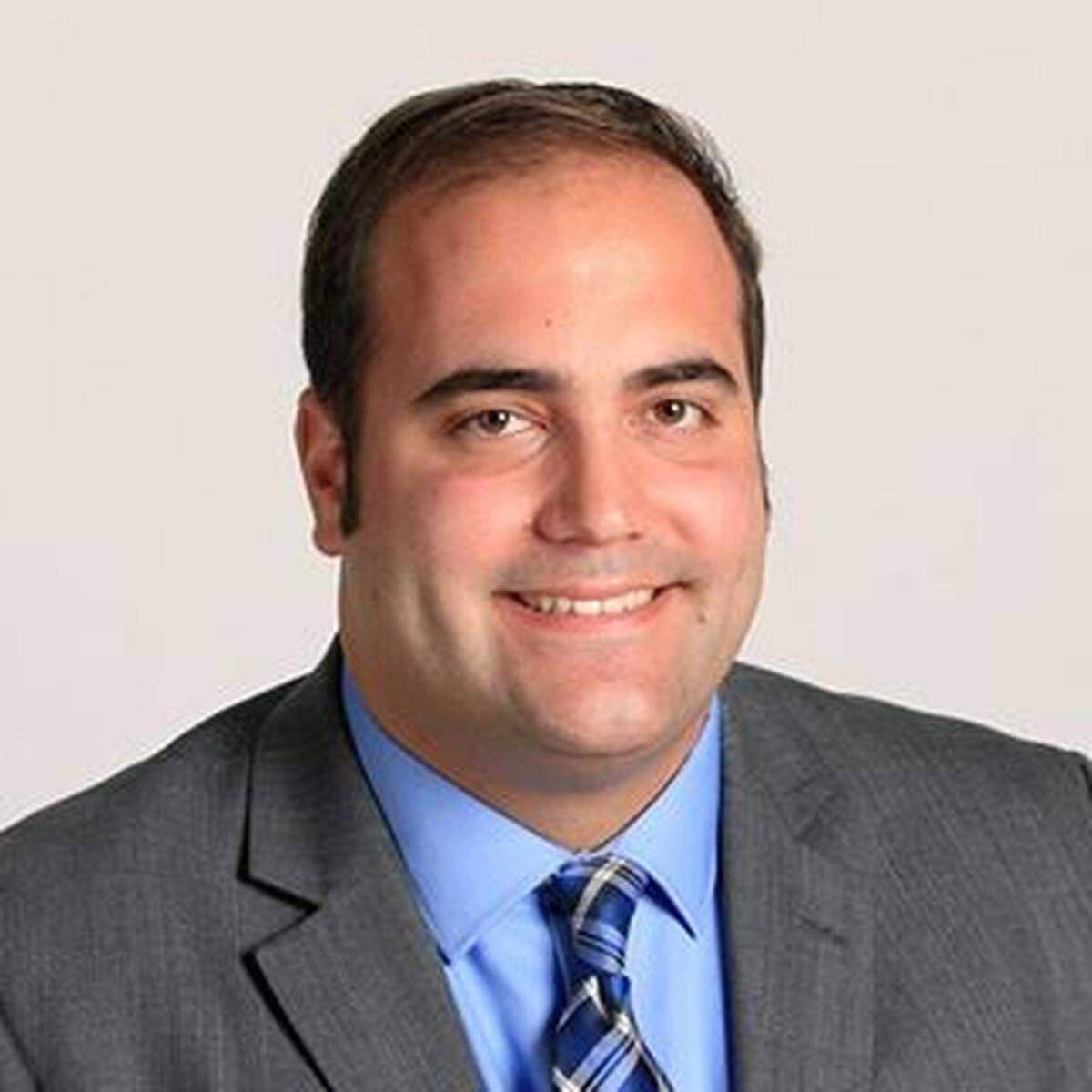
Nicole Galloway keeps ‘showing up’ in Kansas City. Will KC voters show up for her?
On August 5, the day after she became the Democratic nominee for Missouri governor, Nicole Galloway’s first stop was Laborers’ Union Local 264 in southeast Kansas City.
It was the first of six trips the state auditor has made to the Kansas City area since the primary, along with a string of virtual events focused on the region. Her visits to the area often include multiple stops in both the city and suburbs.
Galloway knows that if she has any path to the governor’s mansion it runs directly through Kansas City. She’ll need to maximize turnout in the city’s urban core and win the surrounding suburbs by a solid margin over Republican Gov. Mike Parson.
She will need to do the same in the St. Louis area as well as avoid a blowout in rural Missouri, where Republican dominance has intensified in recent elections.
Kansas City, Missouri’s largest city, is one of the most Democratic-leaning areas in the state. But its impact on statewide elections has been limited by a turnout rate that consistently trails the rest of the state.
Since 2000, Kansas City’s urban core has surpassed 60 % voter turnout only twice.
Both of those times Joe Biden was on the ballot. And both those times Democrat Jay Nixon was elected governor, in 2008 and 2012.
A Missouri Democratic Party analysis last year found that if statewide turnout in 2020 resembled 2016, statewide Democratic candidates would face a deficit of roughly 190,000 voters compared to Republicans.
The party set dual goals. It wanted to narrow the gap in rural areas — a long-standing challenge — and improve turnout in the urban Democratic areas that lag the state as a whole.
‘People who show up’
Galloway, a former Boone County treasurer and auditor since 2015, was better known in central Missouri than Kansas City when the campaign began. She’s been intentional about trying to build local ties, particularly in the African American community, said Rep. Emanuel Cleaver, D-Missouri.
“It’s been very noticeable on this end of the state,” said Cleaver, an eight-term congressman and the city’s first African American mayor.
“She has constantly reached out in Kansas City to clergy leaders, political leaders and community leaders and she has not in my estimation acted shy at all about her interest in securing the Black vote,” he said. “That’s always a part of it. People who show up generally can convince African Americans that they are interested in them. And she has been doing this since she declared her entry into the race.
“She called me up and said, ‘Hey, is there anything you think I need to be doing?’… which I appreciate because it shows that’s she’s not arrogant. Those kinds of subtleties don’t go unnoticed.”
Cleaver’s effusive praise for Galloway’s outreach contrasts sharply with his prickly criticism of Democratic Sen. Claire McCaskill and the state party in 2018 after her loss to Republican Josh Hawley. Cleaver said at the time that the state party had “concluded that they’re not going to listen to the stupid members of Congress” after he had raised concerns about the 2018 African American outreach strategy.
McCaskill rejected the criticism as unfounded because Kansas City’s 2018 turnout was larger than in other mid-term elections despite falling below the statewide average.
Rev. Vernon Howard, the chair of the Kansas City chapter of the Southern Christian Leadership Conference, agreed that Galloway has shown unusual engagement for a statewide candidate. While his organization does not endorse candidates, he said that Galloway has reached out to him about her policy platform.
“She has shared what her platform is and has made it clear that she favor the kinds of policies… that we believe are beneficial to advance of democracy in terms of protecting voter rights,” Howard said.
“Her campaign has communicated the significance of Medicaid expansion as a right to the citizens of Missouri. And she has articulated to be a champion of all of our Missourians, so I can say that about their outreach to us.”
On Oct. 1 Galloway toured Kansas City’s historic 18th and Vine neighborhood with lieutenant governor candidate Alissia Canady, a former Kansas City Council member who would be Missouri’s first statewide Black official if elected.
The stop featured a visit to a local barbershop, 180V Barber Salon, where she took questions from voters for 45 minutes, said Galloway’s campaign manager Chris Sloan. Conversations like these are key to the campaign’s outreach strategy.
“From the very outset of this race when the auditor jumped in it was making sure that we didn’t take anybody for granted and that we were being intentional about our outreach,” Sloan said. “After the killing of George Floyd… everything turned up a notch.”
Joseph “JoeyCuts” Thomas, the Kansas City barber whose shop Galloway visited, was impressed with his conversation with the candidate.
“She was talking to pretty much anybody who wanted to have a conversation. Anybody who wanted to talk. She wasn’t rushing the conversation. She was actually talking to us,” said Thomas, a former city council candidate who primarily talked to Galloway about the hardship businesses like his are facing because of the COVID-19 pandemic.
Will presidential race boost turnout?
Kansas City’s urban core has trailed behind statewide turnout for decades in both presidential and non-presidential years.
In 2016, Kansas City voters turned out at a rate of 57.8 % compared to 66.6 % statewide. Republican Donald Trump won the state by 19 points over Hillary Clinton, helping carry Republicans Eric Greitens and Roy Blunt to single digit victories in the race for governor and Senate.
Barack Obama’s historic election narrowed the turnout gap in 2008, when the city voted at a rate of 66.1 %, just 3.3 percentage points below the statewide turnout. Obama narrowly lost Missouri to Republican Sen. John McCain that year, while Democrat Nixon cruised to election as governor by double digits.
Biden, who served as Obama’s vice president, isn’t expected to win the state. But Democratic nominees for governor have run ahead of the party’s presidential nominee in recent elections.
There’s limited Missouri polling available, but most surveys conducted since September have given Trump and Parson single digit leads.
If Biden can keep the presidential race within single digits, as Obama did, and produce urban turnout closer to 2008 and 2012 levels than 2016, it’ll help Galloway as she tries to narrow the gap with Parson in rural Missouri.
Parson’s campaign declined to discuss internal deliberations when asked about the governor’s turnout strategy, but campaign manager Steele Shippy predicted that Parson’s message will resonate statewide.
“Governor Parson’s record and message has been consistent in every corner of Missouri. In Kansas City, like in St. Louis and Springfield, voters are concerned about rising violent crime and efforts to defund the police who protect their communities. Governor Parson is taking bold steps to address this,” Shippy said, leaning into the law and orders themes that Parson has made the focus of his campaign.
Kansas City Mayor Quinton Lucas said Parson has also been a regular presence in the city — the governor has made four official trips to the city since August— but Lucas said that he thinks Galloway is doing a better job listening to what voters want.
“I think Nicole understands that there’s a lot of Kansas Citians who are frustrated, who are frustrated by violent crime and solutions to it that don’t seem to be addressing it. The answer to violent crime is not taking away prosecutorial power from the St. Louis circuit attorney,” Lucas said.
Lucas wrote to Parson in July to request he call a special session to focus on gun violence after the murder of 4-year-old LeGend Taliferro in Kansas City.
The resulting session bogged down in a standoff between Parson and St. Louis Circuit Attorney Kim Gardner as the governor unsuccessfully pushed for legislation that would give Missouri Attorney General Eric Schmitt dual authority to prosecute crime in the city.
Battle for the suburbs
James Harris, a Jefferson City-based GOP strategist with ties to Parson, is skeptical that big turnout in Kansas City or St. Louis will be enough to help Galloway overcome Parson’s strength in rural counties.
“I think her model is trying to see if I can squeeze more votes out of Kansas City and St. Louis. The problem with that is unlike Texas, North Carolina and to some extent Georgia, Missouri is more of a rural –based population,” Harris said.
“I think for the governor, if you look at the (GOP Sen.) Josh Hawley model—Josh Hawley lost St. Louis by a larger percentage than other Republicans had, but he also won rural areas by a larger percentage. The tradeoff in the Trump era is there’s more votes coming from the out (state) 100 counties,” Harris said.
That doesn’t mean Parson can ignore the Kansas City area. Harris said Parson will need to compete in the traditionally GOP-leaning areas of the metro, Cass County, Platte County and eastern Jackson County.
Geoff Gerling, the executive director of the Jackson County Democratic Committee, said Galloway and down ballot Democrats are also putting concerted effort and resources toward winning in these traditionally GOP-leaning areas of the region.
“Eastern Jackson County, we flipped a (Missouri House) seat two years ago. We’re probably going to get at least one more in Lee’s Summit. We might get a Blues Spring (seat). That would’ve been unthinkable six years ago,” said Gerling, who has long advocated for the party to put its focus on turnout in the state’s population centers.
The August primary vote on Medicaid expansion, which passed with more than 53 % vote, provides a guide for the counties that Galloway needs to dominate in order to win statewide.
A majority of voters voted for expansion in the nine of state’s most populous voting jurisdictions— Kansas City, Jackson County, Platte County, Clay County, St. Louis city, St. Louis County, St. Charles County, Greene County and Boone County. Everywhere else, the ballot initiative lost.
Galloway supported expansion. Parson did not. Whoever wins the race will be charged with implementing the program, a point Galloway’s campaign is making as she campaign in these counties
“The truth is the voters in Clay and eastern Jackson are concerned about the same things. There’s a reason why they voted for Medicaid expansion,” Sloan said. “They want greater access to health care.”
This story was originally published October 12, 2020 at 5:00 AM.