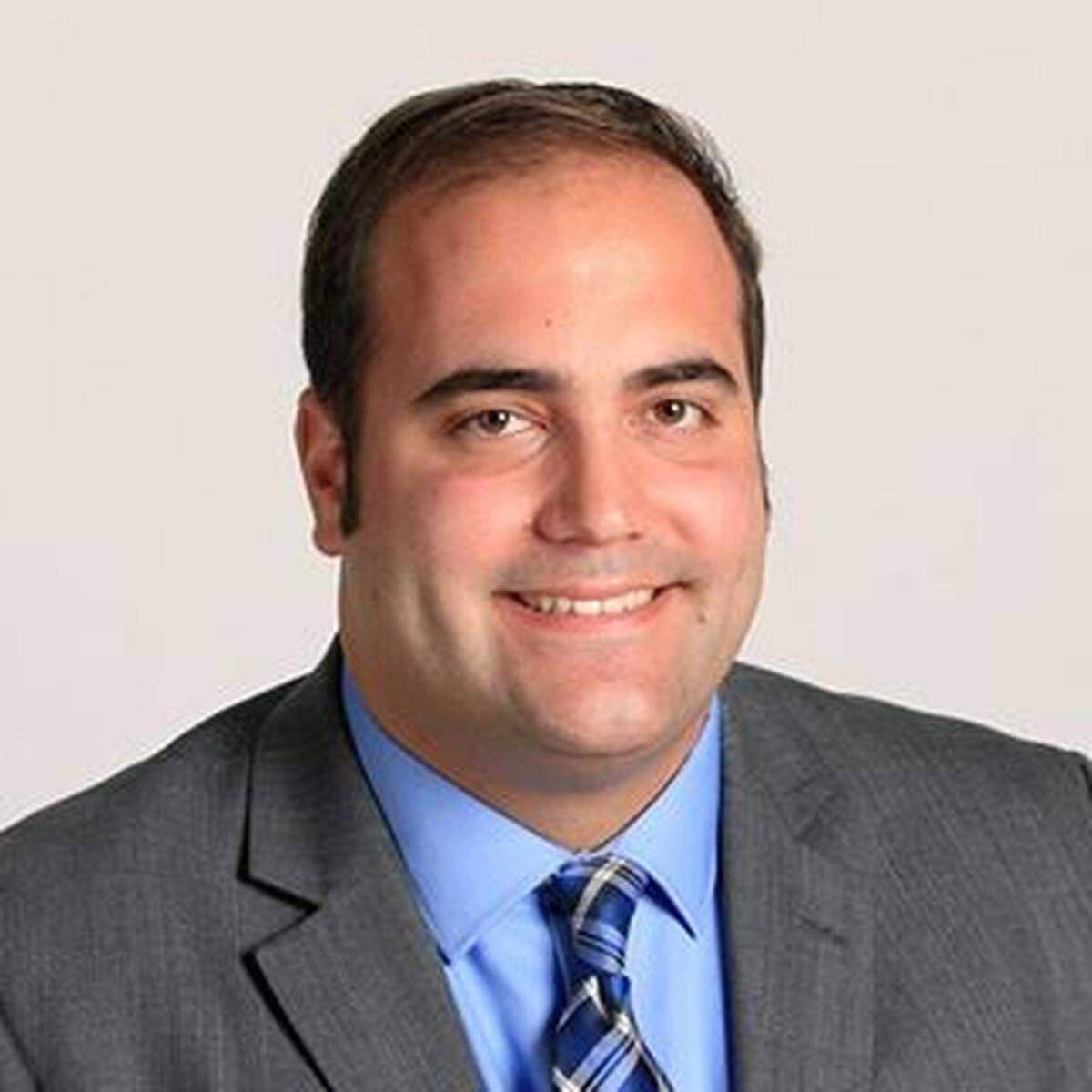
Missouri’s Hawley ensures abortion will figure in Supreme Court nomination fight
For months, Missouri Republican Sen. Josh Hawley has argued that the GOP has failed religious conservatives by allowing Supreme Court nominees to be confirmed without explicitly stating their opposition to the 1973 Roe v. Wade decision.
Now, as a member of the Judiciary Committee, Hawley will have a seat at the table in what is expected to be the biggest judicial nomination battle in memory, the vetting of President Donald Trump’s nominee to replace Justice Ruth Bader Ginsburg, the liberal icon who passed away last week.
The nationally televised confirmation hearings, which will take place just days before the Nov. 3 presidential election if Trump names his nominee this week, will give Hawley a major platform to present his vision for the judicial branch.
“For years Republican senators have promised that they would confirm pro-Constitution, pro-life justices to that bench. Now it’s time to do it,” Hawley said Monday in a preview of his argument on Fox and Friends. “No more stealth nominees. No more secret moderates. We need a strong, tough conservative, someone who understands that Roe, for instance, was wrongly decided,” Hawley said.
It’s a moment he’s been building toward for several years.
A first-term Missouri Republican who clerked for Chief Justice John Roberts early in his career, Hawley was laser-focused on judicial selection during his 2018 campaign.
He cited Missouri Democratic Sen. Claire McCaskill’s vote against Justice Neil Gorsuch as one of his main reasons for entering the race less than two years into his tenure as state attorney general. He then used the furor over Justice Brett Kavanaugh’s bitter confirmation hearings to galvanize voters in the campaign’s final stretch.
After the court ruled 6-3 in June that businesses could not fire LGBT workers based on their sexual orientation or gender identity, Hawley took to the Senate floor to castigate the court’s majority, including Roberts and Gorsuch.
Hawley didn’t refer directly to the gay or transgender communities in the speech. Instead, he called out the conservative legal movement, arguing that it had betrayed religious conservatives who expected that new judges would strictly adhere to their values.
He called for the movement to radically rethink the way it vets judges.
“It represents the end of the conservative legal movement or the conservative legal project as we know it,” Hawley said of the historic ruling.
He argued that conservative legal concepts of textualism and originalism “don’t mean much at all” if they can result in “an outcome that fundamentally changes the scope and meaning and application of statutory law.”
A month later, Hawley was on the floor again following a 5-4 decision striking down a Louisiana abortion restriction. He vowed he would only support judges “who have explicitly acknowledged that Roe v. Wade was wrongly decided.”
With these two speeches, Hawley is asking conservatives to prioritize long-sought policy outcomes rather than overarching constitutional philosophies in judicial selections. It would mean imposing the type of litmus tests that conservatives have traditionally avoided.
The right question to ask?
A day after Ginsburg’s death, Hawley was on Twitter reasserting his pledge and calling “on my fellow Republican senators to take the same stand.”
Hawley’s demand for explicit opposition to Roe promises to elevate the issue of abortion in hearings that will be closely watched by activists on both sides.
But not all conservative Republicans agree with his approach.
“I don’t believe that’s the right question to ask,” Texas Republican Sen. Ted Cruz told ABC’s George Stephanopoulos Sunday when asked about Hawley’s tweet.
Cruz, also a member of the Senate Judiciary Committee, said it’s better to focus on a nominee’s record.
“You look for a proven record of has this individual stood up for the Constitution, defended free speech, defended religious liberty, defended the second amendment, and have they suffered the slings and arrows? Has the press criticized them? Has the press attacked them, and have they stood strong?” he said.
Hawley’s office didn’t respond Monday to a question regarding Cruz’ comments.
Terry Schilling, the executive director of the American Principles Project, said forcing a nominee to take an explicit position on Roe could make it more difficult to ensure the 51-vote majority needed for confirmation.
Four Republicans have the power to block the nominee if they join Democrats in voting “no.”
“Democrats always ask if a nominee is planning to overturn Roe. And it’s a trap,” said Schilling, who described his organization as equivalent to the National Rifle Association for pro-family policy.
“We have a lot of weak-kneed senators, who are Republicans but they might be turned off… It might be too aggressive to demand that they say they will overturn Roe in the nomination process. You risk losing that fourth senator. And if you fumble the ball here, it’s over.”
Moderate Republican Sens. Lisa Murkowski of Alaska and Susan Collins of Maine have already said they don’t support confirming a nominee before the election, which gives Senate Republicans little margin for other defections.
Despite these concerns, Schilling said he believes Hawley will be an asset during the confirmation process and praised him “making us rethink the role of the judiciary” with a greater emphasis toward policy outcomes.
Planned Parenthood Action Fund said Hawley’s “comments demonstrate just how out of out of touch anti-abortion politicians are.”
Anisha Singh, the organization’s director of judiciary and democracy affairs, pointed to a 2019 poll from NPR, PBS and Marist College that found 77 % of Americans want Roe v. Wade upheld.
Singh said Roe “is the floor, not the ceiling in the fight to protect abortion access.”
But Hawley’s demand for explicit Roe opposition has won admiration from hardline social conservative groups.
“I think Sen. Hawley rightly calls attention the need to be firm on a key social issue when it comes to the originalist approach from a justice and the ability to withstand and defend that approach under pressure,” said Travis Webber, vice president for policy and government affairs at the Family Research Council.
Earlier this month, Trump added Hawley, Cruz and Arkansas Republican Sen. Tom Cotton on a list of potential nominees to the court before Ginsburg’s death. All three senators are among the Republicans widely anticipated to pursue the presidency in 2024.
Hawley said he’s uninterested in a position on the court.
Hawley argued in his Fox and Friends appearance that the 2018 Senate elections in which Republicans expanded their majority had been a referendum on the Supreme Court.
His campaign manager told The Star in 2018 that he knew the Republican would win the Missouri race when the crowd at a Springfield rally began chanting, “Kavanaugh! Kavanaugh!” a little more than a month before the election.
An unlikely ‘no’ vote
While Hawley made confirming Trump’s judicial nominees a focus of his 2018 campaign, he hasn’t been a rubber stamp on them. He’s grilled several of Trump’s nominees on abortion and other social issues.
In 2019, for example, Trump’s nominee for federal district court vacancy in Michigan withdrew after Hawley accused him of anti-Catholic bigotry based on his role as an attorney defending a municipal anti-discrimination statute.
It’s unlikely that Hawley would vote against Trump’s nominee to the Supreme Court, but he may require that person to come out more strongly against abortion than Republicans would want during previous confirmation battles.
Hawley appeared to slightly soften the wording of his demand when talking to reporters Monday, saying he wants evidence in the nominee’s record rather than a specific comment.
“I want to see some sort of evidence in the record, by which I mean in public, that they understand the significance of Roe, and that they understand that Roe was wrongly decided, so I haven’t put forward a magic words test,” Hawley said, according to the Senate press pool.
“But what I don’t want and what I’m not content with is private assurances.”
Hawley told the Senate press pool Monday that Amy Coney Barrett, a federal appeals judge from Indiana on the U.S. Court of Appeals for the 7th Circuit, “certainly would meet that standard. I don’t think there’s much doubt about that.”
Coney Barrett, a Catholic who previously taught law at Notre Dame University, said in 2013 that she believes life begins at conception, according to a 2013 article from Notre Dame Magazine, which paraphrased Coney Barrett on this point.
But while these and other statements suggest Coney Barrett would be open to overturning Roe, Schilling emphasized that she hasn’t explicitly said that’s how she would rule.
During her 2017 confirmation process, Coney Barrett faced questions from California Democratic Sen. Dianne Feinstein on whether her Catholic faith would influence rulings, citing an article in which she Coney Barrett said that Catholic judges should “conform their own behavior to the Church’s standard.”
But in her response to Feinstein, Coney Barrett emphasized the distinction between a judge’s personal moral code and the law.
“That passage makes clear the distinction between a judge’s official duty of resolving cases, in which the judge’s personal moral code can have no role, and the judge’s personal life, in which it should. The sentence you quote indicates that judges should live their own lives, as people, consistently with their own moral code. I would think that is something all judges — indeed, all people — seek to do,” Coney Barrett said.
This story was originally published September 21, 2020 at 5:33 PM.