Kansas put foster children’s health and safety at risk in group homes, audit says
Kansas put children’s health and safety at risk by failing to provide adequate oversight of group homes for youth in foster care, an inspector general’s investigation has found.
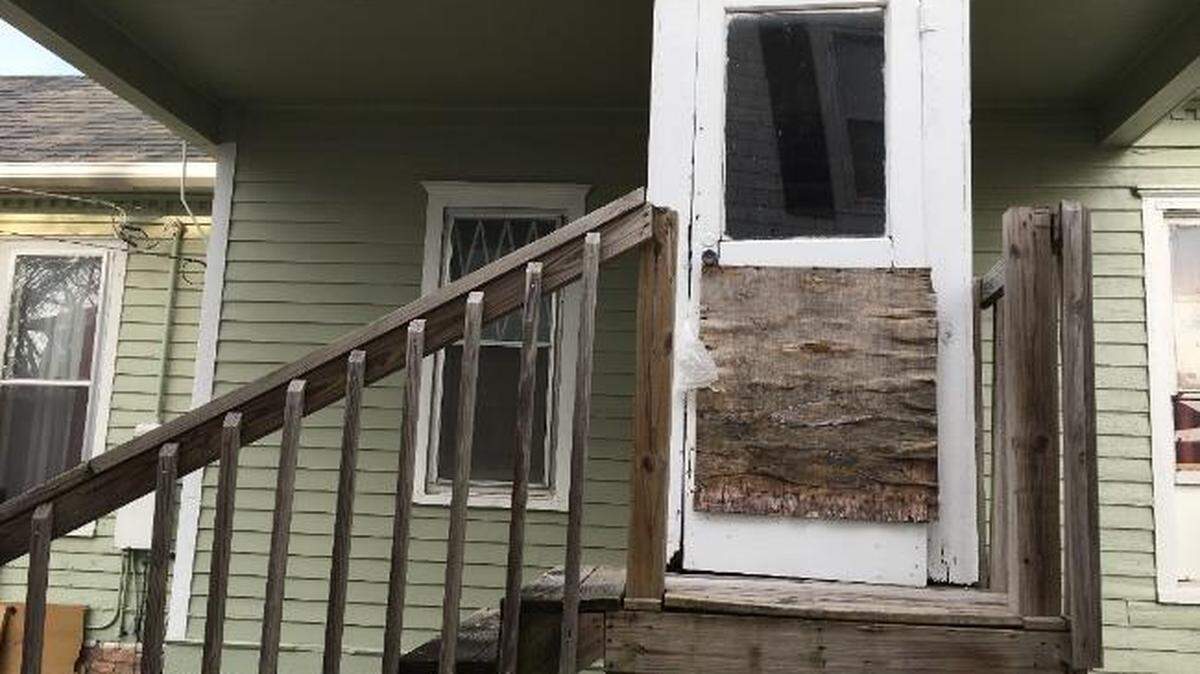
In a 60-page report released Thursday that includes photos of rodent droppings, mold and mildew, tattered furniture, broken and boarded up windows and hazardous debris, the government watchdog agency said the Department for Children and Families did not ensure that all foster care group homes complied with state licensing requirements in accordance with federal laws and regulations.
More than three-fourths of the 31 group homes inspected did not comply with state environmental requirements, the audit found, and 29 failed to comply with background check requirements for some employees.
The investigation also found that one of the group homes was housing both male and female children when it was licensed only for females, yet the state had allowed it to continue operating.
The head of the Kansas Department for Children and Families disputed some of the audit’s findings but said the agency is working hard to improve the way it monitors group homes.
“The Kansas Department for Children and Families is committed to providing comprehensive monitoring and oversight of group home facilities,” DCF Secretary Laura Howard said Thursday in a statement to The Star. “While I do not agree with all the audit teams’ conclusions, we have taken several steps to correct deficiencies identified during the previous administration.
“The health, safety and welfare of children is the paramount goal of our agency. The audit demonstrates that we must remain vigilant as we monitor these facilities. My agency will continue to work with federal and state partners to regulate and provide guidance and oversight to ensure children who require out of home care are placed in safe and stable environments.”
Howard said her administration has made several improvements to ensure better monitoring of group homes.
In February, she said, a Group Home Program Manager position was added to the Licensing Division to assist in providing additional oversight. Also that month, she said, the Licensing Division completed compliance visits to each of the group homes listed in the audit to ensure corrections were made. And in March, Howard said, all licensing staff received training from the State Fire Marshal’s Office.
The audit was conducted by the Office of Inspector General for the U.S. Department of Health and Human Services. The Children’s Bureau within HHS’ Administration for Children and Families administers the Federal Foster Care Program, which awards grants to states to help provide safe foster care placements. In Kansas, the program is administered by DCF. For the state fiscal year 2017, the report said, Kansas received more than $18.6 million in federal reimbursement for foster care under the program.
The audit was conducted, the report said, because Congress had expressed concerns about the safety and well-being of children in foster care and because recent audits of state-monitored child-care facilities in some states found that the majority had problems complying with health and safety requirements.
“To determine whether similar vulnerabilities exist in foster care group homes,” the report said, “we performed this audit in Kansas.”
The report also noted that allegations of abuse and neglect at some foster care group homes were the subject of numerous reports in the media — including The Star — before and during the inspector general’s investigation.
In conducting the audit, investigators visited all of the 31 foster care group homes in Kansas that were licensed to house between five and 24 foster children. The visits took place between April 16, 2018, and April 5, 2019. Investigators also reviewed completion dates of background checks on group home employees who were allowed to have unsupervised contact with children in foster care.
Problems were discovered in three areas, the report said.
Environmental deficiencies
Twenty-four of the 31 group homes inspected did not comply with the environmental requirements in the state regulations, according to the report.
The report noted deficiencies in the homes that included holes in walls and doors, rodent droppings near dishes and below the kitchen sink, missing dresser drawers, boards with protruding nails, a porch propped up by cinder blocks, damaged roofs and siding and neglected playgrounds.
Among the dozens of photos is one of a deck that is missing a railing at a height five steps from the ground. Another shows a load-supporting column held up by a wooden block. And one is of a porch cluttered with empty paint cans, an upside-down table, a pile of trash and a broken window.
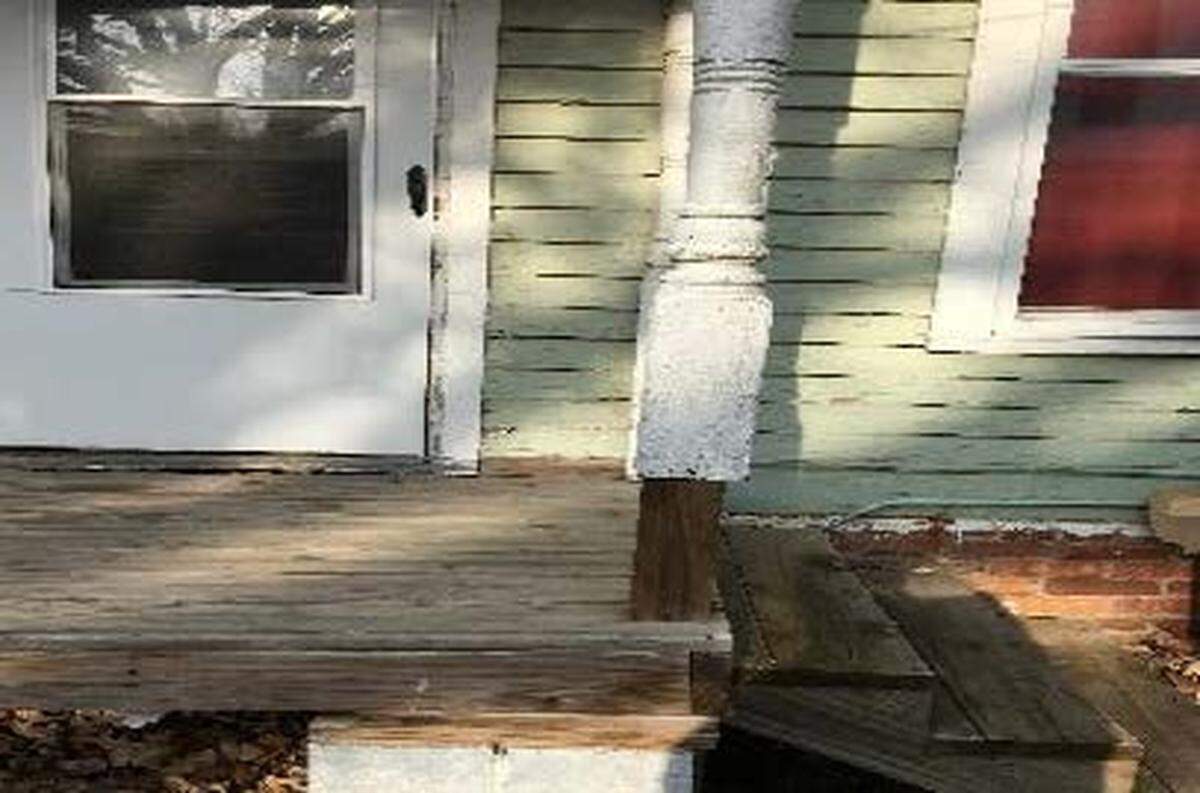
Some of those deficiencies, which indicated “an extended period of substandard maintenance,” appeared in the interior and exterior of a group home inspected in April 2019, the report said.
“We found that within this group home, the children’s living quarters had a gas heater that was hooked up with an exposed natural gas line that ran through a foster child’s room, an electric heater that was plugged in next to another child’s bed, and old, exposed electrical wiring,” it said. “The exposed natural gas lines in a child’s bedroom and the placement of a portable heater next to a child’s bed constituted serious hazards to the children’s health and safety.”
.jpg "kansas03 (1).jpg")
The home’s exterior had significant maintenance issues as well, the report said, “many of which posed serious risks to both children and adults at this facility.”
“Decks appeared to be failing and porches were propped up in a makeshift fashion,” it said. “Trash and debris were strewn around.”
Although the state routinely conducted inspections of the group homes, the report said, “Many of the issues we identified appeared to have been present for significant periods of time.” Moreover, it said, “the homes were generally allowed to maintain operations without making needed repairs.”
“Because the State agency did not ensure that group homes complied with state environmental requirements, the health and safety of the children residing in them were at risk.”
Howard disputed the finding.
“DCF Licensing performs regulatory oversight by annual and complaint site visits,” she wrote in her response to the audit. “Any areas of non-compliance are noted in writing and the facility must address by submitting written and pictorial evidence of corrections.”
Some of the photos auditors took, Howard said, depicted things that weren’t part of the group home property.
“Photographic evidence taken by auditors indicating environmental non-compliance give a snapshot in time,” Howard wrote. “Auditors did not review corrective action plans, were not aware of corrections made by facilities, and did not consider circumstances that would account for some items noted. In some cases, photographs taken were not related to the facility itself.”
Howard told The Star on Thursday that “in February 2020, Licensing completed compliance visits to each of the facilities listed in the report to ensure corrections were made and facilities were in compliance.”
Background checks
Of the 31 foster care group homes inspected, the report said, 29 either failed to comply or could not provide documentation of compliance with the required background check for employees.
Some group homes had no documentation that the background check forms had been completed, the report said. In other cases, it said, forms had been submitted to the state but had no dates on them, and eight group homes had background check request forms that were more than a year old.
“Because foster care group homes did not obtain the required background record checks on all employees who had access to children, the health and safety of the children in these homes may have been placed at risk,” the report said.
Howard disagreed with that finding, saying in her response to auditors that investigators did not fully review DCF’s background check procedures. She said DCF had implemented a process to perform a monthly reconciliation of the employee listings in the agency’s database with those maintained by the foster care group homes in order to rectify any discrepancies and ensure that all employees have timely background checks completed.
Howard said DCF now also requires each new group home employee to have a completed background check before starting work.
Population, capacity concerns
One foster care group home failed to comply with state licensing requirements regarding capacity and population, the report said.
The home, according to the report, was housing five males between the ages of 14 and 18 and four females between the ages of 14 and 17 but was licensed to house only females 12 and older.
The report said an inspector for the state had noted the violation during a visit but DCF allowed the group home to continue operating and did not require it to submit a request for an amended license allowing it to also house males.
“Because the State agency did not ensure that group homes complied with State licensing requirements, the health and safety of the children residing in the homes were potentially at risk,” the report said.
The report also noted that allegations of improprieties at the group home were reported to DCF in late 2017 and an investigation substantiated some of the allegations.
“We conducted our site visit on April 18, 2018, and noted that the group home was out of compliance with respect to the population of children it housed,” the report said.
Howard concurred in her response to the report that the home was out of compliance. She said it lost its license and was closed in early 2019.
The report made five recommendations for DCF as a result of the audit:
▪ Follow up with the group homes to confirm that all maintenance deficiencies identified in the audit were corrected.
▪ Improve controls to make sure group homes are in compliance with state licensing requirements related to the health and safety of the residents.
▪ Ensure that corrective action is taken when noncompliance is found during group home inspections.
▪ Improve controls over the background check procedure to make sure all are submitted in a timely manner and proof of completion is recorded.
▪ Properly monitor group homes to ensure they are in compliance with age and gender requirements their license agreement calls for.
In her response to auditors, Howard said DCF agreed with the recommendations, noting that they “are part of the standard regulatory process that is our practice.”
This story was originally published July 30, 2020 at 5:00 AM.