Investigation of medical marijuana roll out expands to Missouri governor’s office
A legislative investigation into the roll out of Missouri’s medical marijuana program has resumed, with the inquiry for the first time expanding into Gov. Mike Parson’s inner circle.
The Missouri House Special Committee on Government Oversight on Thursday sent a letter to the Department of Health and Senior Services (DHSS) demanding it turn over a trove of records documenting interactions with industry insiders and detailing how key decisions were made.
The committee is also seeking records involving the governor’s deputy chief of staff, chief operating officer and a lobbyist who is Parson’s longtime adviser and has been under FBI scrutiny for months.
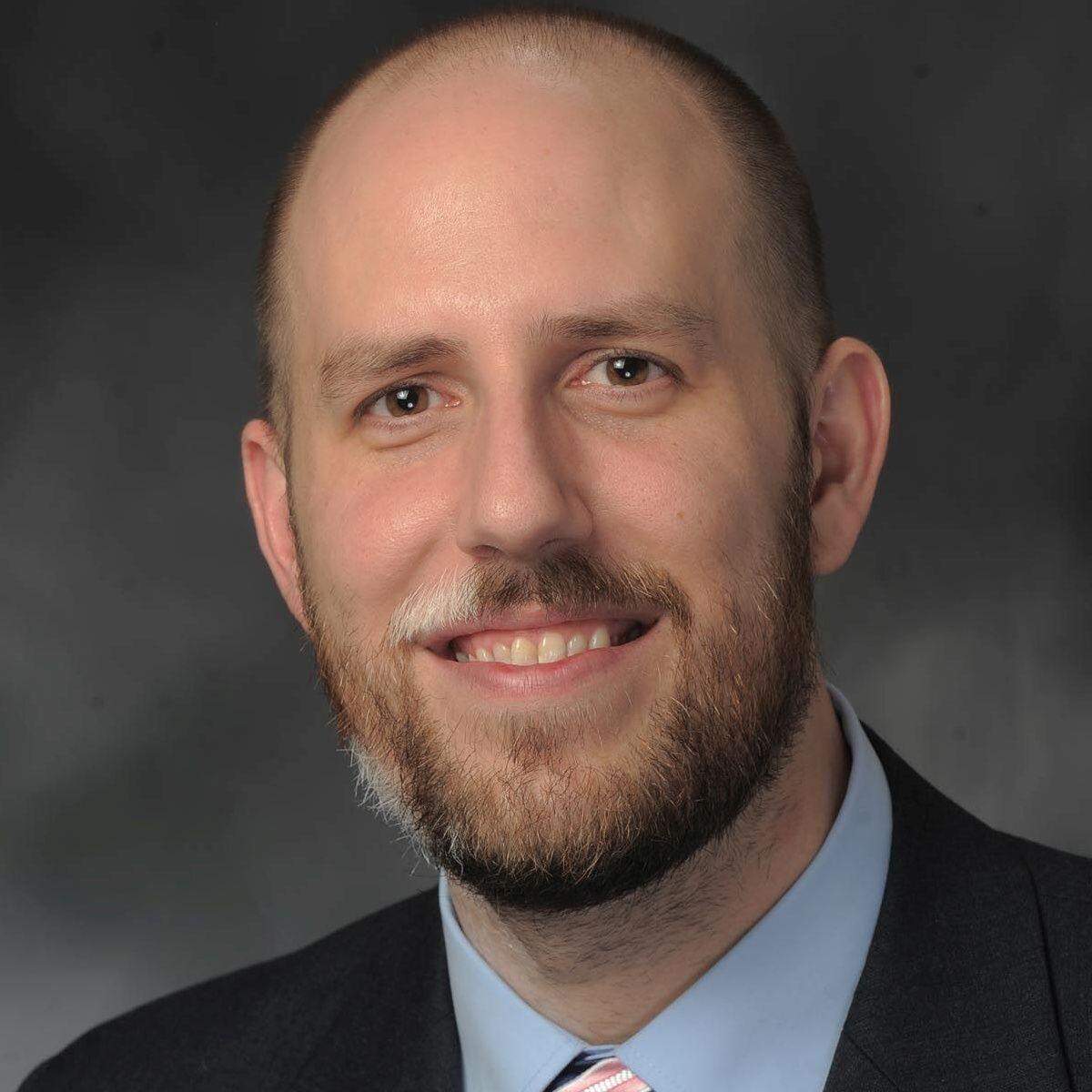
In a letter to DHSS Thursday signed by every member of the committee — six Republicans and three Democrats — state Rep. Robert Ross wrote that the records request stemmed from “too many unanswered questions” by DHSS officials during the a series of public hearings earlier this year.
The committee had paused its inquiry and held off on requesting records from the department because of the COVID-19 outbreak, Ross wrote. The investigation resumed, Ross wrote, because of DHSS Director Randall Williams’ recent comments that medical marijuana staff have continued their work and dispensaries are on track to open this summer.
“I believe our committee is in a position to resume its work to educate Missourians on the questionable implementation by DHSS of the legalization of medical marijuana,” wrote Ross, a Texas County Republican and chairman of the Missouri House Special Committee on Government Oversight.
Along with the records request, Ross also provided the committee with a copy of a whistle-blower complaint he received in March from someone purporting to be a DHSS employee.
The unsigned letter accuses DHSS officials of lying to legislators during public testimony earlier this year and questions the qualifications and salaries of those running the program.
“Marijuana has been a cluster from day one,” the letter says.
The state Auditor’s Office confirmed to The Star that over the last year it has received two whistleblower complaints specific to the operations and the application process of the medical marijuana program.
“After review by our public corruption and fraud division, information was referred to law enforcement,” said Steph Deidrick, spokeswoman for Democratic state Auditor Nicole Galloway. She would not provide any further details, citing whistleblower protection laws.
The Star reported in March that DHSS was served with a subpoena from a federal grand jury late last year seeking information about four medical marijuana applicants. At the request of the FBI, the identity of the applicants was redacted from the copy of the subpoena obtained by The Star. The FBI said “it would be harmful to our investigation should these subjects be notified in any way of this request.”
A spokeswoman for the governor’s office did not immediately respond to a request for comment.
Lisa Cox, spokeswoman for DHSS, previously told The Star that to the department’s knowledge no one from DHSS has been contacted by the FBI this year. She did immediately not respond to a request Thursday for comment about the records request.
Alleged conflicts
The Missouri House launched its inquiry into the medical marijuana program in February.
At the heart of the investigation has been widespread reports of irregularities in how license applications were scored, as well as allegations that conflicts of interest within DHSS and a private company hired to score applications may have tainted the process.
Among the records requested Monday were any documentation of meetings or communication between top DHSS staff and individuals associated with the Missouri Medical Cannabis Trade Association, an industry group whose members have been awarded dozens of licenses to grow, transport and sell marijuana.
The committee also asked for records documenting meetings or communications with a company called BeLeaf Medical LLC.
Out of more than 800 appeals filed by companies challenging the state’s decisions on marijuana licenses, BeLeaf Medical is one of only two DHSS has agreed to settle so far.
The lobbyist for both the trade association and BeLeaf Medical is Steve Tilley.
Tilley has been a friend and political adviser to Gov. Parson dating back to when the two served together in the Missouri House more than a decade ago. And over the years, he has been a major fundraiser for Parson, culminating in 2019 when roughly $1 million raised by the pro-Parson “Uniting Missouri PAC” was connected to Tilley.
Since Parson was sworn into office in June 2018, Tilley’s lists of lobbying clients has more than tripled.
The FBI has spoken to a handful of lawmakers, lobbyists and statehouse staff since the start of the Missouri legislative session in January — with questions centering on Tilley’s ties to medical marijuana companies and to Parson’s administration.
Tilley has also been a central figure in FBI questions focused on a pair of questionable utility contracts in Independence. In March, FBI agents sought records from Independence City Hall about one of those contracts that went to a longtime associate of Tilley despite being twice the cost of the other bidder.
Neither Tilley nor a spokesman for the trade association could be immediately reached for comment.
Lawmakers also requested emails and other records between DHSS officials and Parson’s deputy chief of staff, Robert Knodell, regarding the hiring of Lyndall Fraker as the state’s medical marijuana czar.
Testimony to the committee earlier this year made it clear Knodell played a pivotal role in Fraker’s hire. Republican and Democratic lawmakers have publicly questioned Fraker’s competence and qualifications to run the department.
Fraker, a former state legislator who worked for 17 years as a Walmart manager, punched back by accusing those who have questioned his job performance of doing the bidding of campaign donors who were denied a license.
Also among the requested records are emails regarding Drew Erdmann, Parson’s chief operating officer.
Erdmann is a former executive with the New York-based consulting firm McKinsey & Co. who was hired by former Gov. Eric Greitens to assume the newly created position of state COO in 2017.
Lawmakers are seeking information on what role he may have played in the decision to hire a British consulting firm named Deloitte to assist DHSS in the early stages of the medical marijuana program’s roll out.
In 2018, lawmakers questioned Erdmann’s connection to $4 million worth of consulting contracts awarded to companies by the state without going through the standard competitive bidding process. One was awarded to McKinsey & Co. despite its bid being higher than the combined total of three other bidders.
Lack of candor
Much of the controversy around the medical marijuana program centers on the private company hired by DHSS to score the applications.
The company, Wise Health Solutions, is a joint venture of Nevada-based Veracious Investigative & Compliance Solutions and Oaksterdam University, an unaccredited California institution that offers courses of study on the cannabis industry.
Questions have swirled over whether those connected to company had ties to applicants that could have skewed the process, allegations the company has fiercely denied. Scoring inconsistencies helped fuel concerns about the company’s work — and made up the lion’s share of complaints in the more than 800 appeals of denied licenses.
Lawmakers are seeking records about how DHSS decided to rely on a private company to score bids, as well as how Wise Health Solutions won the contract.
They are also seeking records on several rule changes DHSS enacted throughout the application process that have drawn the ire of many license seekers.
For example, shortly before the final rules for applying were finalized DHSS announced it was granting bonus points for applicants who located their operations in areas of high unemployment. The change came after many applicants had already purchased property, drawn up plans and paid fees to the state.
More recently the department modified its rules to allow companies who were awarded a license to change locations or ownership. That rule change partially inspired a lawsuit by a southwest Missouri family that saw its application to grow medical marijuana rejected by the state.
The lawsuit, filed last week in Cole County Court, asks a judge to block the transfer of any medical marijuana license or location change until all appeals are finalized. Joseph Bednar, the attorney representing the family, said it appears “straw applicants” won licenses with “no intention of actually going into business.”
“People are out selling their licenses,” he said. “No one should profit because of their lack of candor in the application.”
Ross, the oversight committee chairman, wrote that DHSS has been justifiably focused over the last few weeks on mitigating the spread of COVID-19. The committee did not want to distract from that effort, so the legislative investigation was put on hold.
But Williams said last week that dispensaries will likely still theoretically open in “late July, early August.” Since the medical marijuana program’s work continues unabated, Ross wrote, “the committee felt a request for documents could also be satisfied.”
“Instead of calling more witnesses who could not or would not answer questions or who would provide questionable answers because of their obvious conflict of interest,” Ross wrote, “the committee agreed that a request for documents were required to ask the right questions for future hearings.”
This story was originally published May 7, 2020 at 11:32 AM.