Abortion opponents’ newest weapon in the battle to shut down clinics? Coronavirus
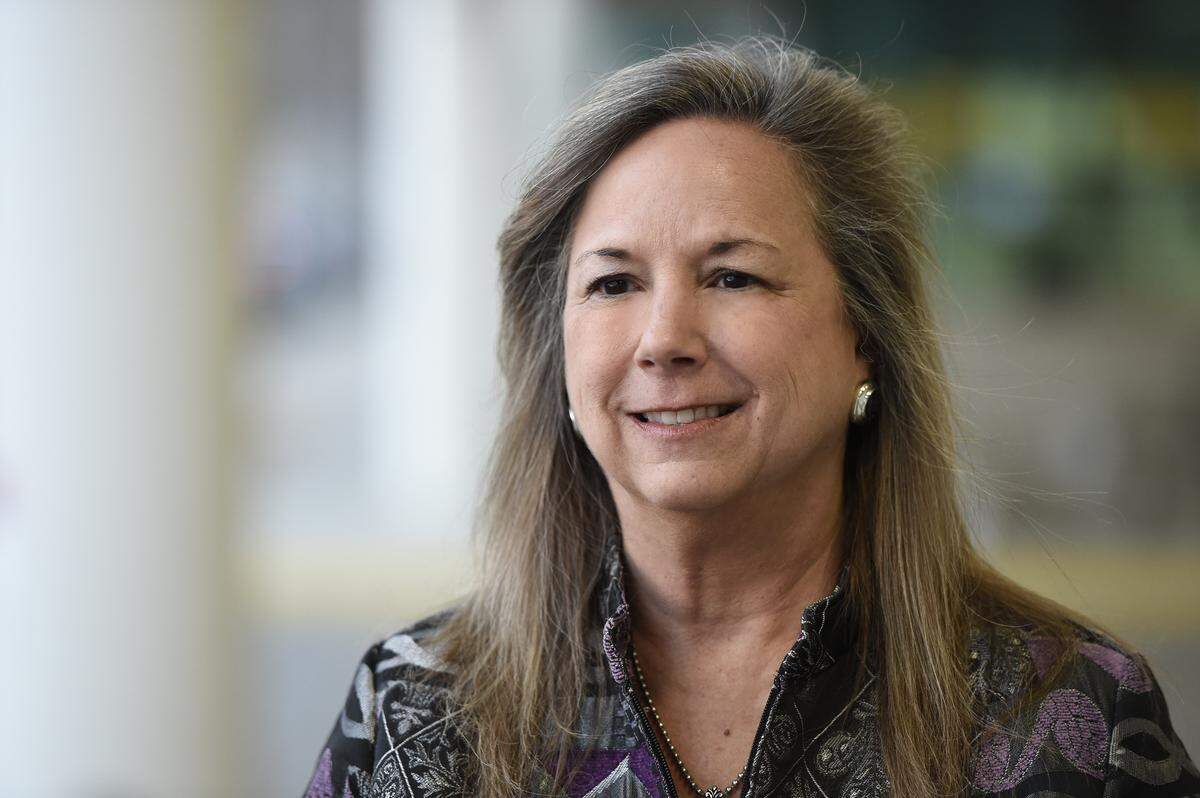
Julie Burkhart thought she’d seen it all in the decades-long battle to shut down abortion clinics.
Stricter laws. Clinic protests and blockades. “Wanted” posters naming doctors and staff. Vandalism, arson and bombings. Even murder.
But now, Burkhart and other clinic operators across the country say they’re confronting the latest weapon in the ongoing war on abortion: the coronavirus.
With most of the U.S. under some kind of stay-at-home order in an attempt to stem the spread of COVID-19, some states have classified abortion procedures as “non-urgent” or not “immediately medically necessary,” which has in effect brought them to a halt.
“This takes the cake. It came totally out of left field,” said Burkhart, who operates clinics in Wichita and Oklahoma City. “Who would use a pandemic as an opportunity to ban abortion?
“This is nothing more than a political tool they are using in order to cut off access to abortion.”
But abortion opponents say the action is needed to preserve personal protective equipment that is in short supply during the pandemic and expand hospitals’ capacity to provide critical care. They also argue that allowing abortion clinics to remain open puts people’s lives in danger because patients are traveling from place to place, potentially passing the virus to others.
“Now, the risk is becoming more urgent,” said Troy Newman, president of Operation Rescue, a Wichita-based anti-abortion group, in a fundraising email sent Friday to supporters. “When some states declare abortion clinics must close, and others allow them to operate, it only encourages patients seeking an abortion to travel across state lines, thus spreading the coronavirus and ignoring all warnings by officials to practice social distancing.
“In the midst of a worldwide viral pandemic, they’re risking the lives of many fellow citizens in the communities they’re entering — maybe even including yours!”
Burkhart said patients wouldn’t have to travel across state lines if abortion foes would leave them alone.
“They have created a reproductive health care crisis within the crisis we face right now, which is a pandemic,” she said. “If these folks did care about life, which includes the life of the woman who’s carrying the baby, they would allow all of these clinics to stay open so people could stay close to their home while accessing essential health care.”
The action is a violation of patients’ rights, she said, and during a public health crisis the consequences are even more dire.
“Women must already navigate the existing barriers and obstacles to abortion access — transportation, child care, lodging,” she said. “Let’s not put another barrier in front of them during these uncertain times.”
Several states, including Alabama, Alaska, Arkansas, Iowa, Ohio, Oklahoma and Texas, have done just that, issuing orders limiting abortion in the vast majority of cases.
While most of the orders have been temporarily blocked by federal courts, they’re winding their way through the appeals process. And on Saturday, abortion providers in Texas filed an emergency motion with the Supreme Court, asking that justices allow them to continue performing some abortions.
Other state leaders are talking about issuing similar orders banning the procedures. Indeed, in lawsuits filed in the Texas and Oklahoma cases, 16 other states — including Missouri — filed a brief in support of those states’ actions.
Clinics — and medical organizations including the American College of Obstetricians and Gynecologists — argue that abortion is an essential component of comprehensive health care and delaying the procedure can jeopardize the health and safety of the patient. Abortion-rights advocates also point out that medication abortion, which occurs early in a pregnancy and involves the taking of pills, does not require surgery, hospital equipment or PPEs.
The Alan Guttmacher Institute, a research and policy organization that supports abortion rights, says the abortion bans create “a significant new barrier to obtaining care, further compounding the web of other barriers and restrictions those seeking an abortion already have to navigate.”
“It would undoubtedly prevent some individuals from obtaining an abortion and, for some people still able to access care, it would result in more second-trimester abortions.”
The greater the travel distance, the greater the hardship, the institute said, and the more likely it becomes that some women would not be able to obtain an abortion at all.
Clinics push back
Burkhart was at her Trust Women Oklahoma City clinic on March 27 when Gov. Kevin Stitt’s order came down.
It required that all elective surgeries and minor medical procedures in the state be postponed in response to the COVID-19 outbreak. And that included most abortions.
“I was down there for the weekend because we were already swamped because of the Texas clinics shutting,” she said. “And I had to turn away about two-thirds of our appointments that we had that day. I stood outside with a clipboard with the schedule, and as the patients arrived, I told them what was happening.”
The clinic had about 165 appointments scheduled through the end of the next week, she said, “so we worked to reschedule them either in Wichita or maybe people opted to go to Louisiana or Arkansas.”
A flood of patients scurried to the Trust Women Wichita clinic, Burkhart said.
“That first week, we saw over 250 patients, mostly from Texas and Oklahoma,” she said. “If you drive straight down I-35, we were the only place where you could go to get both a medication and a surgical abortion from here to the Gulf of Mexico.”
On March 30, Burkhart’s clinic, a Planned Parenthood affiliate and a doctor filed a lawsuit in federal court against Oklahoma officials, asking for a temporary restraining order allowing providers to continue time-sensitive abortion procedures.
The judge partially granted the request on April 6, issuing a temporary order that allows medication abortions to resume in the state, along with surgical abortions for patients who would otherwise be pushed beyond the gestational limit set by the state. The state has appealed the order.
So starting Monday, Burkhart said, the Oklahoma City clinic can provide medication abortions up to 11 weeks and surgical abortions only for women whose pregnancies would be past the state’s limit of 22 weeks if they were forced to wait until the governor’s executive order expires on April 30.
In Texas, a similar emergency order has been volleying back and forth through the courts. On March 22, Gov. Greg Abbott ordered hospitals to cancel surgeries that weren’t “immediately medically necessary” in order to preserve resources to fight the COVID-19 pandemic. Those surgeries, the attorney general said the next day, included most abortion procedures.
Failure to comply with the order is a criminal offense that carries a maximum sentence of a $1,000 fine and 180 days in jail.
A doctor and several clinics sued Texas officials in federal court on March 25, asking for a temporary restraining order. U.S. District Judge Lee Yeakel granted the motion, writing that Abbott’s order “is inconsistent with Supreme Court precedent.”
“Regarding a woman’s right to a pre-fetal-viability abortion, the Supreme Court has spoken clearly,” Yeakel wrote. “There can be no outright ban on such a procedure. This court will not speculate on whether the Supreme Court included a silent ‘except-in-a-national-emergency clause’ in its previous writings on the issue.”
But on Tuesday, the Fifth Circuit Court of Appeals sided with Texas and overturned the lower court’s ruling. On Thursday, however, Yeakel narrowed his original ruling, saying that abortion providers could perform medication abortions as well as surgical abortions for those whose pregnancies would reach 22 weeks by the time the governor’s order expires. Then Friday, just as clinics were starting to schedule appointments again, the appellate court for a second time upheld the state’s ban on most abortions.
And on Saturday, abortion providers asked the Supreme Court to loosen the governor’s order by allowing medication abortions up to 10 weeks of pregnancy.
On the local level
The debate has spilled over into local arenas as well.
In Wichita earlier this month, the Sedgwick County Commission approved a recommendation to restrict abortion clinics to only essential medical procedures during the COVID-19 threat. The action was aimed at stopping abortions at the Trust Women clinic.
The commission said nearly all abortions were nonessential medical procedures and therefore would be banned during Gov. Laura Kelly’s “stay-at-home” order.
The recommendation went to Kelly, the county’s health officer and the Kansas Department of Health and Environment. Kelly has said that women’s clinics will be allowed to remain open. And last year, the Kansas Supreme Court ruled that access to abortion was a “fundamental right” under the state constitution.
Among those supporting the commission’s action was Kansas Senate President Susan Wagle.
“While high risk screenings and all elective procedures throughout the state are being canceled and doctor’s offices are struggling to survive, why should an elective abortion be an exception?” the Wichita Republican said in a statement. “Personal protective equipment is in short supply during this pandemic. Making an exception for an elective abortion is inexcusable.”
Kansans for Life, the state’s largest anti-abortion group, has circulated a petition asking supporters to “hold the abortion industry accountable during this time of crisis.”
“Governor Kelly and county health boards have the ability to block our state’s abortion industry from conducting ‘business as usual’ during these uncertain times,” the organization said. “If schools and churches are not considered ‘necessary,’ neither should the extreme practices of the abortion industry.”
And a group of pastors, anti-abortion organizations and medical professionals are pushing for President Donald Trump to issue a nationwide order to shut down abortion clinics during the pandemic.
“How dare they jail pastors and close the doors of the church while the abortion industry remains open to spread the virus and put our lives at risk,” said Faith2Action President Janet Porter in a recent news release about the effort, StopTheSpreadRightNow.com.
“We call on President Trump and Vice President Pence to shut the door to the Coronavirus by shutting the doors of the abortion industry before the virus spreads even further. In a pandemic a double standard is deadly. Either there is a threat or there isn’t: we must either close the doors of the abortion business or open the doors of the church.”
Trump hasn’t shown any interest in taking such a step. At a White House media briefing last week, a reporter with One America News asked him if he thought more states should ban elective abortions “to make more resources available for coronavirus cases.”
He responded that “what you’re mentioning has been going on for a long time, and it’s a sad event — a lot of sad events in this country.”
“But what we’re doing is now we’re working on the virus, we’re working on that hidden enemy, and I think we’re doing a great job.”