‘Personal attacks’: Bitterly divided Overland Park Council spars over tax breaks
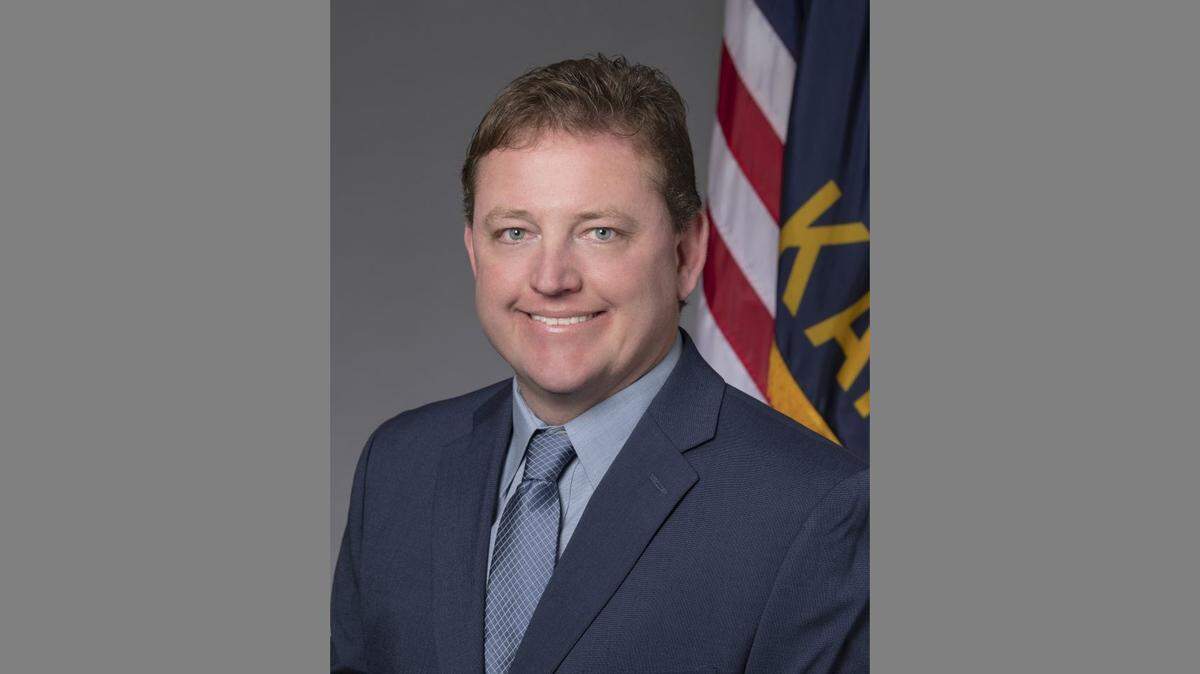
After less than a month on the Overland Park City Council, Scott Hamblin asked officials to rescind a tax break deal that was approved before he took office — a deal he claims was “based on inaccurate data.”
But Hamblin’s request Monday night launched what council members called “personal attacks,” “threats” and a strong warning that the city is damaging its relationship with the business community.
“Is your intent as a City Council member really trying to do what is best for the city of Overland Park? Or is your intent to do what is best for yourself, Scott Hamblin?” Councilman John Thompson asked.
“That’s a pretty offensive question. I don’t think I even need to answer that,” Hamblin answered.
Council members Faris Farassati and Gina Burke — both regular skeptics of tax incentives — sided with Hamblin. They believe the deal granted to a northern Overland Park company was approved despite a cost-benefit analysis they allege overestimated the creation of jobs and underestimated the cost to the city.
After the heated discussion, the City Council voted 7-3 to keep the deal in place. The agreement provides Dimensional Innovations, a design and fabrication company located off Interstates 35 and 635, with a 10-year property tax abatement. During that time, the company plans to expand and add 225 employees to its 187-person workforce, with an average salary of $75,000.
Many council members defended the city’s use of tax incentives, saying Overland Park has a careful process for determining what projects are deserving.
“I think this is one of the most disappointing episodes I’ve experienced since I’ve been on the Council,” Councilman Paul Lyons told The Star. “I believe this is blatantly a political attempt to gain publicity about an issue that has no merit. It’s all about anti-growth Overland Park.”
But Hamblin and his allies in the vote said Monday’s request was only the beginning. They’re calling for a stricter city policy, saying officials should do a better job of verifying information before granting tax incentives.
“I think we’ve got a lot ahead of us. Sales tax revenue is decreasing, and we’re giving away our tax revenue to an applicant where the numbers are not making sense,” Burke said. “We need to make sure we are responsible with the tax base that we have.”
Council members question data
Mayor Carl Gerlach and the majority of the Council enthusiastically supported the tax break agreement, which passed in December with a 9-1 vote.
The City Council agreed to issue $14.6 million in bonds to help Dimensional Innovations with construction costs, and granted a 50% property tax abatement, which would increase to 65% during the second phase of expansion.
“They’re expanding in a difficult area because it’s close to Merriam and KCK, and it’s an area of the city that doesn’t get a lot of attention,” Lyons said. “To me, it was all positive. It wasn’t a close vote. It was a no-brainer, and it was clearly in the best interest of the city.”
Farassati, the lone “no” vote in December, said a growing company doesn’t need subsidies, especially in an area that is not blighted. Some have argued Farassati’s stance is politically motivated because he recently announced he is running for mayor.
Gerlach said the city considers several factors when considering tax incentive requests, such as the number of jobs created, the salaries and quality of potential jobs, and the need to invest in certain parts of the city.
But several officials were also impressed by the outcome of the cost-benefit analysis, which uses a Kansas Department of Commerce model that analyzes data provided by the city and company. The report showed the city would get $3.51 back for every dollar invested.
It also showed the project could result in 705 new jobs over the next decade — with that number including supplier and other jobs indirectly created across the country.
But Hamblin, Farassati and Burke said the numbers don’t add up. They believe the state used an incorrect business classification and employment multiplier to determine the number of spin-off jobs that will be created.
They also question that the report states the company will attract 3,500 out-of-town visitors a year. In December, Tyler McLenon, director of finance for Dimensional Innovations, said the company sees around 6,500 visitors from in and out of town each year.
To address the concern, city staff recently asked the state to complete another cost-benefit analysis, but this time assuming that the company will attract zero visitors over the next decade. That report shows the city would get $2.41 back for every dollar invested.
For Gerlach, that number was comforting, though it was lower than the original report. Kansas’ guidelines state that a tax abatement is acceptable if the city receives $1.30 back for every dollar invested.
“We’re almost double that, even in the worst case scenario. We know the company is going to have some visitors, and if they have zero, then we still meet that,” Gerlach said.
But Hamblin said he is concerned that the city’s return on investment dropped so steeply based only on the visitors number.
“For something as small as removing visitors, you see a 30% drop,” he said. “It makes the point that these numbers need to be looked at, it needs to be accurate and needs to all be presented to the Council.”
Is reform needed?
Many council members defended the city’s process for determining whether a company is worthy of a tax abatement, saying it has worked for years.
Thompson argued that Hamblin and Farassati are misinterpreting the data.
“You’ve added a lot of commentary to your facts, a lot of commentary that is not accurate,” Thompson told Hamblin. “You have provided facts in isolation without proper context, and that is a very dangerous way to deliver public policy.”
Farassati and Hamblin said they were being criticized for asking questions. And they believe the city should be doing a better job of analyzing potential development deals.
On Monday, Farassati pushed city staff to answer whether they verify information provided by companies for tax break requests, such as the number of jobs and the business’s finances.
Officials said, “we don’t assume companies lie to us,” when they provide data or ask for incentives. Farassati said the city should be auditing companies and doing a deeper analysis before moving ahead with subsidies.
Gerlach said the city includes safeguards in all of its tax break deals, namely “claw backs,” which allow the city to reduce the incentives if milestones are not met. Many have said those measures will be discussed at future meetings, when the company asks the City Council to approve a development deal.
“If they don’t bring in 225 jobs, if they don’t pay $75,000 salaries, we will claw back the abatement we give them,” he said.
The mayor said Hamblin’s concerns could be brought up during future discussions on the development. But Hamblin countered by saying the City Council should not move forward with development deals without having a complete analysis of each project.
The contentious meeting was an early sign of what’s to come on the new City Council, as members’ differences on tax incentives continue to dominate nearly every meeting.
Some council members said they are worried that the heated debates are already affecting how the business community views the city. Thompson and Lyons said they are concerned about losing businesses to nearby communities, as incentives are a major tool in attracting companies and jobs.
But Farassati and Hamblin said they don’t plan on sitting silent.