Missouri Supreme Court won’t touch Clay County imbroglio on sheriff’s budget
The Missouri Supreme Court late Thursday declined to take up an appeal from Clay County, which has been ordered by lower courts to adequately fund its sheriff’s department.
The decision by the state’s highest court means that Clay County likely has to pay its sheriff nearly $1 million, maybe more if a lower court decides to tack on attorney’s fees that the sheriff had to pay to litigate the matter.
Thursday’s development could resolve a long-running issue in Clay County where its sheriff, Paul Vescovo, suspected that a majority of Clay County commissioners voted to shortchange his department’s budget as a matter of political retribution. Those budget cuts left the sheriff’s office unable to pay certain vendor contracts.
““It’s time we pay our vendors and put this ordeal behind us,” the Clay County Sheriff’s Office said in a statement.
The Clay County Commission, in an unsigned statement, signaled it respects Thursday’s decision.
“Clay County has disagreed with the merits of this lawsuit from the beginning, and we maintain that position today, given the sheriff’s history of documented budget surpluses,” Clay County’s statement said. “However, we respect the decision and authority of the Missouri Supreme Court.”
It was Vescovo’s office that initially handled an investigation in 2017 into whether the county’s chief budget officer, Laurie Portwood, tampered with public records that had signatures cut off of them. Portwood later resolved the matter by entering into a nonprosecution agreement.
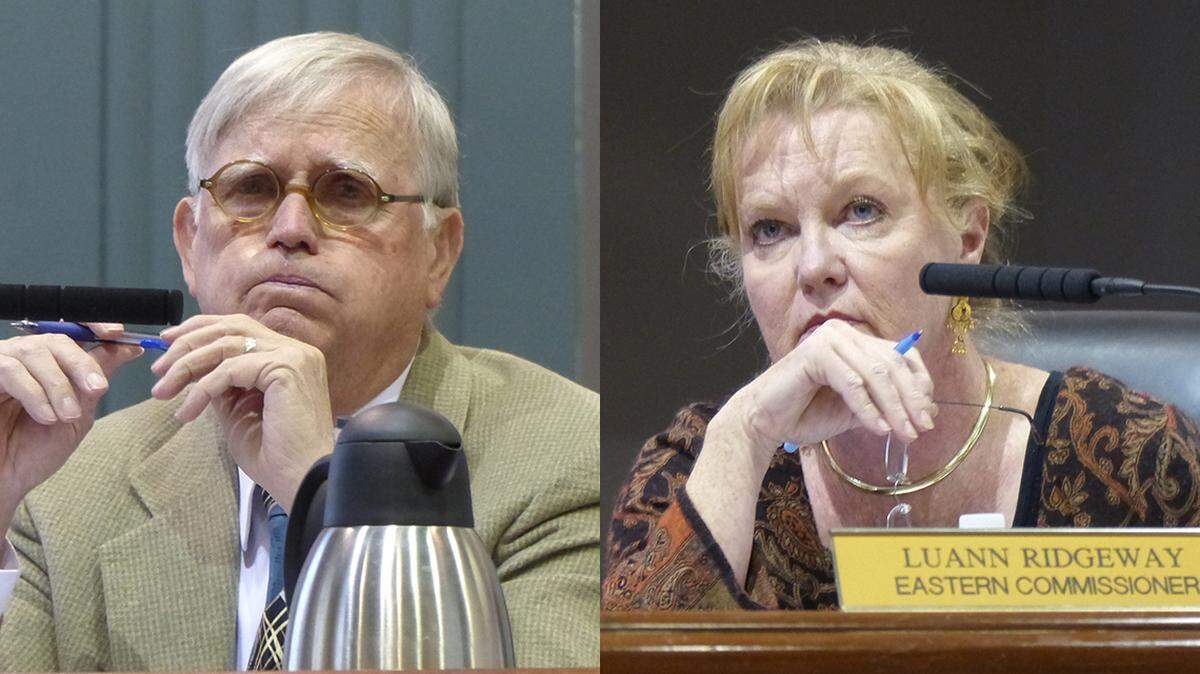
The following year, Portwood submitted a budget that gave the sheriff’s office $2.1 million in operating funds, about $400,000 less than what was requested. In 2019, the sheriff got $1.78 million. Clay County Commissioners Luann Ridgeway and Gene Owen voted to approve the budget; presiding commissioner Jerry Nolte voted against it.
Those amounts were not enough to pay sheriff contracts with outside companies to provide medical services and food for inmates at the Clay County jail. Portwood later testified that she knew the budgets she proposed to the Clay County Commission were not enough to cover the medical and food budgets.
A trial judge sided with Vescovo last year and ordered the county to transfer nearly $1 million to the sheriff’s department. The county appealed to the Missouri Court of Appeals, which also sided with Vescovo and went further than the lower court in ordering that the county also pay Vescovo’s legal fees — about $200,000.
The appellate court’s decision was a stinging rebuke to Portwood and the majority of Clay County commissioners who sided with her budget, saying that the county acted “deliberately, unreasonably and in bad faith” in not fully funding the sheriff’s department.
The county wanted the Missouri Supreme Court to take up the matter, arguing that local government officials in Missouri should be able to set budgets as they see fit with the resources they have.
With the Missouri Supreme Court passing on the matter, the appeals court’s order stands, offering Clay County few apparent options other than to comply with the order to pay Vescovo’s office.
Nolte, a lone wolf on the three-member Clay County Commission on most substantive matters, called for his colleagues to drop the matter.
“Clay County citizens want this destructive vendetta to end,” Nolte said on social media. “How many times must the courts rule in the Sheriff’s favor until Commissioners Ridgeway and Owen adequately fund the Sheriff’s Department. The Circuit Court, the Western District Court of Appeals and now the Supreme Court have all said NO!”
Nolte has been at odds with Ridgeway and Owen over several matters that have surfaced in county government, primarily regarding its transparency and whether it’s using taxpayer money efficiently.
Concerns over Clay County’s performance led to a citizen-initiated audit by Missouri Auditor Nicole Galloway to explore how the county spends its money and why.
That audit is not complete yet, as the county and Galloway’s office have sparred over which records the state auditor has the right to review and the circumstances under which county officials can provide testimony.
This story was originally published January 17, 2020 at 9:51 AM.