
Governor Kelly picks Kansas Supreme Court justice opposed by anti-abortion activists
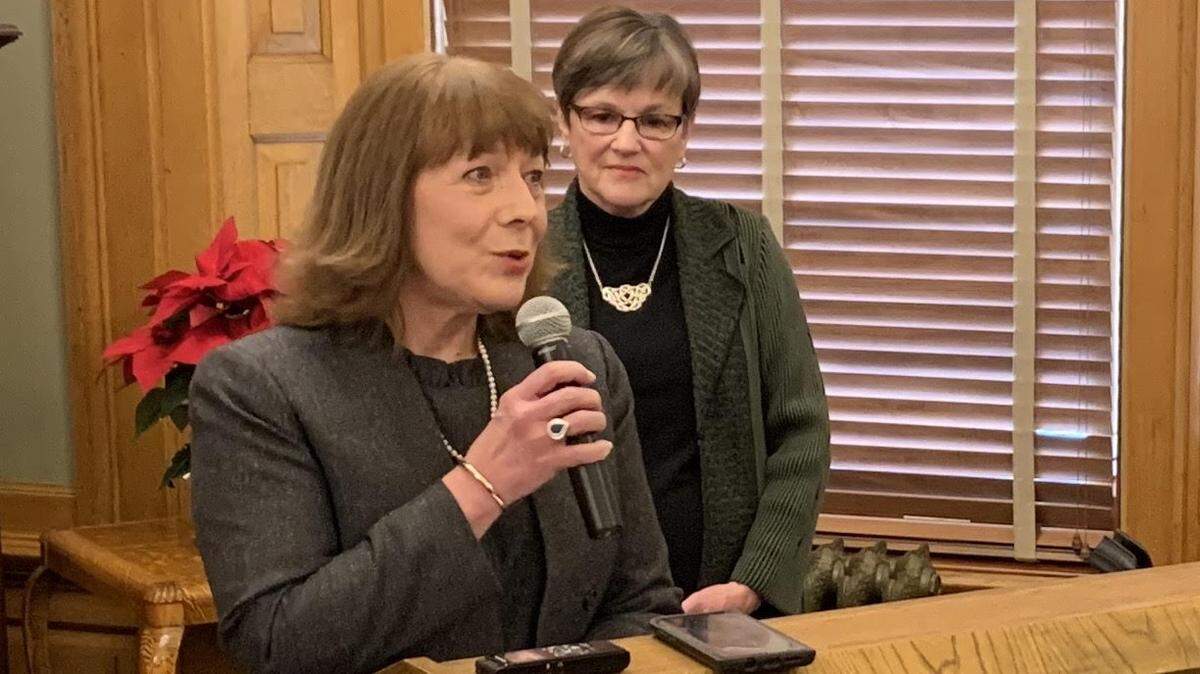
Gov. Laura Kelly has installed a new justice on the Kansas Supreme Court opposed by anti-abortion activists. The decision may fuel calls to overhaul how the state selects its highest court.
Kelly’s choice of Evelyn Wilson, the chief district court judge in Shawnee County, comes after the state Supreme Court issued a landmark decision this spring that could eventually limit abortion restrictions in the state.
The state’s leading anti-abortion group, Kansans for Life, had called Wilson’s nomination “purely political.” It highlighted past contributions her husband made to politicians supportive of abortion rights, including Kelly and former Gov. Kathleen Sebelius.
At a news conference Monday to announce the selection, Kelly said her appointments are based on qualifications.
“I don’t take into account popularity. I really do take into account whether they are fit to do the job, and it’s my sense that Judge Wilson is more than qualified to fill this role,” Kelly said.
Wilson is replacing Justice Lee Johnson, who retired in September after 12 years on the court. Wilson is the first justice to join the court since Gov. Sam Brownback appointed Caleb Stegall in 2014, his only selection as governor.
Asked about her judicial philosophy and temperament, Wilson said that she has learned to look at each case individually, looking at what the law says, what it has been in the past and what has been decided in the past.
“I believe I am a calm person and I am thoughtful,” Wilson said, adding that she can contribute to the court her experiences over 19 years as a lawyer and 15 years as a judge.
With the addition of Wilson, three of the seven justices are now women. She is one of two justices Kelly will select in the next few months. Chief Justice Lawton Nuss is retiring this month, and the process to replace him will play out over the next several weeks.
The retirements mean Kelly, who is about to finish her first year in office, will have already made a greater imprint on the court than the last two Republican governors, who served a combined eight years in office.
The turnover comes at a time of heightened conservative anger at the court. GOP frustration has been driven by decisions that overturned death sentences and called out lawmakers for inadequately funding schools.
But nothing matched the anger over an April opinion that the state constitution protects abortion rights – meaning access to the procedure could continue in Kansas if protections at the federal level are ever eliminated. Anti-abortion activists are pushing for a constitutional amendment to overturn the decision.
“This is yet another reason why we need to amend the Kansas Constitution, and ensure that women and their babies can be protected by reasonable regulations on the abortion industry,” Kansans for Life lobbyist Jeanne Gawdun said, reacting to Wilson’s selection in a statement.
Wilson declined to comment on whether the Supreme Court had made the right decision in the case.
In the wake of the ruling, some Republicans have also renewed efforts to change how the justices are selected. In Kansas, a nominating commission provides three names to the governor, who chooses one. Lawmakers don’t play a role in the process.
Along with Wilson, the commission also sent Kelly the names of Steven Obermeier, an assistant Kansas solicitor general, and Dennis Depew, a deputy Kansas attorney general. In total, 19 applicants were interviewed.
While the interviews were public, Republicans attacked the process as convoluted and lacking substance. Senate President Susan Wagle, a Wichita Republican, said the commission had violated the state’s open meetings law, but an investigation by the Sedgwick County District Attorney cleared the panel.
Wagle said Kelly was rewarding Wilson for years of political patronage and said the contributions by her husband “bring into question the independence of her judicial autonomy.”
Sen. Ty Masterson, an Andover Republican, said in October that judicial philosophy was “rarely discussed” during the interviews. He has been spearheading a constitutional amendment that would move Kansas to a system where the governor nominates a justice and the Senate confirms. The change would effectively give the Republican-controlled Senate veto power of Kelly’s nominees.
But passing an amendment is an uphill climb. Amendments require two-thirds support in both the House and Senate and must be approved by a majority of voters in a statewide election.
The current system, in place for decades, gives voters the opportunity to remove justices. But no justice has ever been thrown out in a statewide vote.
This story was originally published December 16, 2019 at 10:50 AM with the headline "Governor Kelly picks Kansas Supreme Court justice opposed by anti-abortion activists."