College conservatives say their numbers are growing. Or are they just getting louder?
Conservative organizations claim to be growing in both numbers and visibility on college campuses across America. And, according to one of their leaders, they have a certain group to thank: liberals at the University of Missouri.
In particular, the black students whose race-related protests in 2015 forced out the campus chancellor and the system president and drew a critical national spotlight.
That got MU’s Young Americans for Freedom, a predominantly white conservative student group, to plan to make its own statement that drew its own national spotlight.
The group asked its national organization, Young America’s Foundation, to help bring conservative commentator Ben Shapiro to speak on the campus.
A clash of ideologies, they figured, would reverberate on campuses across the country, leading to increased membership for conservative groups.
“Conservative students needed to have a rallying point,” said Spencer Brown, spokesman for Young America’s Foundation. “That evening gave conservative students some place to go. We wanted to restore sanity to the campus. It was literally a perfect event. We were amazed to see how many showed up that evening to hear the speaker.”
Shapiro has been described as a polarizing figure bent on dismantling whatever are the latest tenets of liberalism. That evening in Columbia, he attracted what his supporters said was an overflow crowd and 130,000 viewers online.
Shapiro titled his MU speech “Toughen Up, Spoiled Children” and, shielded by a constitutional right to free speech, poked fun at student claims of racism. The term “white privilege,” he said, is just “a way to silence anyone who is not a person of color,” calling it “reverse racism of the highest order.” In the end, he called the Mizzou administration “cowards” for giving in to “racial radicals.”
While Shapiro talked to his believers, protesters tweeted their opposition.
And so it goes. A cauldron of conflict boils — conservatives yell on the right, the liberal left shouts back and vice versa — “and nobody is listening on these campuses,” said Justice Horn, the student body president at University of Missouri-Kansas City who describes himself as a “blue dog Democrat” — more of a centrist. “I think that what we have seen across the country is that people have tried to snuff out anything that doesn’t subscribe to their ideology.”
But Alex Dwyer, who started a chapter of the conservative group Turning Point USA as a student at the University of Kansas in 2016, sees it differently. “I think that Gen Zers (those born in 1995 or later) are just a lot more conservative than millennials,” Dwyer said. He said his generation is far more comfortable expressing a conservative position on campuses historically dominated by liberal thinkers.
Forbes magazine called Gen Z, “possibly the most conservative generation since World War II.” Albeit a new conservative, since, according to the Pew Research Center, conservative Gen Zers still are more likely to accept diversity and to worry about climate change.
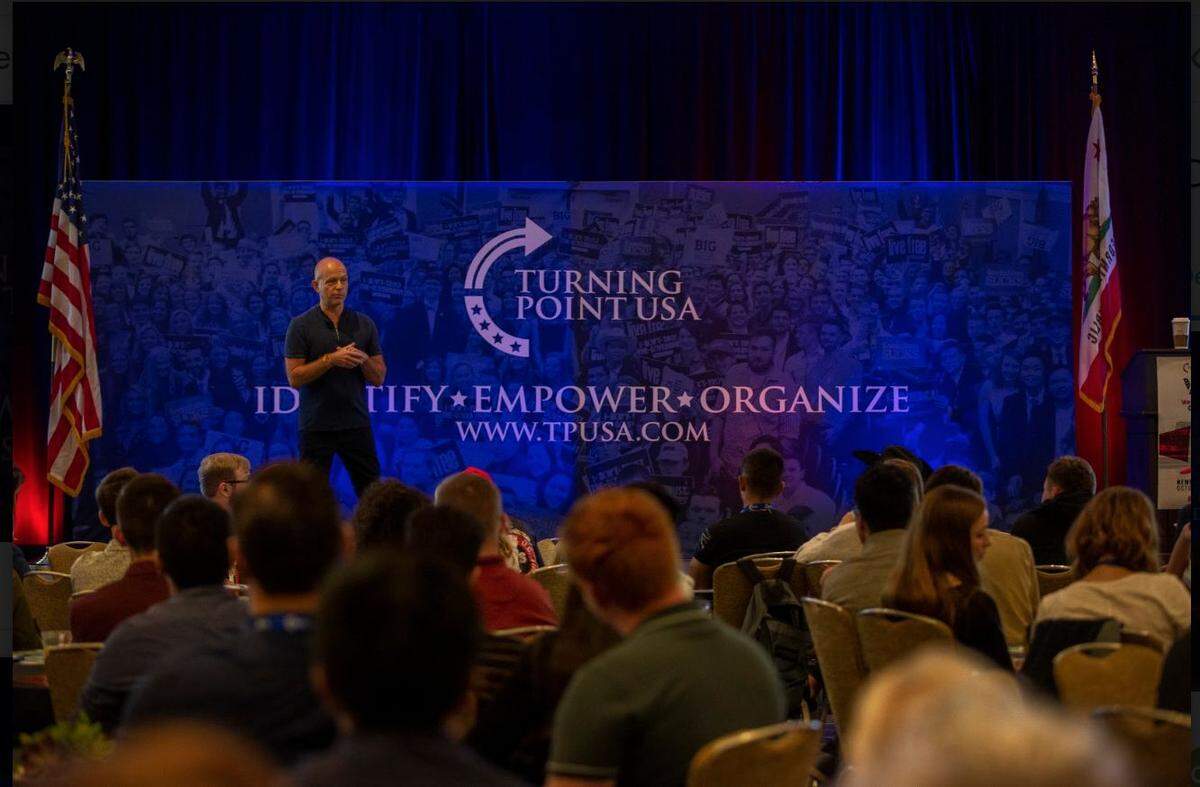
“Their numbers have grown and they are going to continue to grow,” Dwyer said. “We are starting to realize that we have platforms now where we can express our views, debate our ideas and we expect to have some pushback, but that is OK. We are ready for it.”
Controversial speakers in the vein of Shapiro are invited to college campuses these days more than ever before as the conservative student voices get louder and the numbers joining organized conservative groups have grown.
“Part of what I’ve seen on campuses is that students kind of realized that ‘go along to get along’ is not going to work anymore if you want to have a voice,” said Brown. “You can’t be a conservative who stands outside the fray.”
Some say the numbers were always there — and conservatives have always been the minority — but fearing they would be outshouted or shut down, they stayed quiet.
“Certainly we are more aware of them now,” said Patrick Miller, a political science professor at the University of Kansas.
With changes in the national political climate — first with the election of Barack Obama in 2008 pushing discussions of race to the forefront, followed by the 2016 election of Donald Trump and talk of nationalism and free speech — conservative and liberal students alike, he said, became more vocal.
The groups feed off one another. Brown says the more liberal the campus, the more active the conservative student groups. He calls members of those college chapters the new “foot soldiers” for conservative ideologies.
Miller, who has taught on college campuses for nearly a decade, also in North Carolina and Ohio, said while he’s not so sure there are more conservative students, “they do seem to be more organized in clubs and groups.” And, he said, conservative media have pushed up the volume on claims that institutions, perceived as majority liberal, attempt to systemically quash expression of conservative ideology.
He added that he’s been hearing far right conservative language in his classrooms since the beginning of his teaching career. Miller recalls that in 2004, when George W. Bush was pushing for a constitutional amendment to ban same-sex marriage, such discussions did spill over into his classroom. “A lot of the negativity that I was getting was in the language” from far right-leaning conservative students.
Conservative students and national groups that support them say that what has actually changed in recent years is that they started exercising their First Amendment right to free speech and have demanded a platform and a seat at the table when decisions are being made.
And when some administrators began yielding to student objections, allowing the cancellation of right-leaning speakers and restricting pamphlet handouts to certain campus zones, conservative student groups pushed back hard.
In 2017 Young Americans for Liberty sued the University of California, Berkeley for refusing to recognize its chapter. At a community college in Boston, YAL members were told they couldn’t pass out copies of the U.S. Constitution without a permit. At other schools speakers such as Education Secretary Betsy DeVos and Shapiro were banned, uninvited or shut down. Other schools refused to recognize conservative student groups as official, funded student organizations.
Conservatives argue the practice is political correctness gone awry, undermining open discourse.
Numbers and dollars
“For some, efforts to quiet conservative views is what has encouraged them to step up and use their voice,” said Jeffrey Metzler, chairman of the Missouri Federation of College Republicans. Attempts to quiet those voices, he said, played some role in their growth.
It’s why Dwyer started the KU chapter of Turning Point USA. “I didn’t feel that conservatives were represented well enough,” Dwyer said. “I wanted to create a platform for conservatives to express their views.”
One national study concluded that 22% of college freshmen consider themselves conservative or far right, while 36% identify as liberal or far left. The study, conducted by the Higher Education Research Institute in Los Angeles, also says that first-year college students are more politically divided than ever before.
As a group, College Republicans include libertarians, social conservatives and fiscal conservatives, with some leaning further right than others particularly on social issues such as abortion, gun control and gay rights. But what bonds them together is limited government and lower public spending.
College Republicans have been around the longest, but in recent years other conservative groups have vied for student members.
In 2015, 18 College Republicans chapters were on campuses throughout Missouri. A month after Donald Trump was sworn in as the 45th president of the United States, five more chapters were added, and by November 2018 the total had climbed to 26.
Kansas has fewer than a dozen chapters and about a thousand members, but campuses are working to grow their membership, said Jaron Caffrey, who leads Kansas Federation of College Republicans and is a senior at Washburn University.
Nationally though, College Republicans have more than 1,800 chapters and over 250,000 members. And, Metzler says, some chapters now are focusing on high school students, grooming them to become interested in membership and looking toward leadership roles even before stepping on a campus.
Kansas just signed on several new College Republicans chapters in Wichita and central Kansas and reconnected with the chapter at Johnson County Community College that had fallen away from the national group after a controversy over the campus group’s support of Kris Kobach.
The largest chapter in the state, he said, is probably at KU with some 40-plus active members.
“Since 2016 we have definitely seen a lot of growth not just in the number of chapters but in membership activity as well,” Caffrey said. And he said he’s for having controversial speakers visit campus. Though some students might shy away from signing up for fear of being associated with some negative label, “It can also really help to rally up your base.”
Much of the time those speakers are funded by national groups like Young America’s Foundation and Turning Point USA looking to boost numbers.
Turning Point boasts that it’s the fastest-growing conservative student organization in the country. Last year it reported having more than 400 officially registered chapters in high schools and colleges nationwide.
The organization says it stands for limited government and free markets and does not promote hate speech. This year its national leadership pledged to attract more students and launched what it called “Culture War Tour” events across the country. The group says the tour reached 5,000 students in a week, and leaders complained that at some schools, hundreds of students couldn’t attend because venues weren’t large enough.
The events, which Turning Point leaders said are designed to “challenge the leftist narrative,” feature such speakers as Sen. Rand Paul and Donald Trump Jr. The group’s promotional material advertises a student summit being held next month in Palm Beach, Florida — the president’s adopted home.
The Chronicle of Higher Education reported last year that Turning Point designed a 28-page brochure titled “The Foundational Structure for Winning Back Our Universities,” which outlined plans to influence student body politics, defund progressive student organizations and promote a conservative agenda.
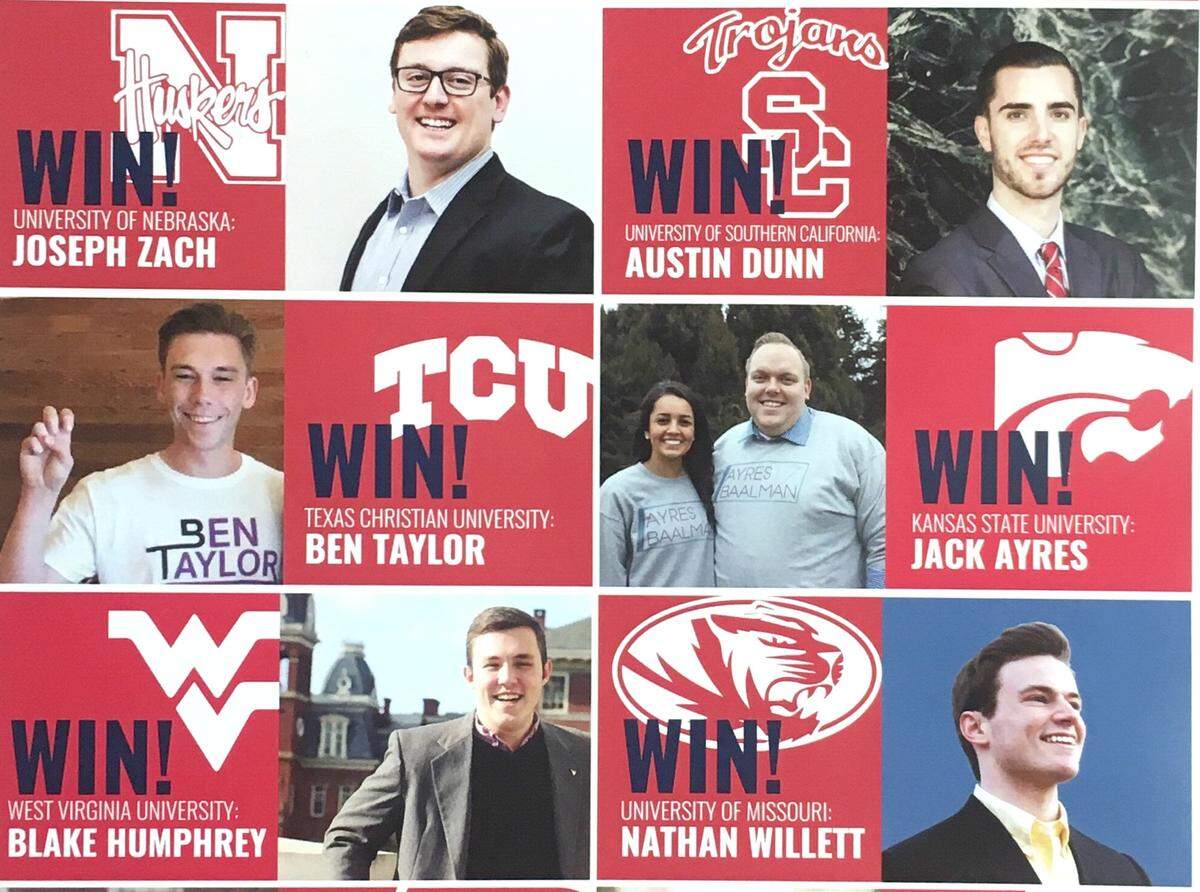
Last year the group launched the “Campus Victory Project” to identify, recruit and promote conservative student government candidates and student leaders at Division 1 sports schools and 100 other “critical universities in swing states” before the 2020 presidential election.
Kansas State University and MU both were on the group’s list as victories, implying that Turning Point had influenced the outcome of student government elections, but students at those schools have have denied being backed by the group.
In 2018 the student body president at Texas State University resigned after her campaign was accused of accepting $2,800 from Turning Point.
That same year, controversy bubbled up at K-State when the then-student government president was accused of accepting hundreds of dollars from Turning Point to support his campaign. He denied ever taking money from the group, as it would have violated the campus election rules capping campaign contributions at $300.
Student governments wield a great deal of power when it comes to deciding how to divide thousands of dollars among campus organizations.
A shared civility
Horn of UMKC and Dwyer of KU represent the left and right respectively and said while they have differing ideologies, their feelings about rowdy clashes between conservatives and liberals on campus are the same.
Horn, who is multiracial, openly gay and an athlete, talks with student body presidents from campuses in the South and the West Coast. They tell him they have an incident roughly once a month where ideologies about politics or human rights collide. And sometimes, he said, verbal banter turns to fisticuffs.
The Higher Education Research Institute study, which surveyed more than 140,000 new college freshmen in 2016, found that most were willing to shut down speech they find offensive, including speech they deemed racist or sexist.
Culture commentator Ta-Nehisi Coates refers to the shout down as a “cancel culture practice.” A practice that student leaders like Horn rebuke.
“I don’t want things to be the Wild West at UMKC,” Horn said. “I think that good conversation and everyone sitting down makes not only our organizations better but it also makes us better people.”
A Business Insider survey of Generation Z identified political divisiveness as one of the top issues plaguing America, above environmental issues, gun control or terrorism, which, by the way, are some of the national issues that conservative and liberal Gen Zers often see eye-to-eye on.
As a student body president, Horn said, his job is to represent all students regardless of their political posture. “And besides,” he said, “every experience is an opportunity to learn. No matter what you believe in, student activism on campus is a good thing, and my job is to see how we can work together. Because a lot of these groups at our universities are siloed off.”
Challenging that effort, Horn said, are some national conservative groups paying speakers to come on campus and use language they know will fire up a liberal backlash. Last year at UMKC, Young Americans for Freedom, which at the time had a small group on campus, worked with the College Republicans to invite right-wing commentator Michael J. Knowles to speak.
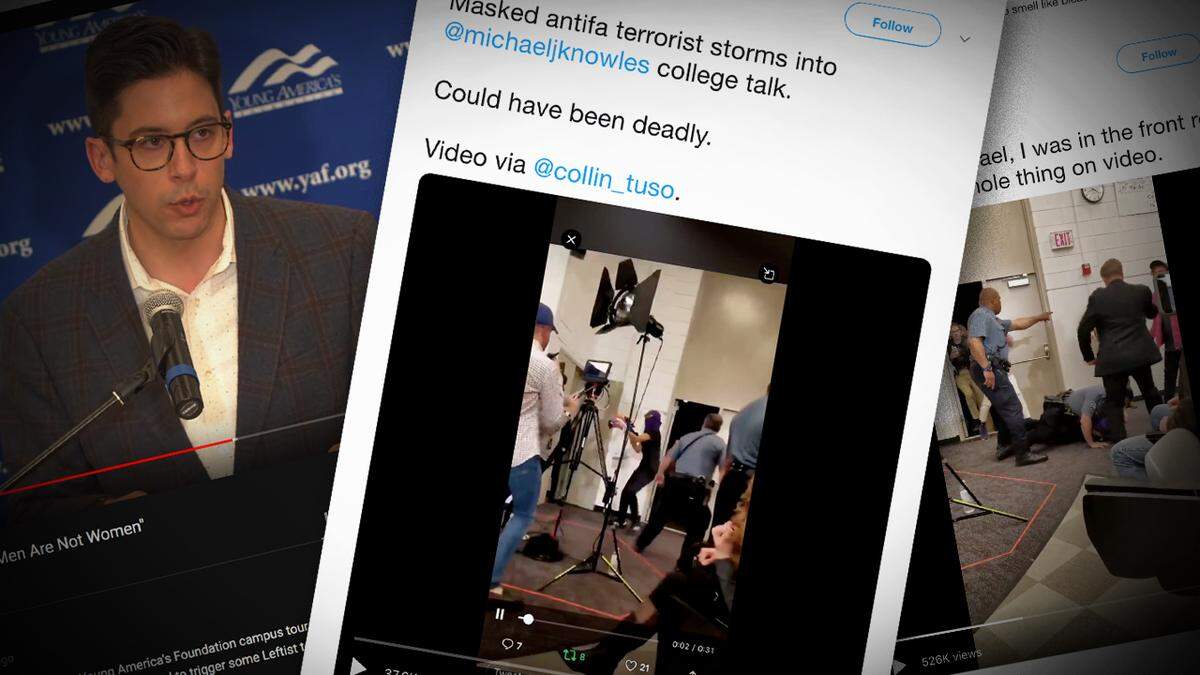
The room was filled with members of the public who were not students. Some students who did attend walked out on the event, called “Men Are not Women,” in which Knowles denounced members of the LGBTQ community. His talk was interrupted when a student barged in and sprayed Knowles with a substance initially thought to be dangerous, but turned out to be lavender water. Conservative media pushed the story, promoting the idea that liberal students at UMKC were trying to silence conservative voices.
That kind of publicity, Dwyer said, attracts some conservative students “to the movement.” A movement looking for the kind of student who wants to be heard, who’s looking to rabble-rouse a bit.
The American Spectator, a right-leaning political news website, reported that conservative groups lure students to their ranks by saying, “If you want to be really radical, be a conservative. … If the Left prevails, how can embracing it be rebellion?”
Still, Dwyer said clashes that go beyond civil debate can hurt the conservative movement. “That is really not what we are about,” Dwyer said. “We are not about political theater, or making statements for shock value.
“Conservatism at its root is about tradition, conserving the natural order of things. It is about a return to our traditional values. I believe that my generation has recognized that this is what conservatism is all about. It is about families, raising good, moral kids.
“Yes, campuses today are seeing more conservative students. Yes, they are more outspoken. And I do believe the growth in numbers is a generational thing. I think that when the polling comes out and more GenZers start voting, you are going to see them voting more conservatively.”