
U.S. Senate candidate prosecuted domestic terror. Key cases were stings with fake bombs
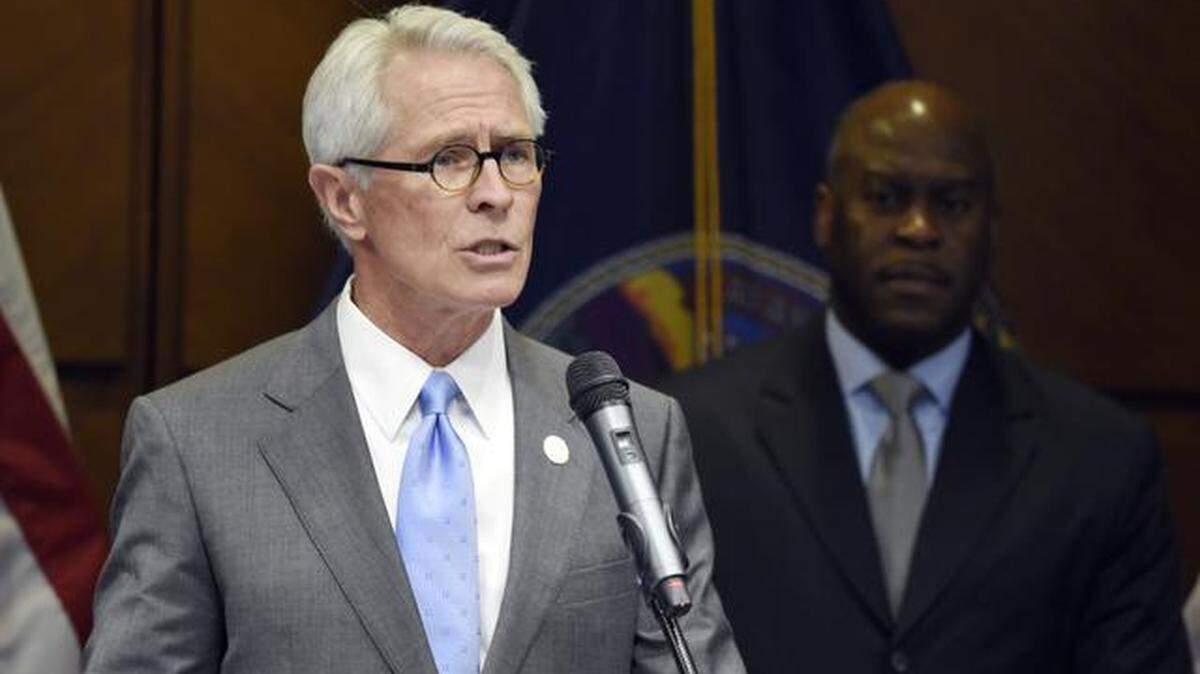
Democrat Barry Grissom is staking his run for Senate in part on the time he spent as Kansas’s top federal prosecutor on two big cases.
“Barry is best known for helping lead the investigation and successful prosecution of the Wichita Airport and the Fort Riley bombers – two domestic terrorists who had plotted to kill hundreds if not thousands of Americans,” the former U.S. attorney’s campaign website says.
But in both cases, the would-be bombers received help from undercover FBI operatives. They worked with the suspects to plan the attacks. The bombs were never real.
BEHIND THE STORY
MOREWhy we did this story
After Democrat Barry Grissom launched his campaign for U.S. Senate in July, reporter Jonathan Shorman noticed that his campaign website highlighted his role in prosecuting Kansas domestic terrorism cases in Wichita and Fort Riley. Shorman decided to dig further into the cases, which play a central role in Grissom’s campaign. Read more by clicking the arrow in the upper right.
How we did this story
Shorman read court documents associated with both the Wichita and Fort Riley cases as well as past coverage of the incidents. He learned that the kind of sting operations used by the FBI in the cases have produced criticism.
Shorman spoke with law enforcement experts critical of these types of sting operations as well as experts who defended them. He also interviewed Grissom about the cases and asked him about the criticism.
Some law enforcement experts are critical of the investigative tactics used in those and other terrorism cases. To them, the FBI’s intimate involvement raises concerns about whether the terror plots are real or effectively manufactured by law enforcement.
“The troubling aspect of a lot of these cases is that they’re FBI-facilitated. These people do not possess the capability to conduct these attacks. They’re basically being coached by the FBI,” said Daryl Johnson, a former senior analyst with the Department of Homeland Security, said.
Grissom calls criticism of the 2013 and 2015 investigations “Monday-morning quarterbacking.” He says attempts by defendants to argue entrapment in post-9/11 terror cases have failed.
“I don’t think we overreacted,” Grissom said. “My experience when I was with the Department of Justice, with the FBI and people in the national security apparatus — I never saw anyone overreacting or pushing the envelope from an evidentiary standpoint.”
Other experts defend the FBI’s heavy involvement in shaping plots. They say the undercover operations are needed to intercept would-be terrorists early, before they can be recruited by real terror groups.
Stings in Kansas cases
In the Wichita case, authorities charged Terry Lee Loewen with trying to detonate a car bomb at Mid-Continent Airport in December 2013. Loewen, who worked as an avionics technician at the airport, had been speaking online with an FBI agent since at least that August.
Loewen had expressed a desire to engage in violent jihad. By October, an FBI agent was asking Loewen whether he would be willing to scout for targets and plant a device. He also met with another FBI employee about a possible attack.
On Dec. 13, Loewen drove with an FBI agent to the airport with what he believed was a bomb. Investigators had ensured it was actually a dud, and Loewen was arrested.
In the Fort Riley case, John Booker of Topeka posted on Facebook in March 2014 that he wanted to wage jihad, drawing the attention of authorities. He was questioned by federal agents, but not arrested.
Later that year, he began talking online to someone who turned out to be a confidential FBI source. Booker expressed a desire to join the Islamic State and kill Americans and was introduced to a second source who he was told was planning attacks in the United States.
Booker prepared for the attack by gathering materials and renting a storage locker. In April 2015, he was arrested as he and an undercover FBI source drove to an area near Fort Riley and Booker armed what he believed was a bomb (it was actually inert).
Loewen and Booker both eventually pleaded guilty to attempting to use a weapon of mass destruction.
Michael German, a retired FBI agent who is now a fellow at the Brennan Center for Justice, said undercover stings are problematic because they can target people who have not formulated a terrorist plot and they draw resources away from other priorities, including solving other violent crimes.
“There’s quite a bit of violence the government could be focusing on, but instead is pulling a lot of resources into these cases where the threat the person posed is not particularly clear,” German said.
But Dru Stevenson, a professor at South Texas College of Law Houston, said investigators and prosecutors turn to sting operations because laws against terrorism, and other crimes such as drug sales, are virtually unenforceable without them. Terrorists plan in secret and plots would go undetected until it’s too late.
“So they have to use phony plots to ferret out the types of people who would be joining real terrorist groups if our undercover agents didn’t get to them first,” Stevenson wrote in an email.
Grissom said in both the Wichita and Fort Riley cases, Booker and Loewen’s actions went “way beyond mere talking.”
An FBI agent also tried to put Booker on a different path, Grissom said. After the FBI first interviewed Booker in March 2014, an agent took him to an imam in Topeka “to explain to him his view of the Koran was perverse and twisted.”
“That was a circumstance where we attempted to intervene and attempted to show him that, you know, where he was being misguided in his beliefs,” Grissom said.
Grissom said he’s not sure how “we could have lived with ourselves” if prosecutors hadn’t pursued the cases.
New domestic terror focus?
The Wichita and Fort Riley cases illustrate the kind of undercover anti-terror stings that have become common since 9/11. They often focus on combating Islamic terrorism.
Of the nearly 900 terrorism defendants charged by federal prosecutors since 9/11, 36 percent were caught up in FBI stings, according to a database of terrorism prosecutions maintained by The Intercept, a news organization.
In the wake of August mass shootings in El Paso, Texas, and Dayton, Ohio, federal law enforcement face calls for a renewed focus on domestic terrorism, especially violence by white supremacists. Previous research suggests authorities have treated suspected Islamic and right-wing terrorists differently.
A 2015 study published by the Journal of Criminal Law and Criminology found that only about 9 percent of all post-9/11 jihadi terror cases likely thwarted a genuine terrorism threat. Its authors, counterterrorism researchers Jesse Norris and Hanna Grol-Prokopcyk, also found that alleged right-wing terrorists had few indications of entrapment.
They suggested that means the government used informants less consistently and aggressively against right-wing extremists than against Muslims.
For his part, Grissom has said the Department of Justice and the Department of Homeland Security need an increased focus on white nationalists.
“This understanding of how strong language is and how it can move people on the fringe is something that really concerns me,” Grissom said. “And it’s something I hope I can give a voice to when I’m in the United States Senate.”
This story was originally published August 31, 2019 at 5:00 AM with the headline "U.S. Senate candidate prosecuted domestic terror. Key cases were stings with fake bombs."