Jackson County’s $52M hike and bike trail in limbo after feds deny right of way
Jackson County, which paid $52 million to acquire nearly 18 miles of the old Rock Island Railway to rip up tracks and ties and build a hiking and biking trail from Lee’s Summit to the Truman Sports Complex, no longer has a right to that corridor, a federal regulatory agency has ruled.
The decision Tuesday by the federal Surface Transportation Board, which regulates rail corridors in the United States, effectively places the fate of the trail in limbo.
It raises questions about who actually now owns the 17.7-mile strip, what will become of it and whether the county squandered $52 million of taxpayer money.
“It means Jackson County is totally (expletive),” said Kansas City attorney Tom Stewart, who sued challenging the method in which the county took possession of the land to build the trail. “What that means is that they have spent $52 million and, as things stand today, they don’t even have any right to be on the corridor, let alone build a hiking and biking trail.
“This has got to be Jackson County’s worst nightmare. What’s worse, they are now subject to be evicted from the railroad corridor and all the work they have done to be pulled out of there.”
But that is not going to happen, said a county spokesman, who conceded that the federal board’s ruling is not positive.
Lawyers for the county are now working to correct a situation created in 2016 under former Jackson County Executive Mike Sanders, who last year was sentenced to 28 months in federal prison for campaign wire fraud, unrelated to the railroad and trails project.
Reading from a written statement, a county spokesman said that its attorneys assert that, “Jackson County still owns the property” — a claim Stewart contests.
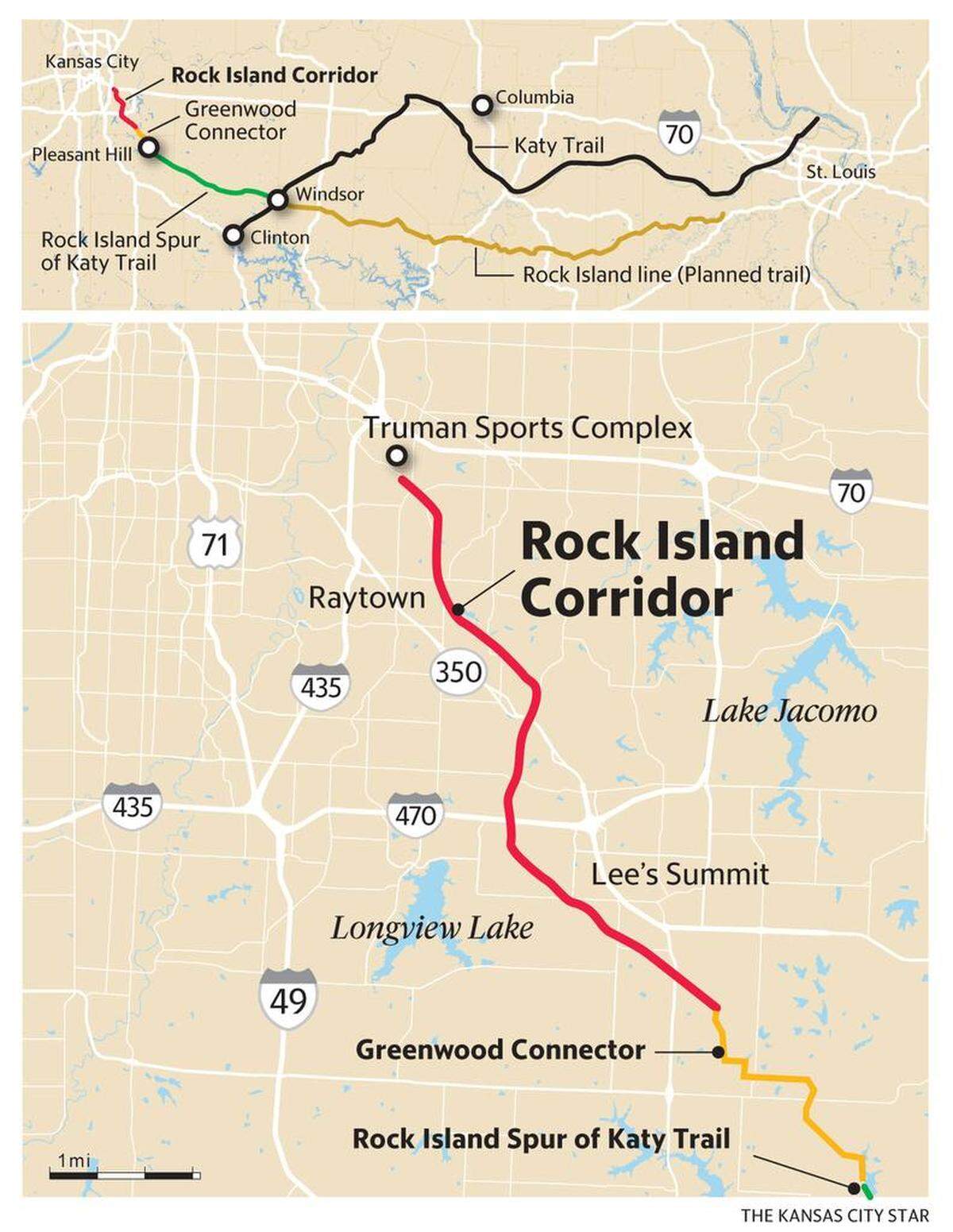
The southern six miles of the hike and bike trail along the old corridor have already been completed and will remain open, the county said. As of the federal board’s decision, further construction on the northern portion has stopped.
“While we determine how best to proceed,” an email statement reads, “the county has asked contractors to stop construction on the rail bed and stop removal of any track on the rail corridor.”
Drama over the corridor has been playing out both in civil court and in front of the federal government.
In 2016, Jackson County took possession of the 17.7 mile stretch of the long-defunct Chicago, Rock Island & Pacific Railroad corridor to create the trail as an amenity and to spur development.
To do so, Jackson County founded its own railroad company, which it called the Rock Island Rail Corridor Authority. It paid the corridor’s then-owner, Union Pacific Railroad, $52 million for a quitclaim deed to the property. For that money, Union Pacific transferred to the county its right to run a railroad.
To acquire the corridor, Jackson County needed federal approval by the Surface Transportation Board and had to agree to fulfill what is known as its “common carrier obligation.”
In other words, Jackson County was free to build a path alongside the rail line, but if a customer suddenly decided it wanted to haul freight along the corridor, the county would be obligated to supply a rail line.
Jackson County made the guarantee and, in February 2016, the Surface Transportation Board allowed it to take control of the corridor.
In creating the hiking and biking trail, however, Jackson County ripped up the ties and railroad track.
In two lawsuits, Stewart represents 10 adjacent landowners to the corridor who argue that, without any railroad track, there was no way that Jackson County could ever have fulfilled its common carrier obligation, nor did it have the intention to do so. The lawsuits argue that the county acted in a fraudulent manner before the federal board.
Since the railroad is gone, the plaintiffs say, the rights to that land should have reverted to the current landowners. Under the Fifth Amendment, they argue that they had the right to be justly compensated for that land.
On Tuesday, the Surface Transportation Board summarily revoked Jackson County’s right to the rail corridor, stating, “By removing the track and placing the trail directly on the rail bed, where the track previously was, the County has taken a step that is contrary to the acquisition of the rail line.”
The board goes on to say that “if the county intends to remove the track and place the trail on the rail bed, then the County should do so by using the Board’s interim trail/railbanking procedures under the Trails Act.”
Under railbanking, established in 1983 as an amendment to the National Trails System Act, a corridor’s tracks and ties may get pulled up, but the corridor itself is still part of the national rail system. Essentially it is “banked,” in the event that the nation needs it for future rail use without having to go to the cost and trouble of again acquiring expensive property and rights of way.
Missouri’s 240-mile Katy Trail was created using that process.
Under railbanking, adjacent landowners would be compensated for their property by the federal government rather than by county taxpayers.
The county spokesman said that no one is quite certain why Sanders did not originally try to use railbanking to create the Rock Island hiking and biking trail. County officials are now trying to back up the process and see if they can do so now.
As for who has rights to the property, the county believes it still owns it, even though it no longer has the right to run it as a rail corridor. It is possible that Union Pacific, which was already paid $52 million for the right of way, regains the corridor.
Stewart said it’s possible, if they file an “adverse abandonment” action, the landowners could take possession.
“Any time you pull up the rails and ties, you’re basically announcing to the world that we’ve abandoned this,” he said. “That’s what they’ve done. Technically, they could be subject to an adverse abandonment action, which means the landowners could possibly kick off both the railroad and Jackson County.”
Stewart said that throughout the legal proceedings he had told Jackson County that railbanking was the way to go. Landowners would be paid by the federal government and Jackson County would be off the hook.
“We’ve been telling them from the very beginning,” he said, “and they have refused to go about it. If they tried to do that (railbank), part of our agreement was that our landowners would not stand in the way if they followed the law and did it properly.”
But that was before the federal board’s ruling.
“Now I’m not sure if that ship has left the dock or not,” Stewart said, “and whether our landowners will say, I don’t want them in there at all and we just want our land back.”