What is microtransit? To get around JoCo for little money, it could be a solution
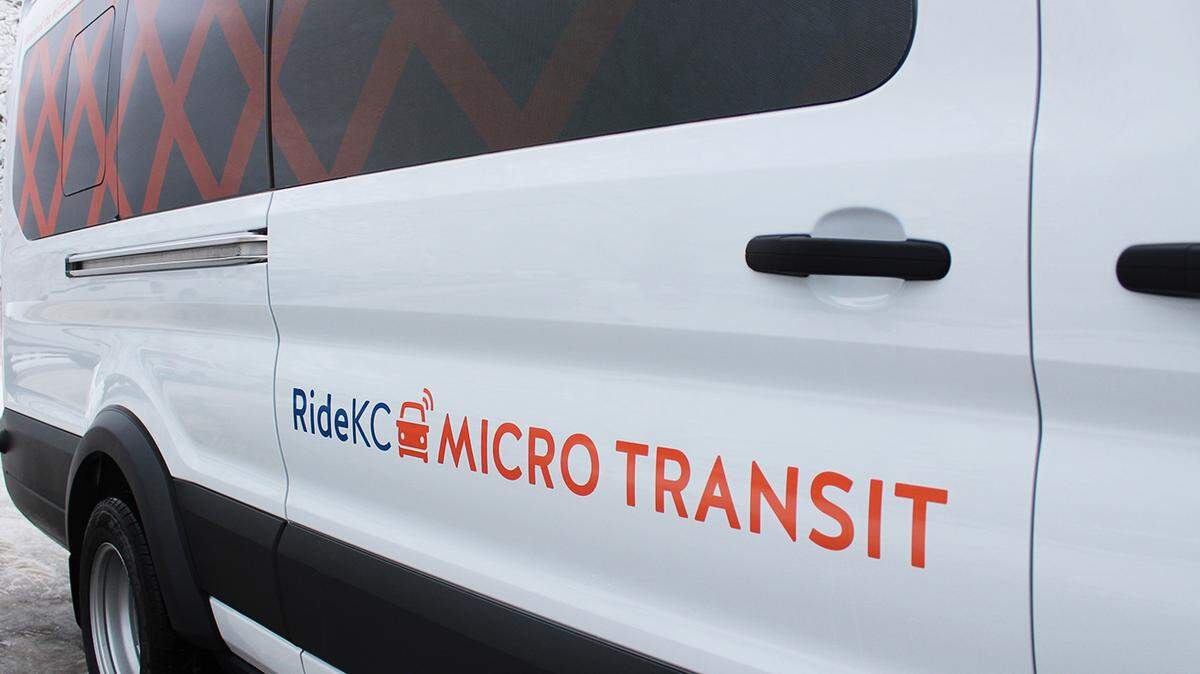
Johnson County will spend $250,000 over the next six months on an Uber-like transit experiment, trying to find a better alternative to large buses carrying small numbers of passengers.
The county is paying for a “microtransit” pilot project serving parts of Overland Park, Mission, Shawnee and Lenexa that will allow passengers to summon a ride on a small van to desired destinations, via a smart phone app.
It’s an on-demand service that’s somewhat akin to Uber or Lyft, although this program involves a “shared ride.” It connects up to 12 passengers at one time who start out in nearby locations and need a ride to destinations in close proximity.
County officials say it’s unique in the country and demonstrates their effort to be more creative and to get more people using mass transit, in partnership with the Kansas City Area Transportation Authority.
“There’s no one in the country, in a suburban environment, that’s done this or made it work,” said Josh Powers, business liaison for Johnson County. He said the county commissioners have pushed the staff to “look at new ways to serve the commuting public, in ways that are different than we’ve done in the past.”
However, county officials also concede that their experimental program grew out of an app-based service that was tried in downtown Kansas City but failed.
Johnson County’s on-demand service officially launches Feb. 1, operating Mondays through Fridays, 6 a.m. to 8 p.m. It will be limited to three 12-passenger vans per day, operating from 63rd Street to 119th Street and from Metcalf Avenue to Renner Boulevard. It is designed to include the Mission Transit Center on Johnson Drive along with the KU Edwards Campus and Johnson County Community College.
People can schedule a ride on a mobile app, via a web interface or by phone. More information is available at ww.ridekc.org/microtransit or at 816-512-5510. The nearest vehicle should come close to the requested arrival point within 15 minutes.
The service pools rides from roughly the same area for transport. People may have to walk a short distance to accommodate those pooled locations.
This is an outgrowth of a RideKC van-hailing service, called Bridj, that began operating in Kansas City’s downtown area in March 2016 but shut down a year later. It generated only 1,415 one-way trips in all that time.
Powers said Bridj didn’t have the ability to route instantly and on the fly, as this new program will do.
“What they ended up running was a fixed route service with smaller vehicles,” Powers said. “The technology has come a very long way in three years.”
The adaptive software that allows this new on-demand service was developed by mobility services vendor Transloc, which is owned by a Ford Motor Company subsidiary.
Powers said the Bridj experiment didn’t achieve the desired ridership, but the KCATA learned valuable lessons, and Johnson County is benefiting from its partnership with KCATA in this new experiment.
The county already offers a “freedom on demand” service where people can get picked up at their home and taken to a chosen destination. But it costs $5 for the first five miles and $2 each mile after that. This pilot project costs the same as a bus ride, $1.50 per ride no matter how far.
In Johnson County, “freedom on demand” has tallied about 1,200 trips per month. The goal of this new service is to reach 100 to 150 passengers per day.
The pilot project had a “soft launch” on Jan. 22 and tallied 50 trips in its first week. Powers said the icy weather proved a challenge, and the initial numbers were far from the goal, but marketing hasn’t yet begun.
County officials believe the program will appeal to students at Johnson County Community College and the KU Edwards campus, as well as to residents living in retirement communities who may want to travel as a group to various destinations.
Robbie Makinen, CEO of the KCATA, praised Johnson County for taking on this experiment. “The Kansas City region is about to see the true benefits of what microtransit service offers,” he said. “This new transit option will empower customers to make the choice that works best for them. It’s customer-driven transit.”
Powers said the county will evaluate the service continuously and report back soon to the county commissioners, so they can decide if it’s worth continuing past the six-month trial period.
This story was originally published January 29, 2019 at 5:30 AM.