
Lawmakers say Parson veto threatens program for stroke, heart attack, trauma patients
Lawmakers on Tuesday lambasted Gov. Mike Parson’s decision to veto funding for a program designed to ensure that critically ill patients suffering from trauma, stroke and heart attacks get to hospitals that can treat them most effectively.
In particular, Republicans and Democrats on the House budget committee questioned why the governor vetoed the funding without having a plan in place to sustain a program credited with improving emergency care, especially in rural Missouri.
Parson’s veto of the Time Critical Diagnosis program amounted to less than $154,000 out of the state’s $28 billion budget. It eliminated the three full-time positions that administered the TCD program.
Days after the veto, hospitals that were scheduled to be inspected as a final step toward earning a designation as a certified stroke, heart attack or trauma center received notice from the Department of Health and Senior Services that those inspections were canceled.
Among those receiving a cancellation notice was Liberty Hospital. Its certification as a trauma center expires in September.
Certification is needed because state law requires first responders to transport acute stroke, heart attack and trauma patients to hospitals that have earned the designation, rather than simply to the closest facility.
“As a stroke survivor, I am very concerned about these cuts,” Rep. Rocky Miller, R-Osage Beach, tweeted Friday. “Every second counts.”
Facing backlash from hospitals, EMS providers and patient advocates, Parson’s administration downplayed the impact of the veto and insisted it will not disrupt the TCD program. Resources from other areas of the Department of Health and Senior Services would be used to keep the program afloat while a new funding stream is put into place, officials say.
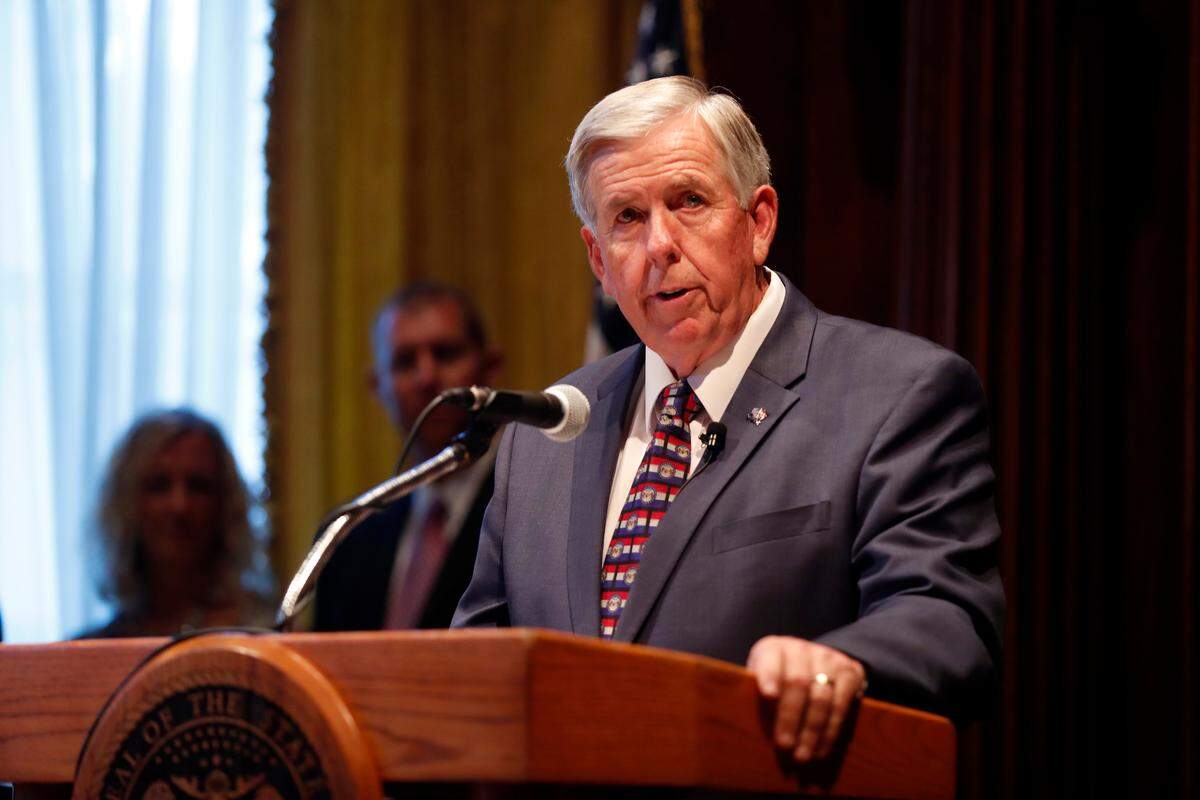
“I don’t think you’re going to see any change in service,” Parson told reporters Monday. “I think a lot of people are saying a lot of things right now without seeing what the real outcome is going to be. So patience sometime plays a huge part in what we’re doing here.”
But House Budget Chairman Scott Fitzpatrick, R-Shell Knob, said Tuesday that state agencies can’t simply reallocate money that the Legislature designated for a specific purpose.
That, he said, would be unconstitutional.
“Gov. Parson vetoed the funding, and it sounds like to me like you regret that decision and want to walk that back. But that’s not how this works,” Fitzpatrick said. He later added: “These inspections are important, but the governor made his decision. Everybody knew what the consequences were when it was made.”
The TCD program’s funding was originally removed from the budget in January by former Gov. Eric Greitens. Lawmakers put it back in at the urging of the medical community, and it sailed through the legislative process without controversy.
Parson vetoed it on June 29 along with 20 other budget items that totaled about $12 million in state spending.
The House budget committee held a public hearing on Tuesday to discuss those vetoes.
Randall Williams, director of Parson’s Department of Health and Senior Services, told the committee Tuesday that the intent of the TCD veto was to ensure changes are enacted in the program to require that hospitals shoulder more of the financial burden.
Implementing those changes will require legislative action next year. Until that happens, Williams said, the department will continue to run the program using resources from elsewhere in the department.
Members of the House budget committee made it clear Tuesday that was not an option.
“You guys messed up,” Fitzpatrick said, “and if it’s going to get fixed in a way that is consistent with the Constitution … the ways to fix it are there are no inspections until we pass a supplemental (budget) in January, or you agree a mistake was made and you ask us to override the veto.”
If the department goes forward with a plan that ignores the budget process laid out in the Constitution, Fitzpatrick said, “there will be hell to pay.”
“You can’t spend money on something that you vetoed,” Fitzpatrick said. “If you choose to spend money on the TCD program when the money dedicated for the program was vetoed, that is going to be a constitutional problem.”
Parson appears ready for a showdown with the budget committee, releasing a statement through his spokesman Tuesday afternoon declaring that the services provided by the TCD program are not going away.
He disagrees with lawmakers that shifting resources within the department’s budget is unconstitutional.
“The department of health has a $1.4 billion budget and the governor vetoed $153,000,” Steele Shippy, Parson’s communications director, said in an email to The Star. “We have a viable plan to move forward with the intent to find a more stable, long-term funding source than operating from general revenue.”
Across Missouri there are 33 trauma centers, 62 stroke centers and 55 heart attack centers, according to figures the health department provided to The Star. Most hospitals carry two or more designations. In all, 71 hospitals participate in these voluntary designation programs.
Of those, the state lists 17 whose designations will expire at some point this year.
The state’s largest hospitals can bypass the state system by going through a much more expensive process of accreditation by the federal government or a private third party. That can cost tens of thousands of dollars and typically requires a re-inspection every two years.
Smaller, mostly rural hospitals rely on state certification, which can cost $3,000 to $5,000 to cover an inspector’s visit. The designation lasts up to five years for trauma, four for stroke and three for heart attack.
Even if those smaller hospitals wanted to get nationally accredited because of the veto, the process can take up to two years to finalize.
The TCD veto was only one of the funding cuts debated Tuesday by the budget committee.
A parade of witnesses testified against the governor’s vetoes in areas ranging from higher education to law enforcement to health care. Nearly all were met with calls for Parson’s veto to be overridden.
Rep. Kip Kendrick, D-Columbia, asked his colleagues to support an override of Parson’s veto of $100,000 to fund two employees in the Office of Child Advocate, which investigates and acts on complaints regarding agencies responsible for enforcing child welfare laws.
Rep. Justin Hill, R-St. Charles County, said lawmakers should override Parson’s veto of $50,000 that was targeted to pay for emergency rescue tourniquets for law enforcement agencies across the state.
“Fifty grand in the state budget is pretty low. It’s a fraction of a fraction,” Hill said.
He said the veto was “absolutely absurd, and I hope this committee seriously considers overriding this veto.”
This story was originally published July 17, 2018 at 2:19 PM.