
Kobach’s office: Counties may continue to ‘track’ citizenship if they don’t ask
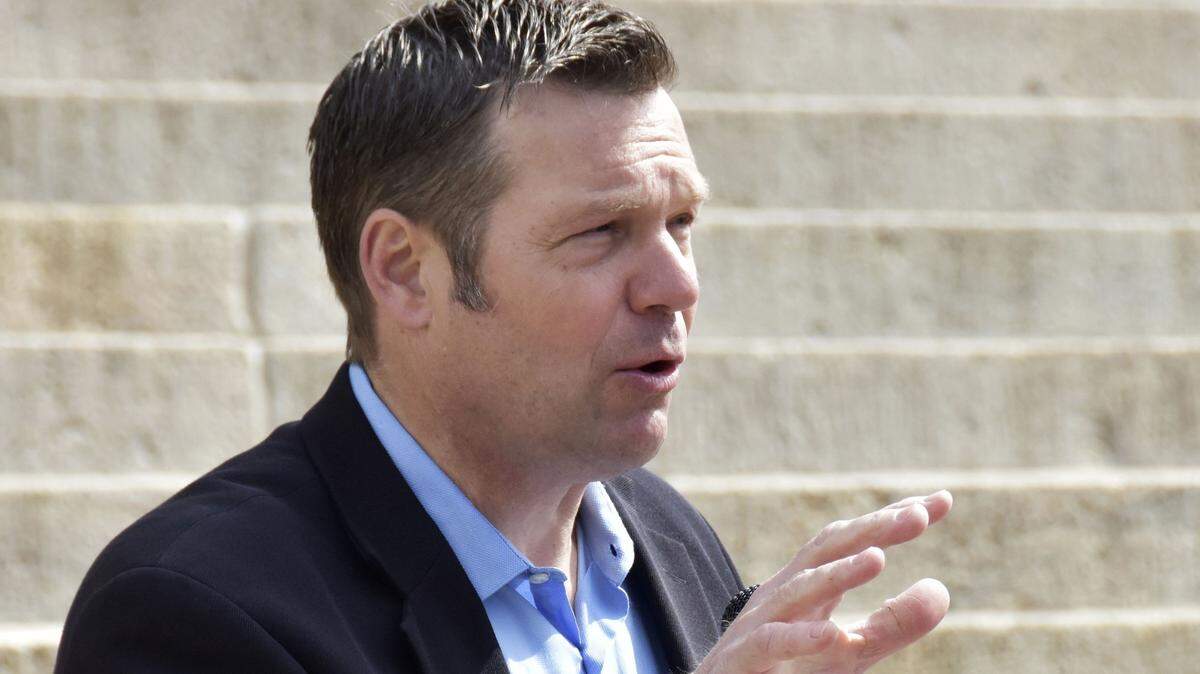
Kansas Secretary of State Kris Kobach’s office has told county election offices that they may no longer ask prospective voters for proof of citizenship but they can collect the documents if voters provide them voluntarily.
Kobach’s office provided instructions Wednesday afternoon to the state’s 105 county election offices following a federal judge’s decision Monday to strike down the state’s requirement that people must provide proof of citizenship before they can register to vote.
Bryan Caskey, the state’s director of elections, instructed the county election officials to change the status of any voter registration record marked canceled or in suspension to “active” after the ruling.
Caskey said in an email that about 25,175 voter records would be changed to active status.
“Once the status has changed, each person should be sent a notice of disposition that informs the voter of their registration status and the location of the polling place for the upcoming primary election. No other notices are required to be sent,” Caskey instructed the county officials.
Caskey told the local election officials they could no longer ask for proof of citizenship, such as a birth certificate or passport, in the wake of the ruling.
However, he also said that if — the word “if” is underlined in the instructions — a voter provides the documents voluntarily or the county election office receives the documents from a third party, it should still note the information in the voter registration system.
“This has no bearing on the applicant’s voter registration status. It will be used for tracking purposes only,” Caskey said in the instructions.
Mark Johnson, a Kansas City-based attorney who represented a plaintiff in one of the two lawsuits against Kobach, questioned the instruction that counties could continue to track proof of citizenship.
“They have no business maintaining that information. I don’t like the idea that it will be used for tracking purposes only. Tracking what? That should not be in there,” Johnson said.
“I think the judge will be surprised to see that,” he added.
U.S. District Judge Julie Robinson issued a contempt order for Kobach in April and this week ordered him to take six hours of classes on civil procedure.
Kobach crafted and championed the proof-of-citizenship law on the grounds that it prevents noncitizens from voting, but plaintiffs successfully persuaded the judge that the law blocks many citizens from voting.
Johnson said that if counties receive proof-of-citizenship documents, the only thing they should be instructed to do now is to tell the prospective voter “Thank you, but we don’t need that” and hand them back.
Caskey told the election officials that under the ruling, any voter who has not provided proof of citizenship “shall be treated the same as a person who has provided documentary proof of citizenship.”
However, he also informed the local officials that the state is appealing the district court ruling and that if the appeal is successful, “an individual who has not provided evidence of citizenship and who may be affected by any reversal of the court’s ruling may need to have their status reviewed.”
Johnson said that apart from his concern with the tracking of citizenship status, the instructions otherwise appear to adhere to the ruling.
Dale Ho, the lead attorney for the American Civil Liberties Union, said in an email that his organization was reviewing how Kobach's office was responding to the ruling.
“To me, it looks like there are still some compliance problems, but they do not appear to be emergency issues. We’ll continue reviewing,” Ho said.
This story was originally published June 20, 2018 at 3:47 PM with the headline "Kobach’s office: Counties may continue to ‘track’ citizenship if they don’t ask."