
KU student protest video sparks action on sexual assault policy
Morgan Said is quite familiar with the power of student protest.
But the University of Kansas student body president said she has never known it to spark student emotion so intense or an administration response so swift as what she saw on her campus this week.
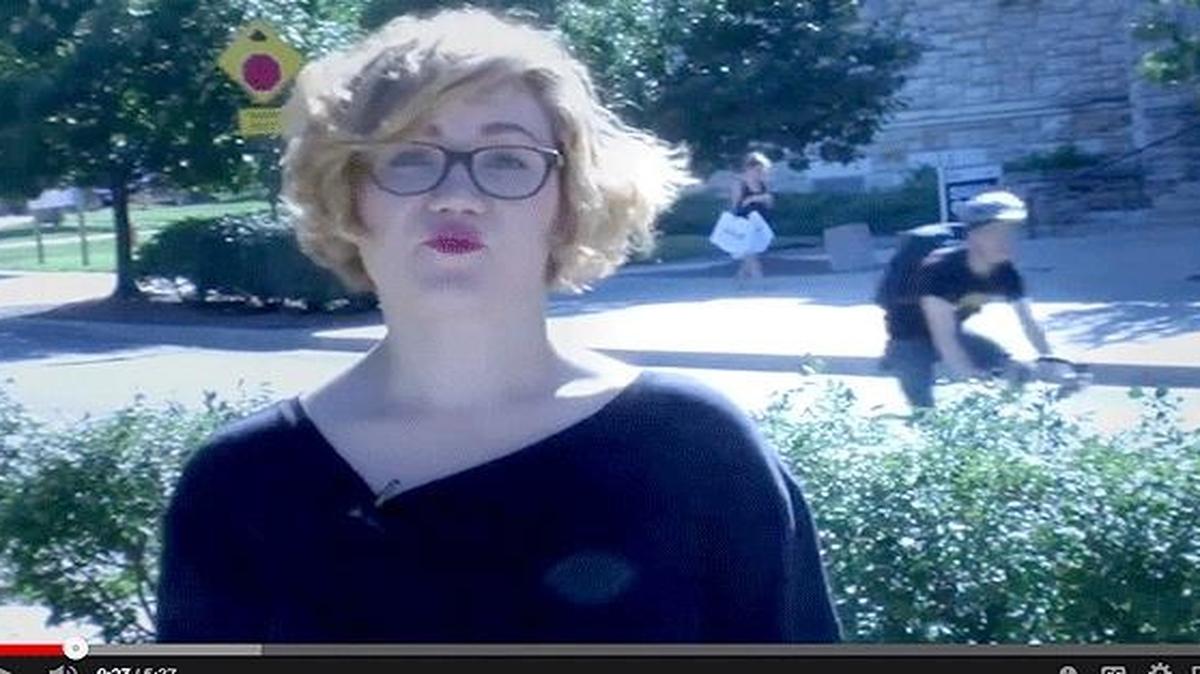
Student outrage over the way the University of Kansas handles sexual assault cases erupted Tuesday after a group released a video warning potential students not to enroll at KU because the Lawrence campus is not a safe place.
“The message we were trying to send was that this is a cool school to be at, but we cannot, in good conscience, tell people to come here when the administration does not care about the students,” said Jamie Godd-Nelson, a member of September Siblings, the 50-member student group that posted the video.
Tuesday evening, more than 200 students turned out for a forum denouncing the university’s handling of sexual assault complaints. Young women who had been quiet told the gathering about having been sexually assaulted.
On Wednesday, a student government committee passed a resolution condemning the university’s sexual assault policies. Petitions circulated on campus calling for the chancellor’s office to investigate the office of Institutional Opportunity and Access and Student Affairs, which reviews sexual assault allegations.
On Thursday, the chancellor presented a plan for improvement.
“Sexual assaults on college campuses is a hot-button issue at this time, and in the last months students at quite a few other schools — Berkeley, Columbia and Dartmouth, for example — have launched student protests on this issue,” said Terry Hartle, senior vice president for government and public affairs at the American Council on Education.
“These are not your grandfather’s protests,” Hartle said. “Social media has certainly changed every aspect of our lives, and student protests are no different.” A don’t-come-to-my-school video, he said, does little to slow enrollment, but “it certainly gets a quick response.”
The protests were sparked by a report that in 2013, KU officials declined to order a student who’d been accused of raping another student to perform community service following a university investigation.
Details about how the university handled the rape complaint came out Sept. 2 in a Huffington Post report. The university has declined to comment on that case or another report, this one from Sept. 9, in The University Daily Kansan. That report said a student accused of sexual assault was to be put on probation and made to pay restitution to the victim for therapy expenses, but the university’s student conduct office did not act on those recommendations.
On top of that, KU is among 76 schools under federal investigation for how it has handled sexual assault cases.
The title of the video, “A Great Place to Be Unsafe,” is a twist on a KU marketing slogan, “A Great Place to Be.” It highlights national and campus sexual assault statistics and includes statements from sexual assault victims whose faces are cloaked by a black screen and whose voices are disguised.
Godd-Nelson said her group chose a digital protest rather than signs on the campus lawn because they wanted their message to reach far beyond campus gates.
“We are definitely aware that media is an important aspect of what we are doing,” Godd-Nelson said. “We wanted to protest so that someone across the country could see it.”
It definitely got Chancellor Bernadette Gray-Little’s attention. On Thursday, she sent out a campus-wide statement promising the university would take a new “direction forward on preventing and responding to sexual assault.”
Gray-Little said she had directed Provost Jeffrey Vitter “to take immediate steps to ensure that the mandatory sexual assault training required of all students, faculty and staff has sanctions for noncompletion that are at least as severe as those that are in place for our compulsory alcohol training.”
She said she was creating a sexual assault task force of students, faculty and staff that will review policies, practices and sanctions, and recommend improvements. Angela Murphy, a graduate student in the English department, will lead the task force with Alesha Doan, chairwoman of the department of women, gender and sexuality studies and associate professor of political science.
“This is a good first step,” Godd-Nelson said. “This cannot be solved in a few days. It will take time, but we will be relentless.”
Said, a senior from Shawnee, said that while she has been involved with student politics at KU for some time and seen student government push the administration to act many times, on this issue the university had been slow to move.
But she said she has seen the university do more to improve its sexual assault policies this week than in all of 2013, when student government started speaking out about the issue.
The administration’s response this week “is because students have made such a fuss,” Said said. “It has really helped to speed things up.”
Until now, she said, the university has told students that KU’s policies are as good or better than those at its peer public research institutions.
“But having the better policy is irrelevant if the policy is not keeping students safe,” Said said. “Does the university abide by its policy, yes. Is the policy effective, no.”
Students complain that KU has no clear and specific sanctions for sexual misconduct.
At KU, sexual assault falls under a sexual harassment policy. Tim Caboni, vice chancellor for public affairs, said that’s because “federal law (Title IX) includes sexual violence as a form of discrimination.” So sexual assault cases at KU follow the same complaint resolution process as 16 other forms of discrimination including age, religion and race.
“Students are sanctioned under the Code of Student Rights and Responsibilities, for which Student Senate has primary authority,” Caboni said. “The most typical sanctions imposed have been suspension or expulsion.” Two students were expelled and four were suspended over the previous two academic years.
While the September Siblings’ video post calls for high school students to rethink plans to attend KU, Godd-Nelson said she and her fellow protesters have no plans to leave the school.
“If we all say this is scary and dangerous, so we are all just going to leave, then nothing changes,” Godd-Nelson said. “We are here, and there is something here that needs changing. We are going to be the ones who do it.”
To reach Mará Rose Williams, call 816-234-4419 or send email to mdwilliams@kcstar.com.
This story was originally published September 12, 2014 at 9:36 PM with the headline "KU student protest video sparks action on sexual assault policy."