
Colyer’s election-year challenge grows as Kansas’ school funding crisis intensifies
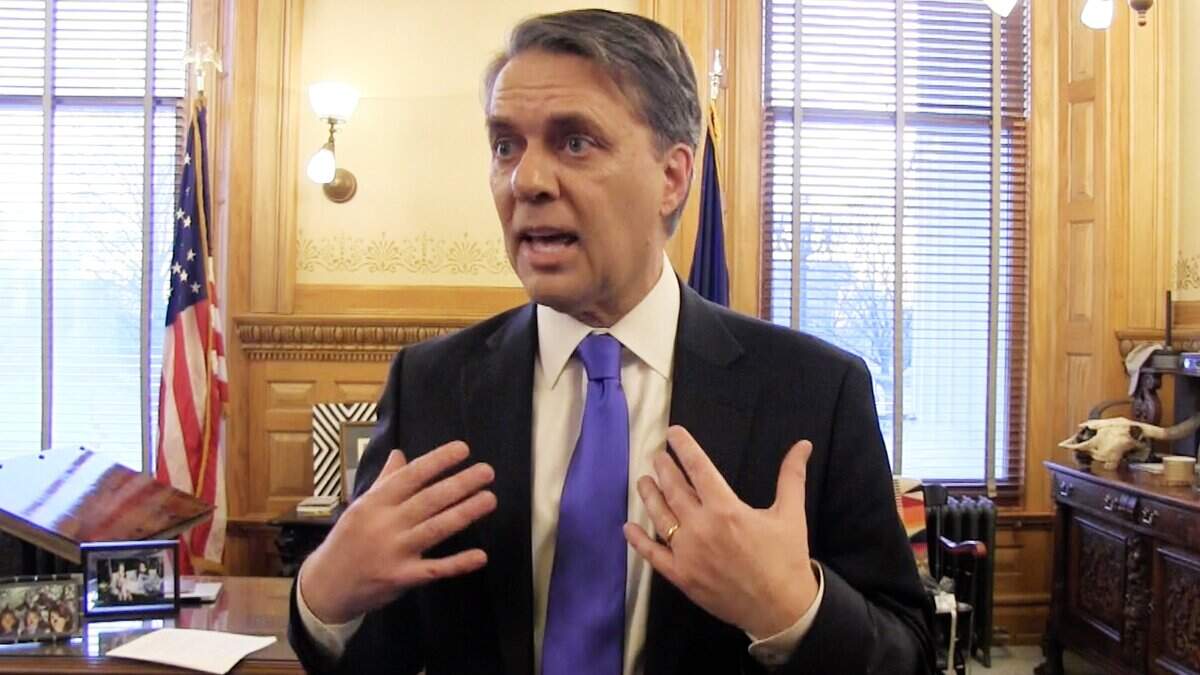
Gov. Jeff Colyer was nowhere to be seen on the third floor of the Kansas Statehouse on Friday as slack-jawed lawmakers watched the state's school finance crisis explode in size.
And even though it's the Kansas Legislature that must answer the state Supreme Court’s order to constitutionally fund K-12 schools, the issue could become a deafening one for Colyer as he attempts to beat out a more conservative primary challenger and still win the general election in November.
A study released Friday says Kansas would need to increase education funding by up to $2 billion to reach high targets for student achievement, or by more than $450 million for a lower mark.
What's a governor to do?
"How does he balance a desire to not raise taxes and comply?" said Rep. John Whitmer, a conservative Wichita Republican. "I don't think you can. That's the point. You can't. You either have to not comply or raise taxes. Pick one. You can't have both."
Lawmakers already faced a tight schedule. When the Kansas Supreme Court found the current funding unconstitutional, it gave lawmakers an April 30 deadline.
Rep. Valdenia Winn, a Kansas City, Kan., Democrat, said Colyer's best bet would be to "avoid the question between now and April 30, and hope that the Legislature does the job."
Money for schools has long been a hotly debated issue in Kansas, and along with the 2012 tax cuts largely defined former Gov. Sam Brownback’s tenure in Topeka. Though the school funding dilemma predates Brownback, it only grew with the Gannon case, in which four school districts, including Kansas City, Kan., in 2010 sued the state for more funding.
"I'm always open, as the entire Gannon team is, we're always open to conversation that results in a compromise," said Alan Rupe, the attorney representing the plaintiff districts. "And I would hope that some of the candidates for elected office this time around would not be adverse to a compromise, like some candidates for some political offices are."
During a joint address in February, Colyer called for an end to education lawsuits, which he said in some form have loomed over 10 governors and “fifty years and counting.”
Colyer said he wanted a definitive solution that ends school finance lawsuits “for good,” and he said increased investment in K-12 education must come through a phased-in approach that “doesn’t increase the tax burden on Kansas families.”
"I think in order to appeal to those moderate Republicans, Colyer's going to want to show some leadership on this that goes way beyond just attacking the courts," said Bob Beatty, a political scientist at Washburn University
Colyer's campaign spokesman said in an email Tuesday that "while some candidates see the school finance case as a political issue, Governor Colyer is more concerned with doing the right thing for our students, schools, and taxpayers. "
"Governor Colyer has been very clear since becoming Governor that any school finance plan must get money into schools to improve student outcomes, must end the litigation for good, and not raise the tax burden on hard-working Kansans," Colyer campaign spokesman Kendall Marr said.
Mark Desetti, legislative director of the Kansas National Education Association, the state's largest teachers union, said the situation could be a tipping point for Colyer.
"This may be the point where he tries to distinguish himself as 'not-Brownback,' " Desetti said. "So far, I've seen him be very conservative. Almost like he's trying to be more conservative than Kris Kobach to a certain degree. I'm wondering if he's looking for the place where he separates himself."
The makeup of the Kansas Legislature was overhauled by the 2016 election, when a host of moderate Republicans and Democrats, running against Brownback on tax policy and school funding, unseated conservative incumbents and gained clout in the statehouse.
But with every seat in the Kansas House on the ballot again this year, some are watching closely how the school finance debate plays out.
"I don't think we're going to push hard for increased revenues in this legislative session,” said Judith Deedy, executive director of Game On for Kansas Schools, a Johnson County parents organization. "If they come up with a plan to phase this in that's reasonable ...
"We don't want to wait forever, but we also know there is a limit to the resources of the state and this has to be done wisely and carefully. Nobody wants to bankrupt the state with a bad tax plan or with an unaffordable education plan."
House Majority Leader Don Hineman, a moderate Republican from Dighton, said it's too early to tell about the reports impact on the upcoming election.
"We're all in the process of digesting the report," Hineman said. "... In terms of how it affects any of us in the campaign, including the governor, I think it's premature to speculate."
Rep. Jim Karleskint, a moderate Republican from Tonganoxie who focuses on education, said lawmakers are feeling pressure.
"We can't throw all of the money at education," he said. "But we need to satisfy the court."
He said he's committed to doing what's right for schools, but also what's right for the overall state, citing serious needs other than education in Kansas.
"Even with the moderates, and probably a lot of the D's too, they don't want to make a significant tax increase," Karleskint said. "If they want to come back, they've got to be careful."
Some conservatives are still venting their frustration over the move by the Legislature last year to pass a tax increase expected to be worth roughly $600 million a year that essentially rolled back Brownback's tax cuts. Passing a tax increase in an election year would likely be a more difficult haul.
"Whether you're running for governor or you're running for re-election to the House, if you're looking at something that's $150 million over five years, I don't think that's going to be in and of itself an election issue," Dave Trabert, president of the Kansas Policy Institute, a conservative research group, said about education funding targets. "If you're looking at something that's $2 billion over five years, that's going to be a real problem, for everybody."
Conservative lawmakers such as Whitmer say it may be time to draw a line.
"When a petulant child keeps insisting on more, sometimes you spank them on the hand and tell them no," he said when asked about education funding.
Lawmakers, and Colyer, will have little time to reach a consensus on one of the state’s most controversial issues in a pivotal election year.
"We put a man on the moon," Winn, the Kansas City, Kan, Democrat, said. "Why can't we solve school finance?"
The Wichita Eagle's Jonathan Shorman contributed to this report.
This story was originally published March 20, 2018 at 4:19 PM with the headline "Colyer’s election-year challenge grows as Kansas’ school funding crisis intensifies."