
Block grant funding for Kansas schools gets tentative House approval
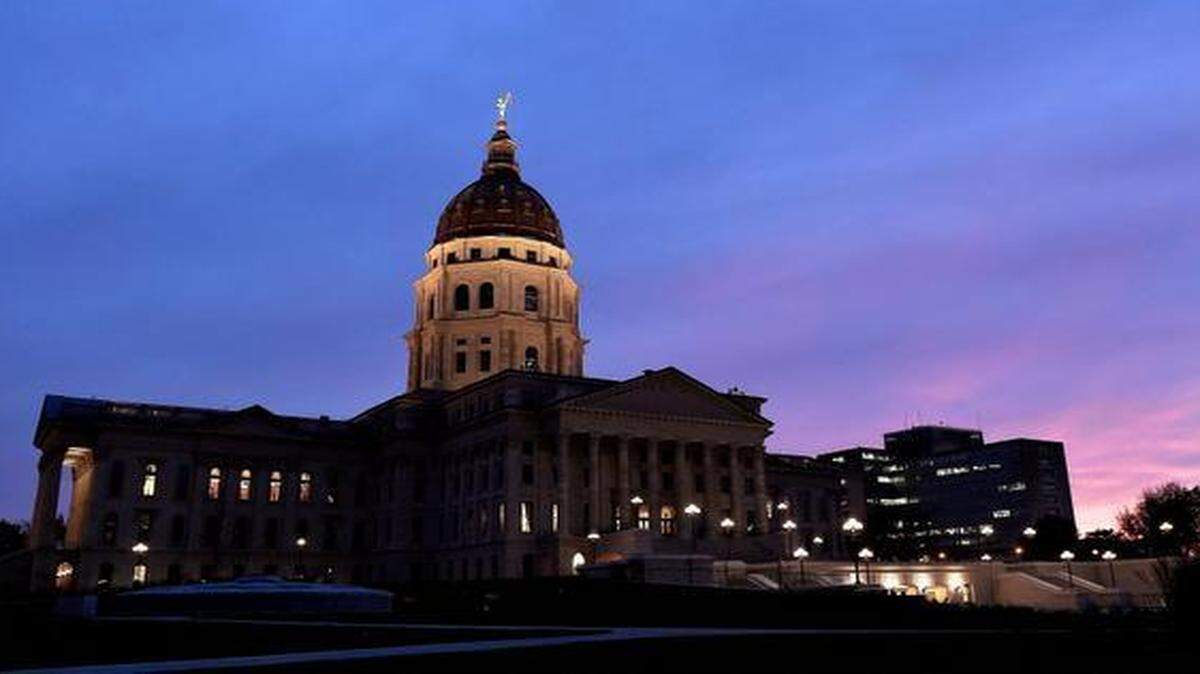
The Kansas House narrowly advanced a controversial bill Thursday repealing the state’s current school finance formula in favor of flexible block grants.
The proposal — first previewed by Gov. Sam Brownback during his State of State address — will give school districts more flexibility on how to spend state dollars.
Yet it will also reduce overall school funding for the current year.
The measure won preliminary approval 64-58. The House still needs to take final action on the bill, probably Friday morning, before it can head to the Senate.
“It’s not a victory till it gets to (Brownback’s) desk,” said Jon Hummel, the governor’s chief of staff.
Supporters of the bill framed it as a way to free up dollars for the classroom and offer school districts and lawmakers certainty about funding levels for the next two years.
Brownback and many conservatives say the current formula, which ebbs and flows each year depending on student demographics, is flawed.
The bill reduces funding for the current year and then keeps money for districts’ daily operations mostly flat for the next two years. It does, however, fund a $122 million pension funding increase that was not included in the governor’s proposed budget for the next two years.
Rep. Amanda Grosserode, a Lenexa Republican, argued that the cost of the pensions increase would have otherwise been passed onto school districts.
Money for pensions will not be flexible. Neither will the money slated for paying interest on bonds or funding special education.
But the rest of the money, which under the current system is slated for specific purposes such as transportation, would be flexible to be used how school districts see fit.
“Our local districts know how to educate our kids better than we do,” Rep. Ron Ryckman, Jr., an Olathe Republican and one of the bill’s authors, said during the debate. “Change is hard. This is an emotional decision.”
Rep. Jerry Lunn, an Overland Park Republican, argued that the move to block grants would enable districts to offer pay raises to teachers.
Before the House vote Thursday, officials from two of the largest and most prosperous districts in the state gave qualified endorsements to the legislation.
Shawnee Mission schools issued a statement challenging one notion put forward by legislative leaders, saying that “we do not concur that the formula is too complex to understand or that all districts are inefficient.
“But,” the statement continued, “we do believe changing the formula benefits our students and our community.”
The statement said the district supports “block grant legislation as the difficult but necessary transition to a new formula.”
Blue Valley superintendent Tom Trigg said in an email to legislators late Wednesday that his district was backing the measure as “likely the best school finance bill that will come before the legislature this session.”
“While the bill is not ideal,” Trigg wrote, “it represents a genuine effort to continue current funding levels for the next two years.”
Both districts said they might withdraw their backing if the bill changed significantly.
Mark Desetti, legislative director for the Kansas National Education Association, the state’s biggest teachers union, called this unlikely, as districts would still face the same expenses they do now.
“School boards still have to pay utility bills, fill the buses with gas, bring in the food, clean the buildings. … So this idea that it’s a big benefit to teachers, it is absolutely not,” Desetti said.
Opponents called for caution about scuttling the 23-year-old formula in favor of a policy that was only unveiled a week ago. The bill includes a sunset, so after the 2016-2017 school year, the state will be without a school finance formula unless lawmakers pass something new.
Rep. Don Hineman, a Republican from western Kansas, compared the debate to when he and his wife remodeled their farmhouse.
“Our plan didn’t involve lighting a match and burning the house to the ground,” he said. “Instead, we remodeled the bathrooms.”
Rep. Scott Schwab, an Olathe Republican, later retorted that “I’m not remodeling the bathroom. I’m taking down something that needs to be taken down.”
Schwab said that schools in his district receive about $12,000 in funding for each student — a figure that includes local and federal dollars — and questioned whether adding one more student to a classroom truly causes the cost of educating the class as whole to shoot up $12,000.
No school districts outside Johnson County have actively backed the plan.
Other large districts — Wichita, Topeka and Kansas City — all see major funding reductions and have been outspoken in opposition.
The bill restores the $28 million reduction to funding for the current school year made by the governor that went into effect earlier this month. But it also reduces equalization aid approved by the legislature last session by about $51 million.
Wichita alone loses $4.8 million if the bill becomes law compared to if the legislature took no action. Mike Rodee, a member of the Wichita school board, said Wednesday the district would likely be forced to raise local property taxes or make cuts.
On the House floor, Rep. Ed Trimmer, a Winfield Democrat, argued that the bill would have an unequal impact across districts.
Winfield will lose about $253,000, he said. Arkansas City, on the other hand, will gain more than $235,000, creating an overall difference of almost $490,000 despite the districts being only miles apart and similar in population, Trimmer said.
Rep. Annie Kuether, a Topeka Democrat, offered an amendment that would have prevented the governor from issuing any future funding reductions if it became law.
Kuether and Grosserode had an intense exchange. The lawmaker from Lenexa asked what the governor should do if the state runs into a situation — as it did this year — where it needs to cut expenses immediately in order to pay its bills.
Kuether said the obvious solution is to address the state’s tax system, which many Democrats and moderate Republicans blame for the state’s rocky financial situation.
Kuether and others said that the purpose of the amendment was to hold the governor and legislators to promises to protect school funding and to ensure that the money allocated in the bill goes to school districts.
The motion failed by a vote of 89-33.
Rep. Barbara Bollier of Mission Hills, one of only five Republicans to support the amendment, spoke skeptically about the bill’s supporters’ willingness to fund schools at the level outlined in the bill.
Later in the debate, Rep. Don Hill, an Emporia Republican, noted that the few organizations actively backing the bill, such as the Kansas Policy Institute and the Kansas Chamber of Commerce, were the same ones that pushed for “our flawed tax policy” in 2012.
House Minority Leader Tom Burroughs, a Kansas City Democrat, called the bill the work of an “anti-education lobbying effort.”
“Maybe this isn’t the great state of Kansas,” Burroughs said. “Maybe this is the great state of the Chamber of Commerce.”
Mike O’Neal, the chamber’s president, has previously said the organization’s support for the bill stems from a belief that the current formula does not get enough money to the classroom and that block grants will enable districts to do so.
This story was originally published March 12, 2015 at 5:35 PM with the headline "Block grant funding for Kansas schools gets tentative House approval."