
Child advocates want to halt production of interactive Hello Barbie doll
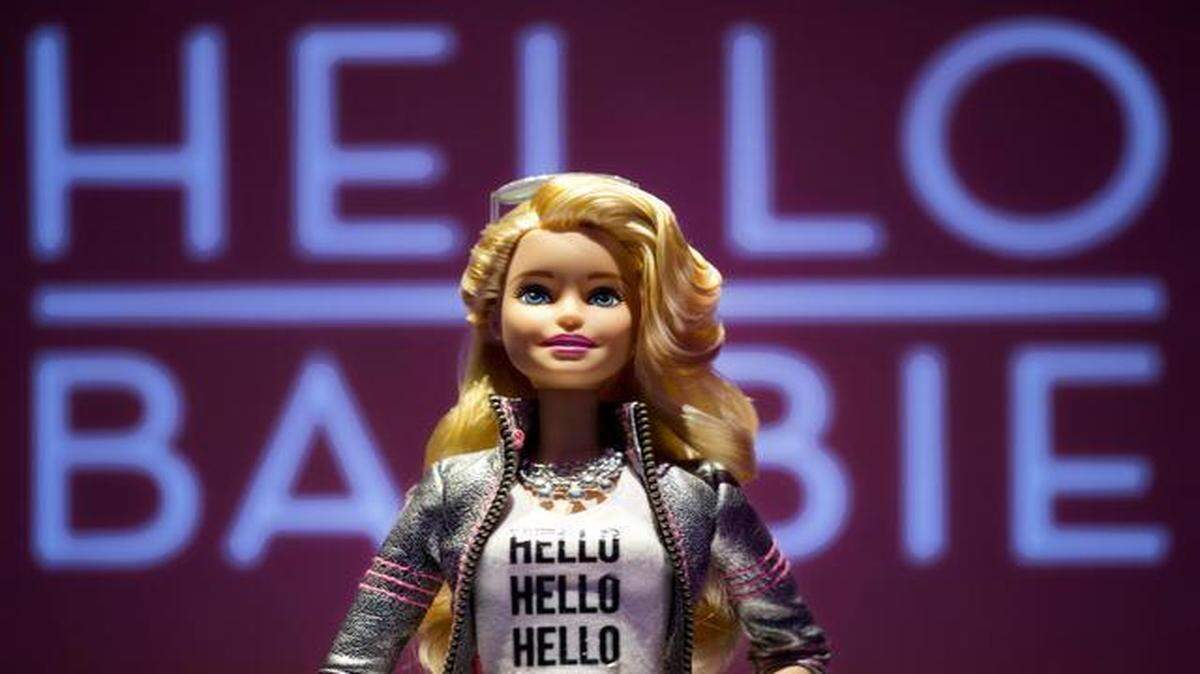
Child advocates want toy maker Mattel to pull the plug on a new interactive Barbie doll that records children’s voices and uploads them to a cloud server.
The Hello Barbie doll — expected to arrive in stores this fall — uses Wi-Fi to hold two-way conversations by “listening” to a child’s words and responding appropriately.
In a videotaped demonstration of the doll at the New York Toy Fair last month, a saleswoman chatted with Barbie about New York City.
“I love New York, don’t you?” Barbie gushed. “Tell me, what’s your favorite part about the city?”
When the woman said she enjoys Italian restaurants, Barbie said, “You have to take me to try it!”
Susan Linn, executive director of the nonprofit Campaign for a Commercial-Free Childhood, said the doll is “creepy” and “dangerous.” The group is calling on Mattel to stop all production and marketing of Hello Barbie.
“Kids using Hello Barbie aren’t only talking to a doll. They are talking directly to a toy conglomerate whose only interest in them is financial,” Linn said Wednesday in a statement.
Mattel said Hello Barbie was developed in response to the wishes of girls from around the world, whose top request was to be able to have a conversation with Barbie.
Hello Barbie conforms to government standards and employs safeguards to protect children’s data from access by “unauthorized users,” Mattel said in a statement.
“Mattel is committed to safety and security,” the statement said.
But advocates with the Campaign for a Commercial-Free Childhood complain that Hello Barbie eavesdrops on children, exploiting private dialogues with dolls for profit.
“If I had a young child, I would be very concerned that my child’s intimate conversations with her doll were being recorded and analyzed,” Angela Campbell, faculty adviser to the Center on Privacy and Technology at Georgetown Law School, said in the group’s statement on Tuesday.
“In Mattel’s demo, Barbie asks many questions that would elicit a great deal of information about a child, her interests and her family,” Campbell said. “This information could be of great value to advertisers and be used to market unfairly to children.”
Computer algorithms shouldn’t displace children’s real conversations with real friends, pediatrician Dipesh Navsaria, assistant professor at the University of Wisconsin School of Medicine and Public Health, said in the statement.
“Children do not need commercially manufactured messages — artificially created after listening in on anyone within range of Mattel’s microphones,” Navsaria said.
To reach Lindsay Wise, call 202-383-6007 or send email to lwise@mcclatchydc.com.
This story was originally published March 11, 2015 at 12:54 PM.