
In KC, Condoleezza Rice warns of international erosion without U.S. defense
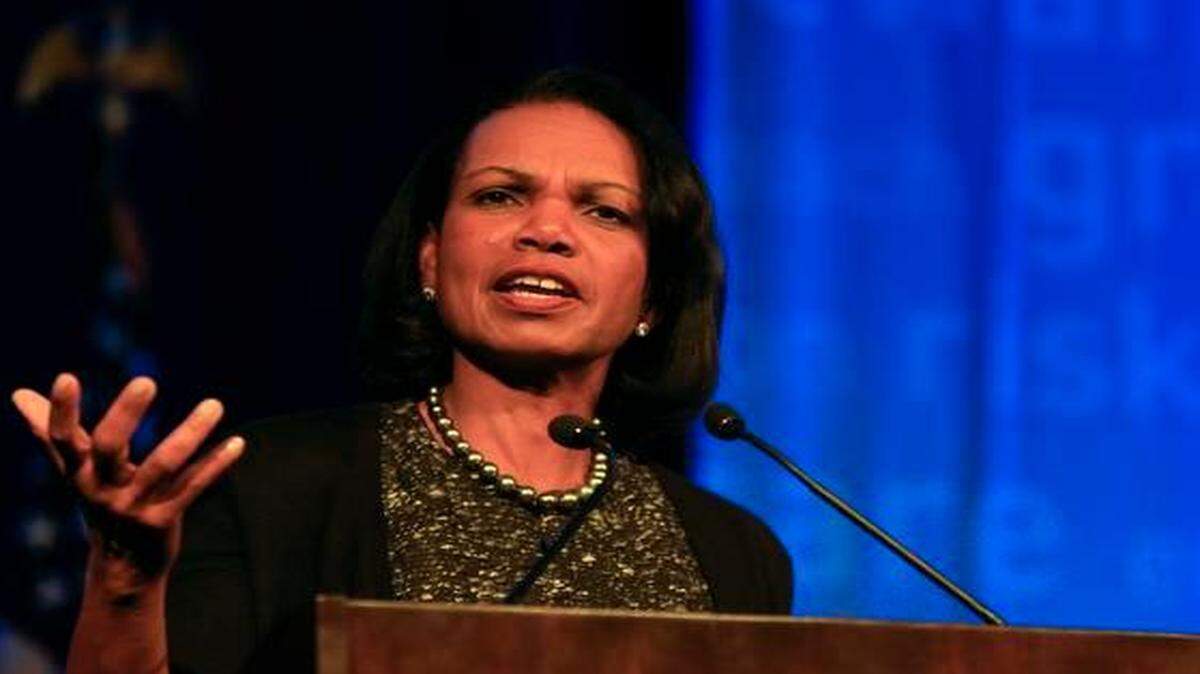
Former U.S. secretary of state Condoleezza Rice said Wednesday in Kansas City that the established world order may “erode” without a firmer U.S. commitment to defend existing relationships among nations.
“Signals are not very strong” that the U.S. will defend the current setup of interconnected nation-states, Rice told an audience at the Kansas City Marriott Downtown.
The former national security adviser spoke there as part of a leadership series lecture sponsored by Rockhurst University. More than 1,100 people attended the speech.
Rice did not criticize specific decisions of successors such as John Kerry, and she did not talk about Hillary Clinton’s service. Clinton now faces criticism for her use of private email accounts while secretary of state.
But Rice said the existing system of foreign relations, built on interlocking interests and superpower presence, is worth defending.
She called Russian President Vladimir Putin a “megalomaniac.”
In a response to a written question from a Rockhurst student, Rice said she considers the threat of a cyberattack against the U.S. as serious as the threat from conventional terrorism. She said the country might have to develop the capability to massively respond to a digital attack — a deterrent similar to the nuclear arsenal assembled during the Cold War.
The former secretary, a well-known sports fan, also weighed in on the status of collegiate athletics.
She said a proposal to pay football and men’s basketball players is a “dead end” because other college athletes would demand similar treatment.
“If we ever get to the place where we’re paying (players) commensurate with what you brought in, places like Stanford will get out of the business,” she said.
Rice is a professor at Stanford.
To reach Dave Helling, call 816-234-4656 or send email to dhelling@kcstar.com.
This story was originally published March 4, 2015 at 3:46 PM with the headline "In KC, Condoleezza Rice warns of international erosion without U.S. defense."