
Vance heads to new talks with Iran, with peace and his own standing at stake
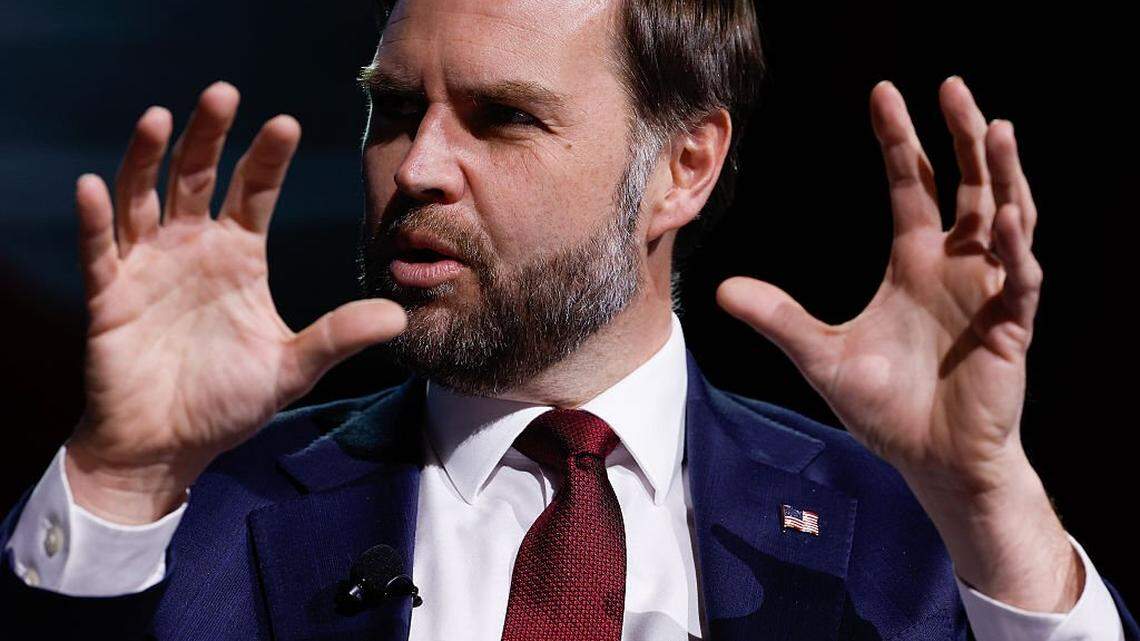
WASHINGTON -- JD Vance will try again.
The vice president is scheduled to lead a U.S. delegation back to Islamabad this week for another round of in-person negotiations with Iran after failing to secure a deal just over a week ago.
Whether the talks even occur seems in dispute. Hours after President Donald Trump announced the trip on Sunday, Iranian state media said Iran had not yet agreed to any such meeting. Later, Trump announced that a Navy destroyer had attacked an Iranian-flagged cargo ship that tried to skirt the U.S. blockade on Iranian ports in the Strait of Hormuz.
The conditions for a new round of diplomacy were, at best, imperfect, and the stakes for a second failure high, both for ending a war that neither side seems to want to prolong and for Mr. Vance himself.
As a two-week ceasefire nears an end, and as Vance prepared for another long journey to Pakistan, Trump again threatened maximalist consequences if Iran failed to agree to his terms.
“We’re offering a very fair and reasonable DEAL, and I hope they take it because, if they don’t, the United States is going to knock out every single Power Plant, and every single Bridge, in Iran,” the president wrote on social media Sunday. “NO MORE MR. NICE GUY!”
While Steve Witkoff, Trump’s special envoy, and Jared Kushner, the president’s son-in-law, will also be at the talks, Vance is center stage, tasked with finding a way out of a war that is increasingly unpopular with Americans and that has continued to weaken the global economy and the vastly complex energy supply chain. It is also a conflict that Vance told Trump, during deliberations on whether to attack, could be seen as a betrayal to loyal voters who did not want more wars. He has nonetheless defended it publicly.
Vance spent 21 hours in Pakistan last weekend negotiating with the Iranians, only to walk away with no deal. Allies and adversaries alike say that if he is unable to make any progress this time, it will be the latest political setback, as the world watches, for a man who wants to succeed Trump.
The vice president traveled to Hungary this month to campaign with Prime Minister Viktor Orban, a hero to the U.S. right wing who went on to lose reelection. Vance, who announced last month that he was writing a book about his conversion to Catholicism, also found himself defending Trump in a row with Pope Leo XIV, and took much grief online for suggesting that the head of the world’s 1.4 billion Catholics should be more “careful” when discussing theology.
Trump appears to have further complicated the negotiations and, thus, Vance’s task. The president spent much of the weekend proclaiming that Iran had agreed to all of his demands and expressing optimism that a deal was close.
Iranian leaders have denied his claims. But still, for Iran, reaching a deal with Washington could also be crucial to easing pressure on an economy already in crisis before the war -- and the spark that set off nationwide protests this year.
A deal could also potentially unlock billions of dollars in Iranian assets frozen by Washington or at least partially lift punishing sanctions that have isolated Iran from the global economy. Such a boost would be critical for Iran to repair this war’s destruction, not just on its military sites, but also on major factories, universities and infrastructure.
On April 12, when Vance abruptly left Islamabad after a marathon session of negotiations, he said the United States had made its “final and best offer.” U.S. officials say that despite the public bluster, the two sides have made strides toward a deal since that apparent ultimatum.
How far they can get in any new talks remains unclear, given the deeply sensitive unresolved issues, including the specifics of nuclear enrichment. U.S. officials said the Trump administration wanted a ban on nuclear enrichment for 20 years. Iran had countered with five years.
The status of the Strait of Hormuz also remains in dispute.
Iran imposed a blockade on the channel itself, through which roughly 20% of the world’s oil normally travels, and the United States countered by blocking traffic to Iranian ports. On Saturday, Iran attacked two Indian vessels attempting a transit, acts that Trump described on Sunday as a “total violation of our ceasefire.”
Nonetheless, Pakistan appeared to be readying for a fresh round of talks, an indication that the negotiations were likely to go forward even as the two sides sent conflicting public messages. Islamabad, the capital, went on a security lockdown Sunday night, and officials said they would deploy 10,000 extra security forces in the city.
This article originally appeared in The New York Times.
Copyright 2026 The New York Times Company
This story was originally published April 20, 2026 at 10:02 AM.