‘Large’ creature with ‘long’ tail found in pond in China. It’s a new species

In a deep pool tucked in the mountains of southern China, a “large” brownish-black creature with a “long” tail moved through the water. Something about it caught the attention of visiting scientists — and for good reason.
It turned out to be a new species.
A team of researchers visited the Wumeng Mountains in 2018 as part of a project to document the region’s amphibians. They hoped such “species identification” work would in turn support more accurate wildlife conservation efforts, according to a study published Oct. 1 in the peer-reviewed journal Zoosystematics and Evolution.
During the surveys, researchers found several vaguely familiar looking salamanders in “three deep-water pools,” the study said. At first, they identified the animals as a new population of a known species but, when they took a closer look, they noticed several unique features.
Researchers soon realized they’d discovered a new species: Paramesotriton wumengshanensis, or the Wumeng Mountains warty newt.
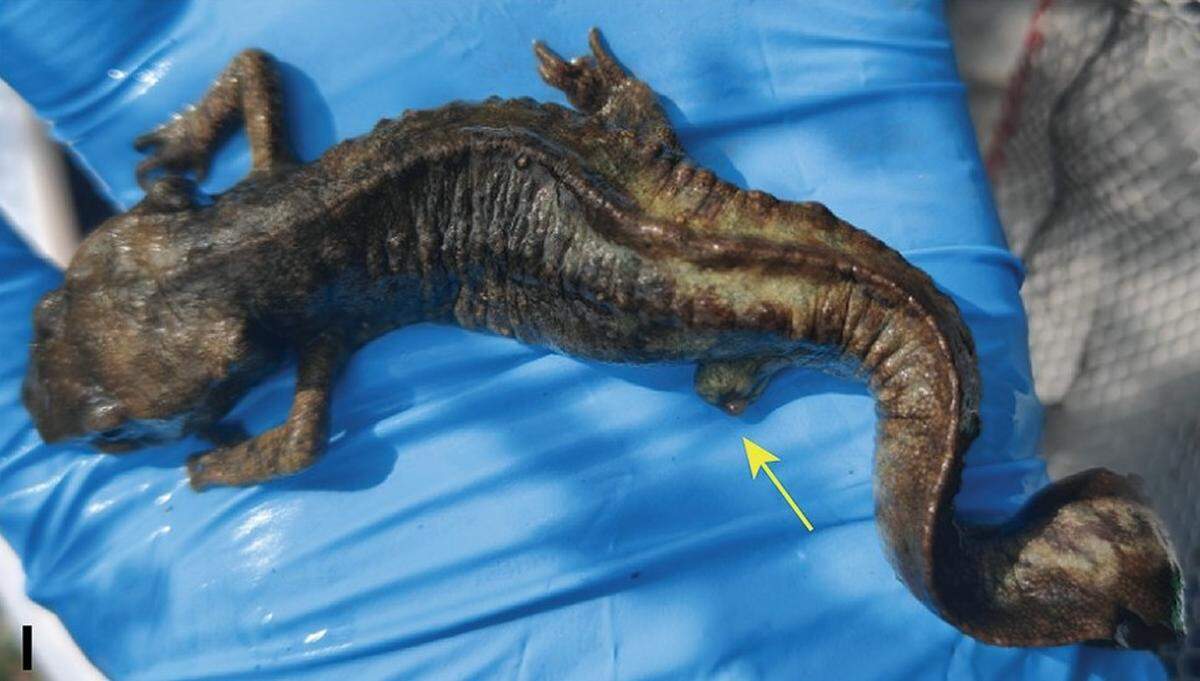
Wumeng Mountains warty newts are considered “large,” reaching over 6 nches in length,/the study said. They have “slender” bodies with a “flat” head, “short” arms and “relatively long” tail. Their skin is “rough” with “many warts,” ridges and wrinkles. Their eyes are “large,” and their tongues are “short.”
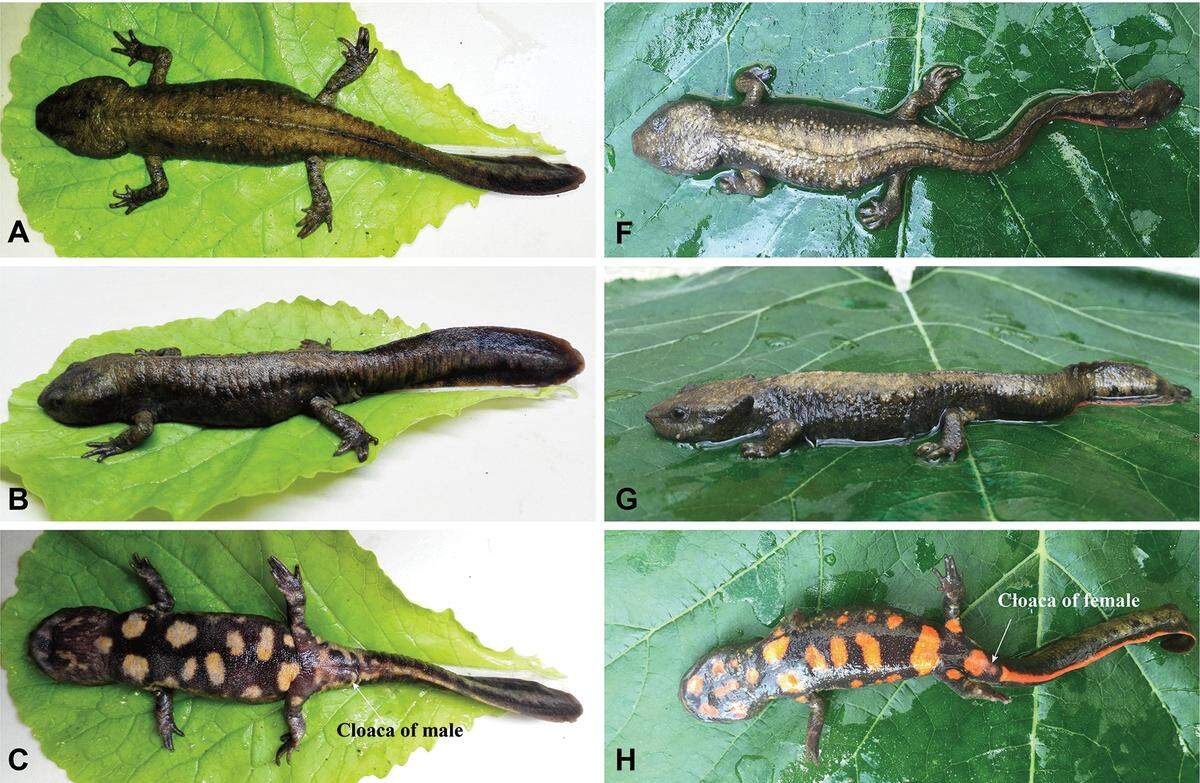
Photos show the coloring of the new species. Seen from above, the newts are uniformly “black-brown,” researchers said. Seen from below, the newts have “irregular reddish-orange markings.”
Wumeng Mountains warty newts were found in “waterholes” surrounded by “bamboo forests and local crops, including rice, corn, and chili peppers,” the study said. Much about their behavior, diet and lifestyle remains unknown.
Researchers said they named the new species after the Wumeng Mountains, where it was first discovered and, so far, the only place where it has been found. The discovery site is in Guizhou province of southern China.
Because of its limited range, potentially small population and proximity to known threats, the new species could be at risk, and its conservation status should be evaluated, the study said.
The new species was identified by its DNA, body size, skin texture, coloring, finger and toe shape, skeletal structure, teeth, and other subtle physical features, researchers said.
The research team included Tao Luo, Jia-Jia Wang, Mei Liao, Ming-Yuan Xiao, Huai-Qing Deng, Ning Xiao and Jiang Zhou.
This story was originally published October 2, 2025 at 1:19 PM with the headline "‘Large’ creature with ‘long’ tail found in pond in China. It’s a new species."