‘Secretive’ creature found buried under rotten log in Vietnam. It’s a new species
.png "In the mountains of Vietnam, a new blind species was found buried under a rotten long.")
What makes a lizard, a lizard? A rough, scaly body, long claws and flickering tongue does not a lizard make.
Instead, the definition is a little more encompassing than you might believe.
Meet the skink.
Worm-like and sleek, this group of lizards includes a family called Dibamidae, or blind skinks, which are “one of the most ancient living groups of squamate reptiles.”
Blind skinks live a “fossorial” life, meaning they burrow into the soft sediment and under fallen leaves and rotting logs. This lifestyle has led to “miniaturization,” the “almost complete reduction of eyes” and the loss of “external ear openings.”
Now, researchers have discovered a new blind skink species in the Kon Ka Kinh National Park of Vietnam.
“Their small size and secretive fossorial lifestyle make finding these lizards in the field quite challenging, leading to a lack of understanding of their actual diversity and natural history,” according to a study published Sept. 16 in the peer-reviewed journal Zootaxa.
The Langbian blind skink is a species that was first described in 1921 in the Langbian region of Vietnam, but when researchers conducted recent fieldwork they noticed that while some of the specimens looked the same “superficially”, a closer look at their osteology, or skeletons, and bodies showed they belonged to different species.
The new species was found “under a rotten log” in an evergreen montane forest, according to the study.
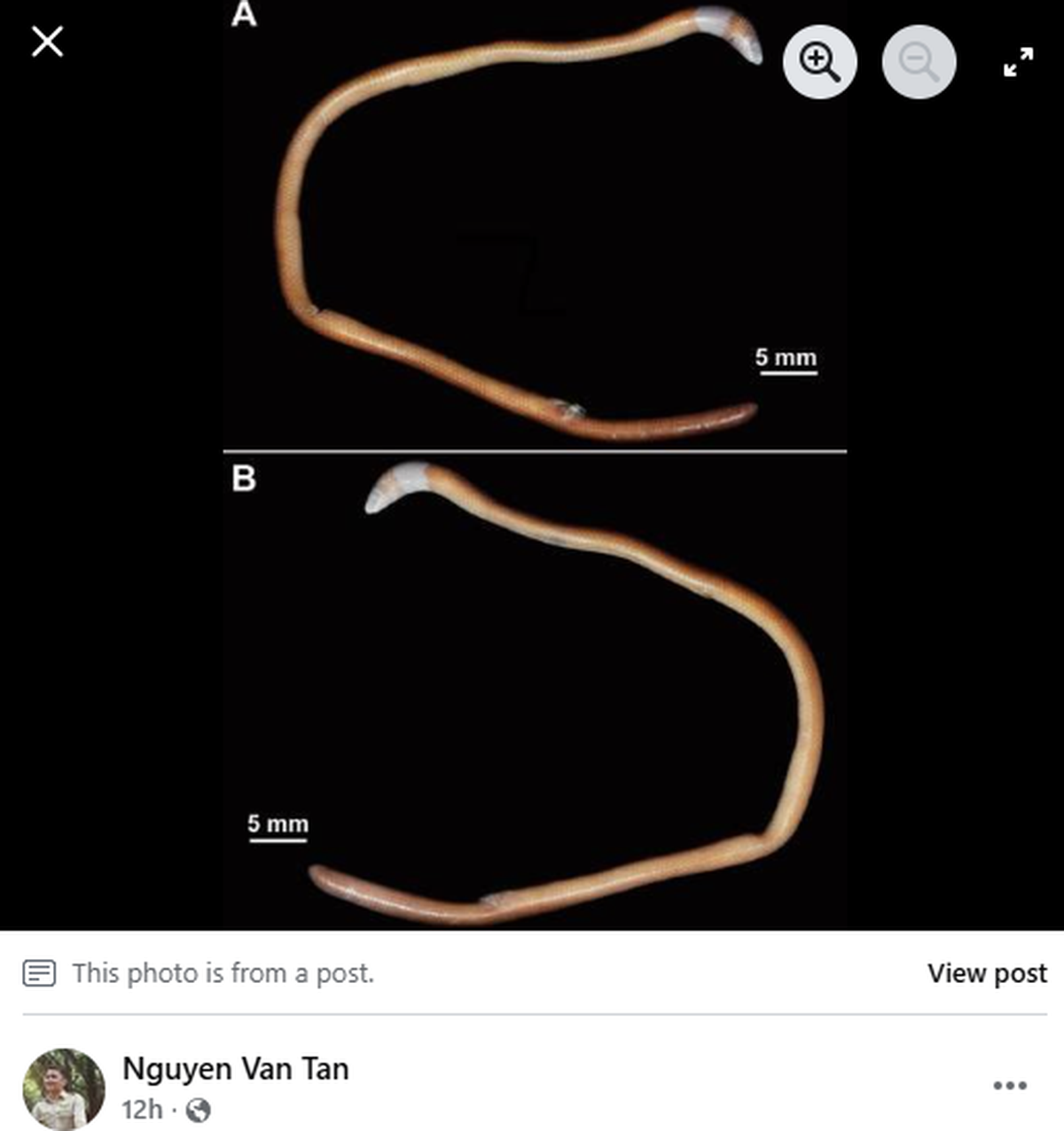
The animal was named Anna’s blind skink, Dibamus annae, after Russian researcher Anna B. Vassilieva who collected the holotype, or primary specimen, and has spent 10 years studying reptiles in Vietnam, researchers said.
The skink is about 4 inches long and has a “longer” head, according to the study.
Its snout is “bluntly rounded” and the ear holes are missing while the eyes are “barely visible” under a single scale, researchers said.
The skink has a “wormlike” body that is “almost cylindrical” with “smooth” scales. While the tail is “complete,” Anna’s blind skink has “rudimentary flap-like hind limbs” that are barely noticeable from a distance, according to the study.
In preservation, the skink is light brown with a “distinct transverse cream-colored” band behind the head, according to the study.
The skink was mistaken for another species that was described in life as “reddish-brown to pale brown” with a “dull-grey” body band, and the colors faded after the specimen was preserved, researchers said.
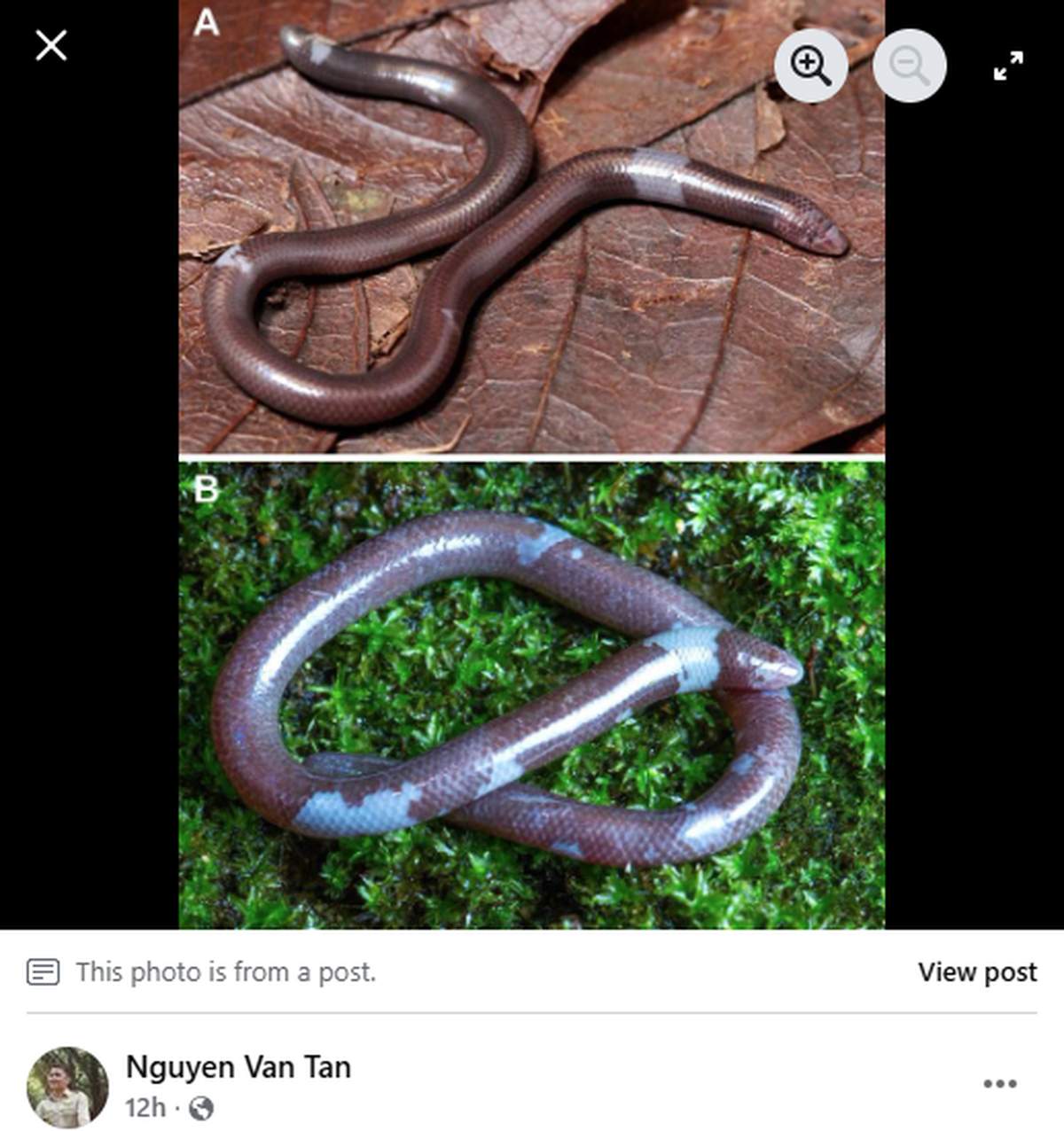
“Dibamus annae sp. nov. was recorded at an elevation of (2,854 feet above sea level) and appears to be restricted to montane forests of the Central Annamites,” researchers said. “This mountainous area is recognized as a local center of herpetofaunal diversity, with many new species of amphibians and reptiles described from the plateau in the last decade.”
Two blind skinks have now been found around the same area, according to the study, and the new species brings the total number of blind skinks globally to 28, nine of which live in Vietnam, study author Tan Van Nguyen said in a Sept. 15 Facebook post.
“Blind skinks are rarely seen but are important indicators of soil and forest ecosystem health,” Nguyen said. “The discovery of D. annae underscores the importance of conserving Vietnam’s montane forests, which harbor unique, poorly known, and often threatened lineages.”
Kon Ka Kinh National Park is in central Vietnam, east of the borders of Cambodia and Laos.
The research team includes Nguyen, Nikita S. Kliukin, Parinya Pawangkhanant, Hieu Minh Pham, Son Xuan Le, Vladislav A. Gorin, Collin Bos, Isaac W. Krone and Nikolay A. Poyarkov.
This story was originally published September 16, 2025 at 12:57 PM with the headline "‘Secretive’ creature found buried under rotten log in Vietnam. It’s a new species."