2-foot-long predator — ‘a hidden green gem’ — discovered as new species in Tibet

Near a river in the foothills of the Himalayas, a 2-foot-long predator with “reddish” eyes moved through the grass. Its “striking and vivid” coloring helped it go largely unnoticed — until some keen-eyed scientists visited.
The lurking animal turned out to be a new species.
A team of researchers visited the mountains of southern Tibet in June as part of a larger project to document the region’s reptiles and amphibians. The Himalayas are generally known as a “global biodiversity hotspot,” but “due to its remoteness, rugged terrain, and frequent geological instability, many parts of the Himalayas remain poorly surveyed,” according to a study published Sept. 12 in the peer-reviewed journal Animals.
During their fieldwork, researchers encountered several unfamiliar-looking snakes and caught three of them for a closer look, the study said. Researchers analyzed the snakes and quickly realized they’d discovered a new species: Trimeresurus pretiosus, or the Yadong green pit viper.
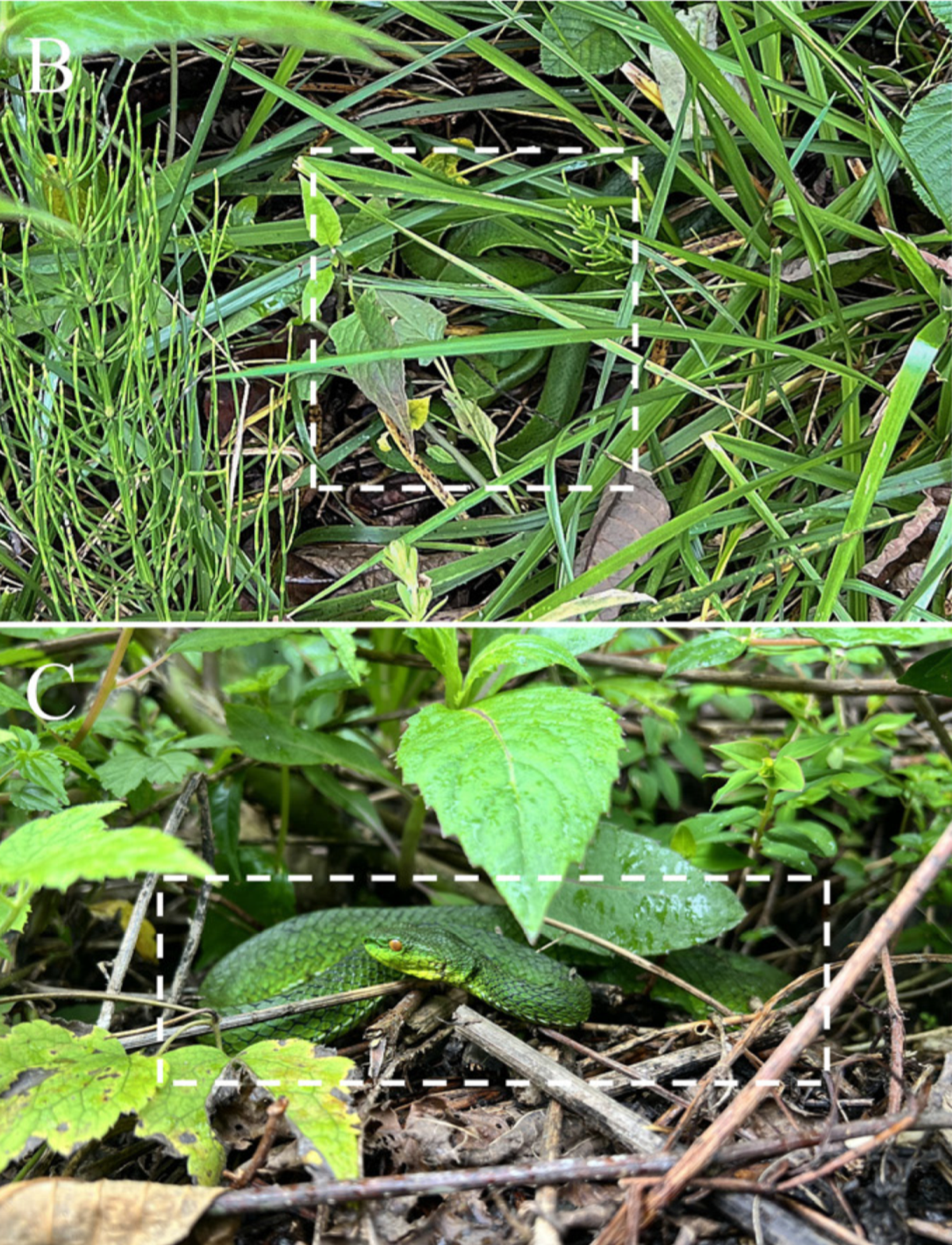
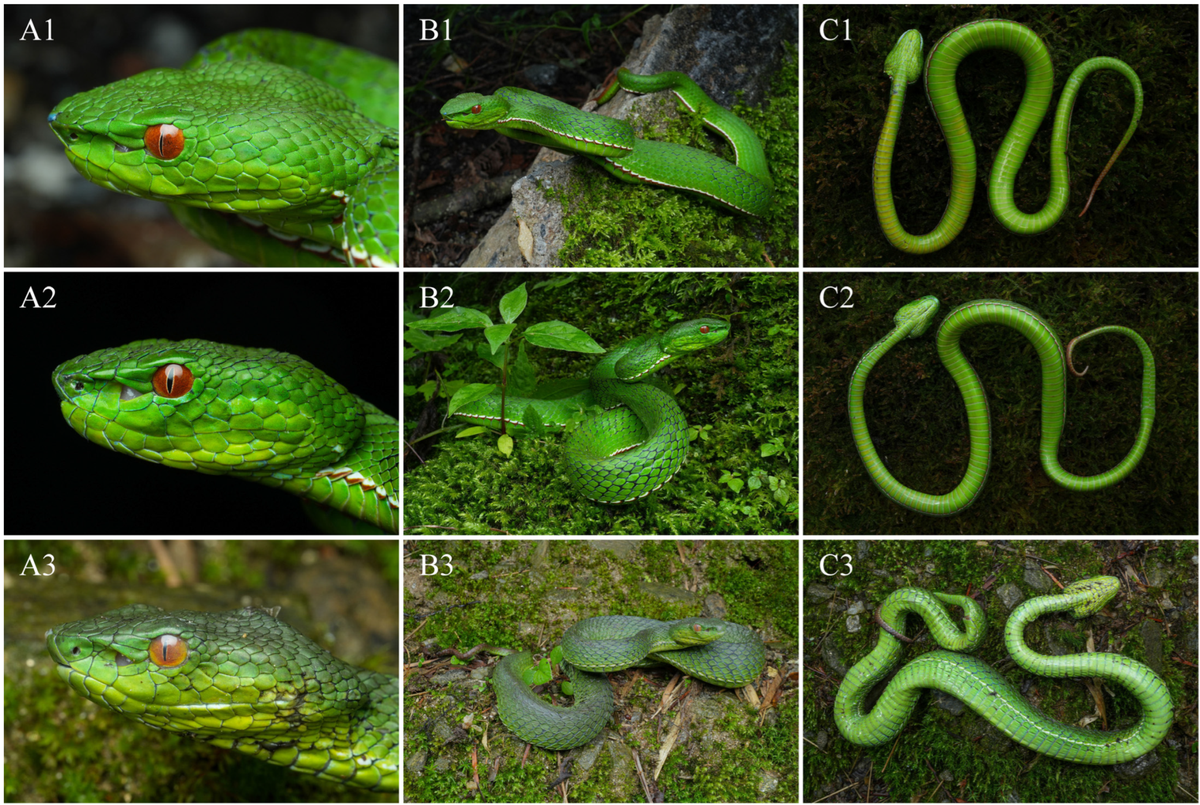
Yadong green pit vipers are considered “relatively small,” reaching about 25 inches in length, the study said. They have “triangular” heads and “relatively long” tails.
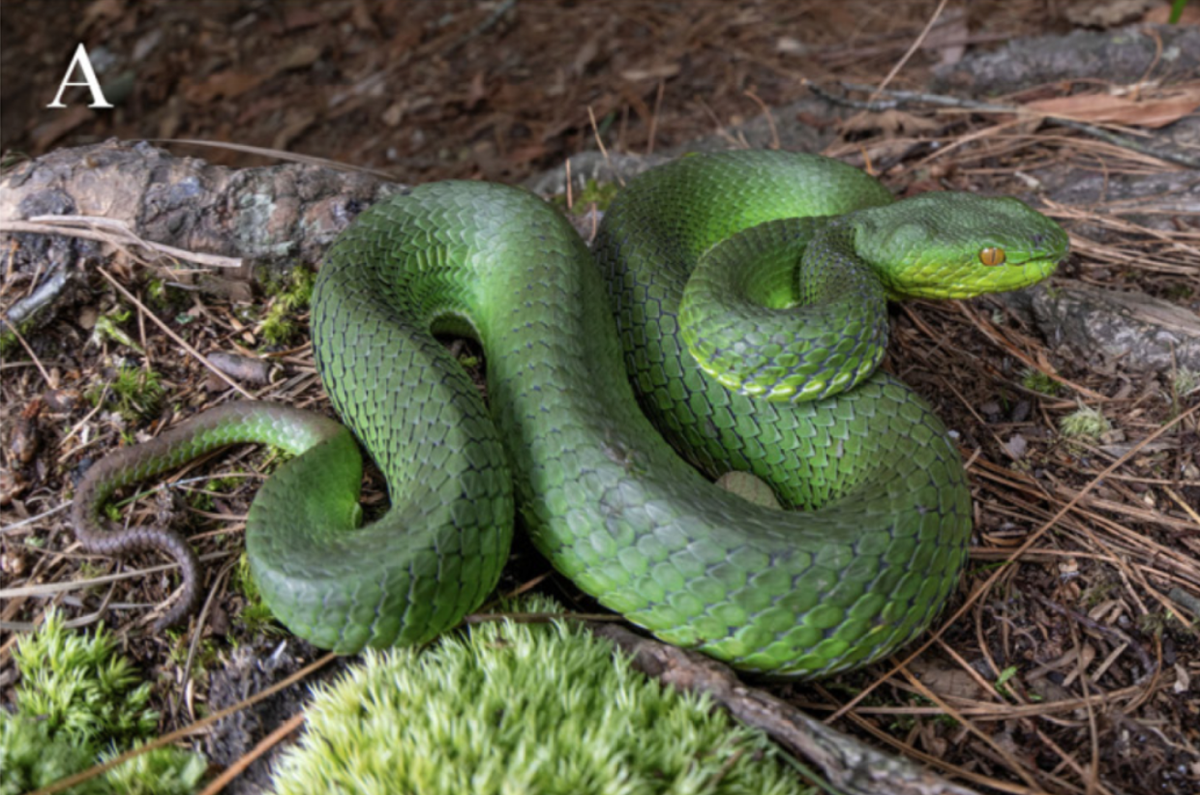
Photos show the “bright grass‑green” coloring of the new species.
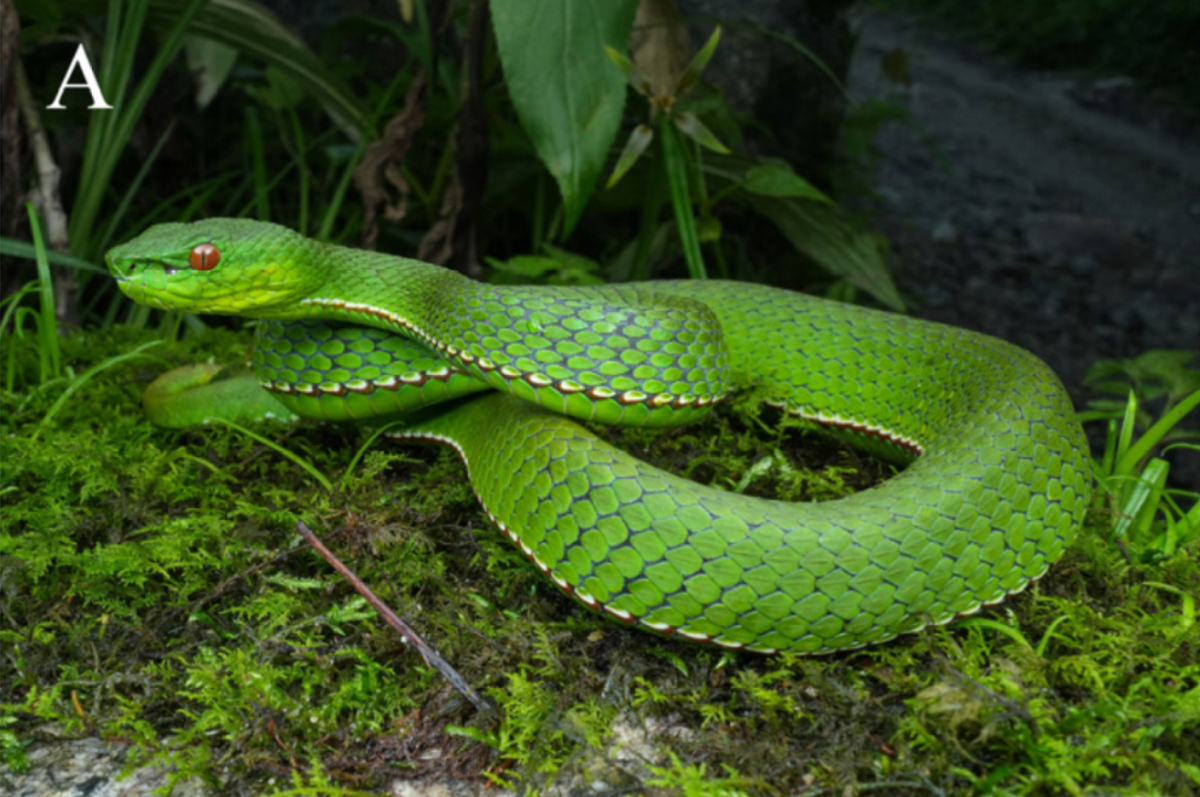
Male and female Yadong green pit vipers vary in coloring, researchers said. Male snakes have “reddish-brown” eyes and a red and white stripe running down their sides. Female snakes have “orange-yellow” eyes and just a white stripe on their sides, photos show.
Yadong green pit vipers live in forests at elevations of about 6,000 feet, the study said. The snakes “were found either within grassy vegetation or near rocks surrounded by dense plant cover” usually near riverbanks.
Two photos show how well the new species blends in with the “relatively lush vegetation.”
A female Yadong green pit viper “regurgitated a partially digested mouse shortly after capture,” which suggests the new species “may primarily feed on small mammals including rodents in the wild,” researchers said.
Pit vipers are generally venomous snakes and “of considerable medical significance,” the study said. The detailed toxicology of the new species is unknown.
Researchers said they named the new species after the Latin word for “‘precious’ or ‘valuable’” because of its “striking and vivid colouration, which makes it resemble a hidden green gem within the pristine forest.”
The new species’ common name refers to Yadong County where it was first discovered and, so far, the only place where it has been found. The county is in southern Tibet, a disputed territory controlled by China, and borders India and Bhutan.
Scientists have conducted amphibian and reptile surveys in Yadong County “since the 1970s,” but this is the region’s first record of a pit viper, indicating the new species is “extremely rare in the wild,” researchers said.
“It is plausible that the new species also occurs in suitable habitats” in neighboring regions, “a possibility that warrants further field surveys,” the study said.
Researchers suggested Yadong green pit vipers be considered a vulnerable species due to their rarity, limited distribution and exposure to “increasing anthropogenic pressures” but noted that more data is needed.
The new species was identified by its overall size, body proportions, eye and body coloring, genitalia, scale pattern and other subtle physical features, the study said. DNA analysis found the new species had at least 5% genetic divergence from related species.
The research team included Yuhao Xu, Tan Van Nguyen, Zhenqi Wang, Tierui Zhang, Nikolay Poyarkov, Cong Wei, Gernot Vogel, Jianchuan Li, Jundong Deng, Fanyue Sun, Lifang Peng and Shiyang Weng.
This story was originally published September 12, 2025 at 12:18 PM with the headline "2-foot-long predator — ‘a hidden green gem’ — discovered as new species in Tibet."