‘Extremely yellow’ creature caught off Pacific island. See the new ‘duckbill’ species

In the pristine waters around the Pacific islands east of Australia, rocky reefs connect the sandy beaches to deep water.
The continental shelf offers refuge to creatures not suited for the shallow water or the abyss, including around New Caledonia.
In the summer of 2021, researchers with the Tropical Deep Sea Benthos Exploration Program (in operation since the 1970s), dropped trawls and dredges into the water around the French territory island, according to a study published Dec. 26 in the peer-reviewed journal Taxa.
When the nets were pulled back to the surface, researchers noticed two small fish that didn’t look like anything they had seen before, and both were found to be species new to science.
Acanthopsaron striatum and Pteropsaron flavissimum are new species of signalfish, a group of bottom-dwelling fish typically found along the soft edges of the continental slope, according to the study.
Identifiable by their protruding upper jaw and spiny bodies, the new species had a few key features that set them apart.
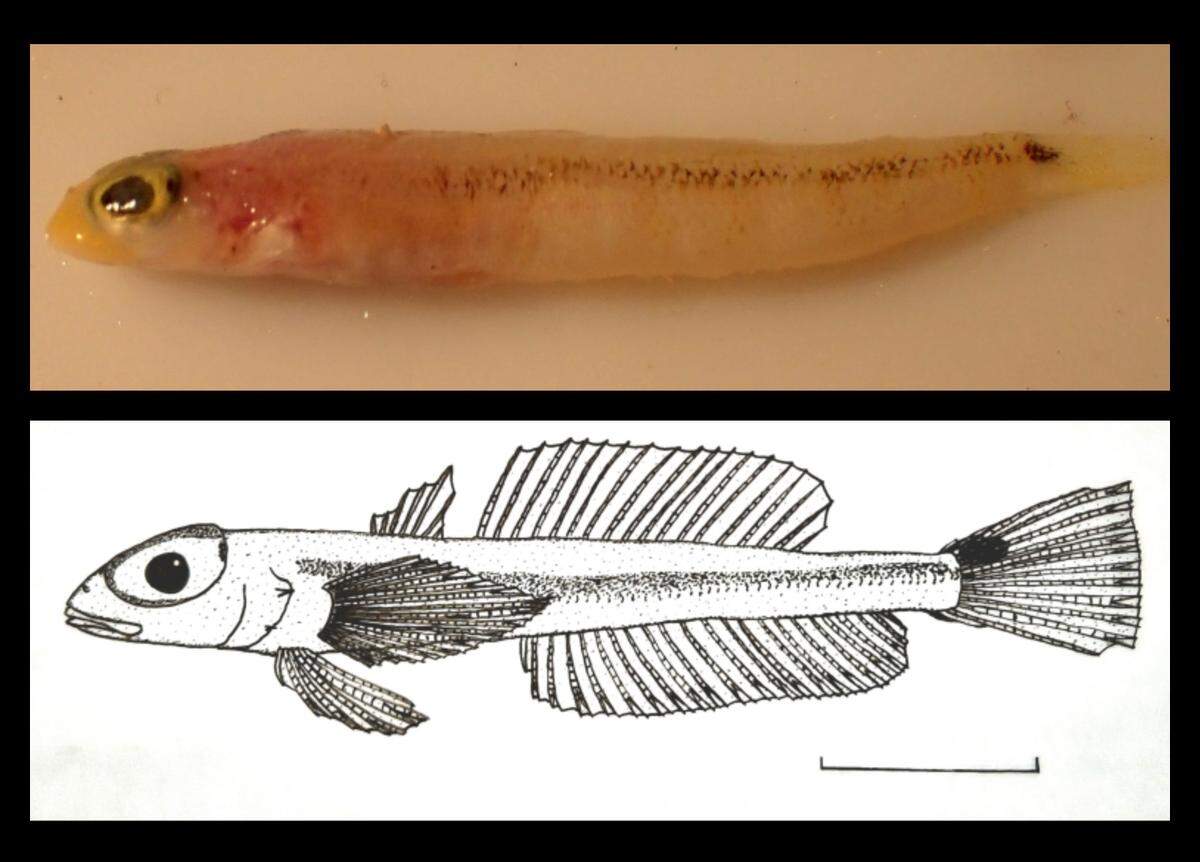
Acanthopsaron straitum, or the banded duckbill signalfish, has a body length of about 1.7 inches and spines along its back, researchers said.
The fish has relatively large eyes, photos show, with a mixture of blue and yellow in the iris.
The new species has a “head and body whitish, dorsal parts of head rose, snout yellowish orange” and a long “dark gray streak” down its sides, according to the study.
The banded duckbill was collected from a coarse-sandy bottom where starfish were scuttling along the seafloor, researchers said.
The second new species, Pteropsaron flavissimum, was visually very different.
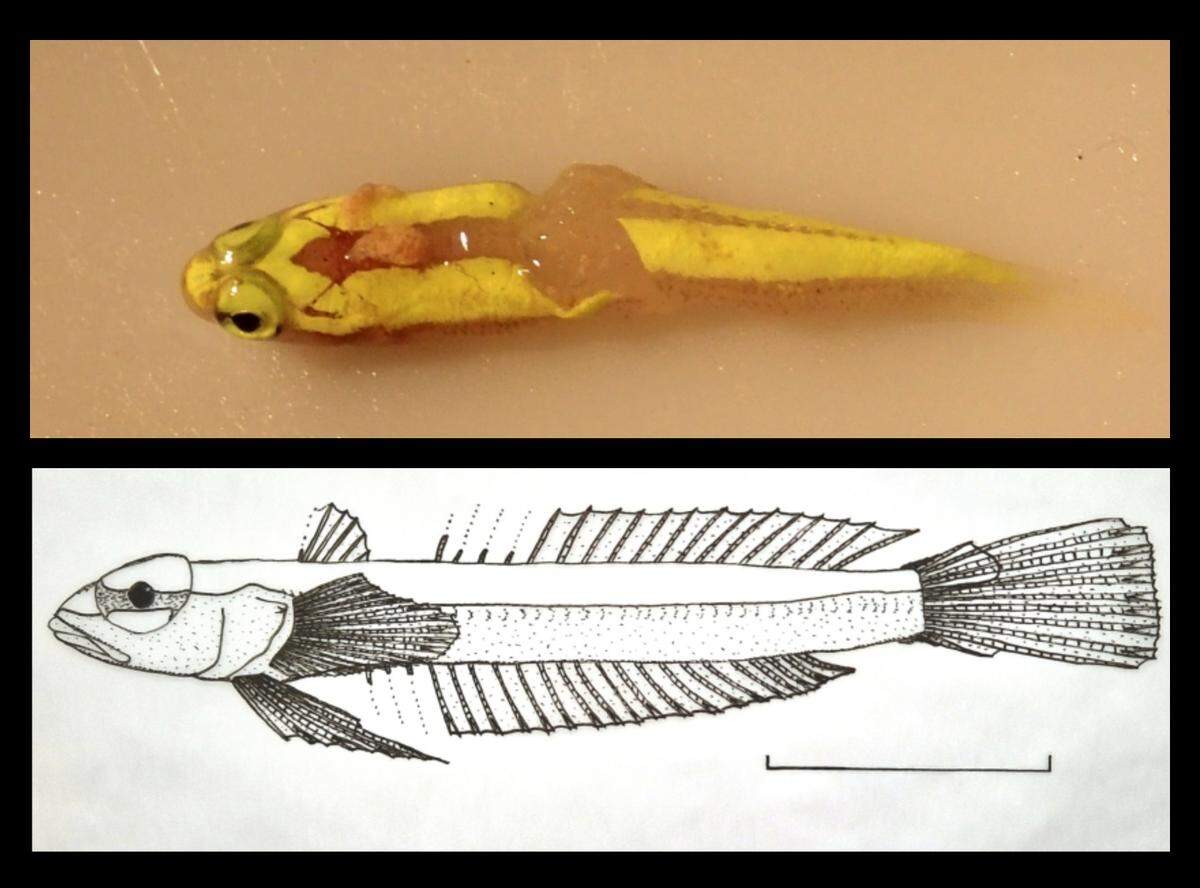
Named the yellow duckbill signalfish, the second new species was found in an area with sand and larger boulders, researchers said.
The yellow duckbill is smaller than the banded duckbill, only 1.2 inches long, but it has the same noticeable snout and spined body, according to the study.
Most of its body is a “rosy-pink” color, but the rest is “bright yellow” on the back, extending from the snout and back of the eyes until the base of the tail, researchers said.
Its name comes “from the Latin ‘Flavissimus’ meaning extremely yellow, referring to the bright yellow dorsal coloration of this species that is still persistent and bright after two years of preservation,” researchers said.
Signalfish overall are relatively rare, researchers said, and because of the small size of the two new species and the fact that only these two specimens have been discovered, not much more is known about the duckbill fishes in the region.
The fish were found in the Grand Passage off the northern coast of New Caledonia, an island in the southwestern Pacific Ocean.
The research was carried out by Ronald Fricke of the Staatliches Museum für Naturkunde in Stuttgart, Germany.
This story was originally published January 2, 2025 at 12:31 PM with the headline "‘Extremely yellow’ creature caught off Pacific island. See the new ‘duckbill’ species."