Ancient statue with asymmetrical face may depict goddess with rare condition in Portugal

Atop Cividade Hill in northern Portugal, the ancient city of Bracasa Augusta lays in ruin.
Today, the site belongs to the modern-day city of Braga, but 2,000 years ago, it was occupied by the Romans and acted as a meeting place along strategic military roads.
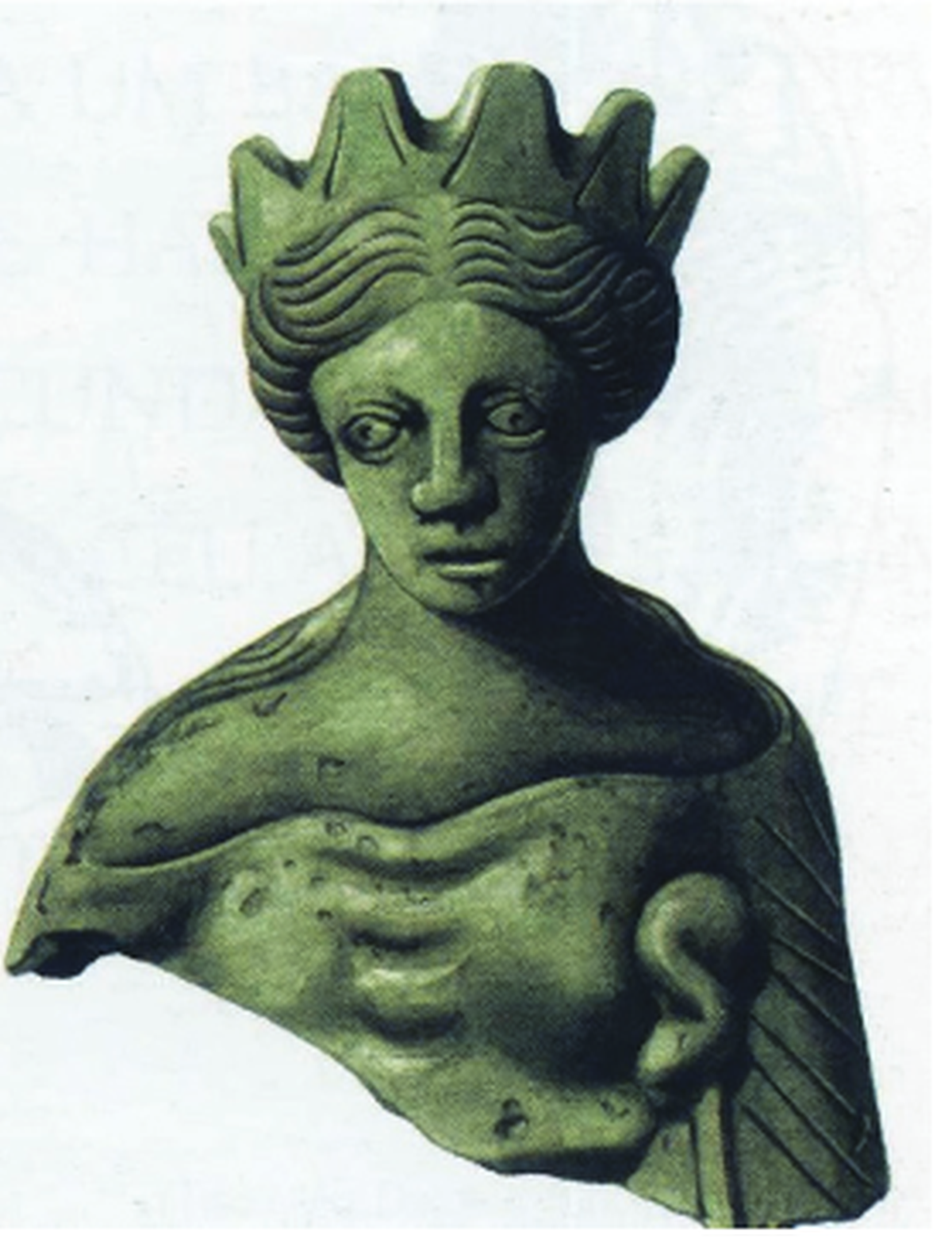
Among the remains, archaeologists working at the site discovered a small bronze statue of a woman relatively well-preserved and dating to the second century, according to a study published Dec. 16 in the peer-reviewed journal Antropologia Portuguesa.
Researchers were immediately captivated by her “intriguing” facial features, a mix of asymmetry and deformity, according to the study. (abstract)
“The facial expression is accentuated by the size of her large and prominent eyes,” archaeologist Rui Morais said in the study. (page 33)
Her head shows brachycephaly, meaning her skull is shorter than normal and flattened on the back, and hypoplasia in the middle of her face, caused by underdeveloped face structures, researchers said. (page 33)
The woman’s face also shows exophthalmos, or protruding eyes, exotropia, or eyes turned outward , and general asymmetry, according to the study. (page 33)
1,800 years ago, the Roman artists may not have been able to identify what would cause these abnormalities, but today, doctors know the grouping of features as Crouzon Syndrome.
Crouzon Syndrome, first described by French neurologist Octave Crouzon in 1912, is an inherited genetic condition that only occurs in 1 in 60,000 newborns, according to the study. The genetic mutation causes the bones of the skull to fuse prematurely, often resulting in large eyes, a “beak-shaped nose” and an abnormally small jaw, researchers said. (page 35)
“As a rare disease, undiagnosed in their time, just a few cases on craniosynostosis (early skull bone fusing) and Crouzon syndrome have been identified in the past,” researchers said.
Pericles, the Greek politician from the fourth century B.C., was described to have an unusually formed head, and artistic renditions often showed him wearing a helmet to cover the deformity, according to the study. Researchers say this shows how artists at the time were faithful in their depictions of others, not willing to alter the correct appearance of someone for the art.
So who might this ancient woman be?
“The head is crowned by a diadem of seven stylized towers delimited by a zigzag groove that could correspond to the number of gates in the Roman City,” according to the study. “The hair is divided into symmetrical waves, hiding the ears and collected at the top of the head. Two wavy locks emerge from the back of her head, descending over the shoulders.”
The crown is similar to those worn by Tyche, the Greek goddess of fate who symbolizes fertility, happiness, prosperity and wealth, researchers said. She later became known as a protector of cities as the Romans personified their cities as crowned women, selecting patron goddesses. (36, 37)
“The object under the left arm, a serpent entwined around a rod, a significant attribute of the Greek goddess Hygeia may provide another view,” researchers said. “Since the serpent was not Tyche’s classical attribute, its presence led to the conclusion that the figurine represented the Roman goddess Salus … The personification of Bracara Augusta conveys the imperial ideology of peace and happiness in the Empire.” (39)
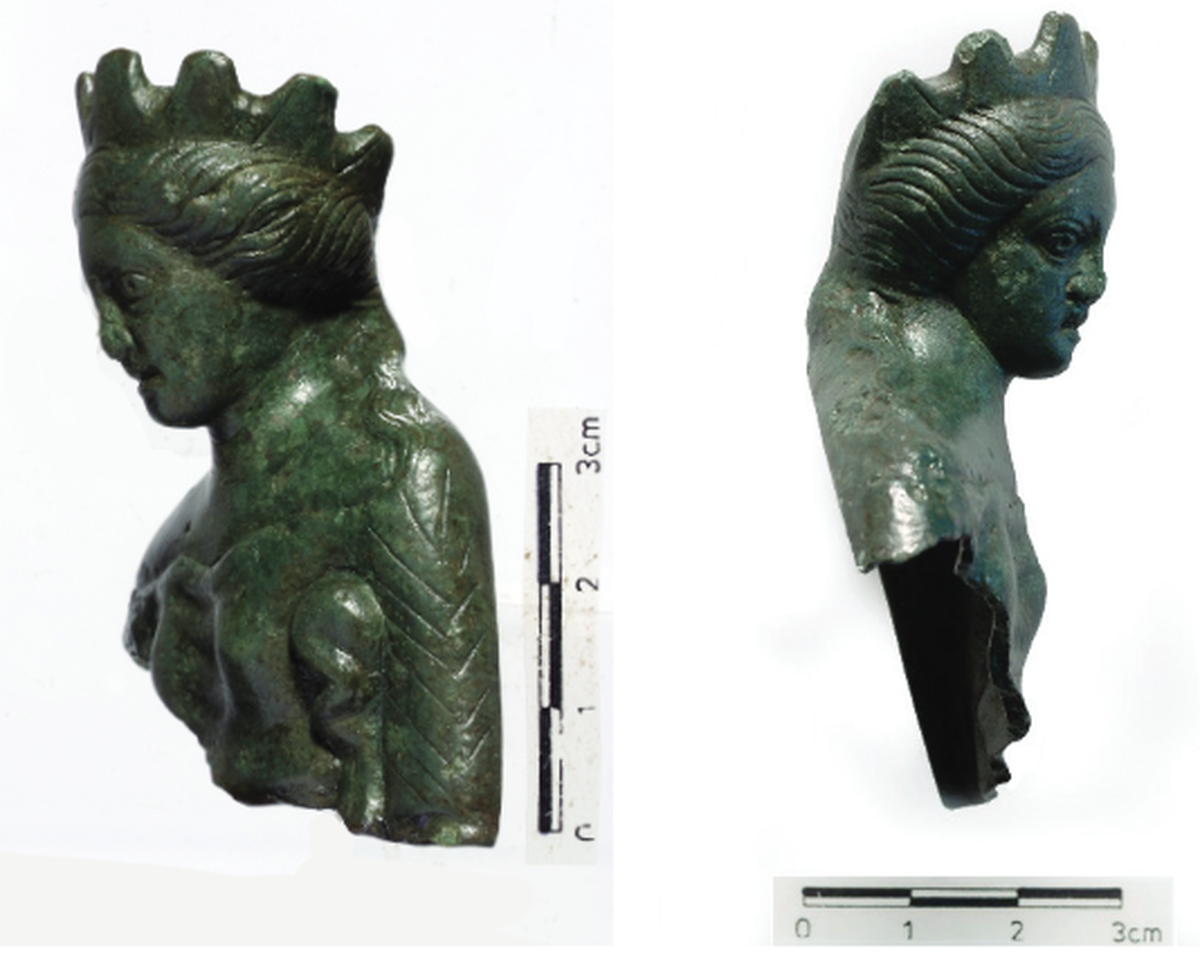
The woman, however, doesn’t appear happy, researchers said. She stands in a hieratic pose indicating a high social or religious position in society, but her face is “unattractive,” “misshapen” and she “looks sad,” according to the study. (39)
Because the statue is “not rudimentary, crude, or imprecise,” it was likely made by a talented artist, and therefore the choice to deform her face was intentional and required “remarkable skill,” researchers said. (39)
The woman’s condition alone may show that she wasn’t a goddess at all, but rather a priestess or shaman.
“She could have been a priestess if we remember the Ibero-Celtic origin of the Bracara Augusta population. The young ladder could be linked to remnants of indigenous rites,” researchers said. “In primitive shamanic medicine, deformities were seen as divine marks, often leading to the selection of disabled individuals as priests.”
No matter her societal role, the statue of the woman represents the only known example of Crouzon syndrome in the region, but its inclusion in topical art shows the impact the woman had on her community, according to the study. (40)
Braga is in northwestern Portugal. The research was conducted by Maria do Sameiro Barroso from the University of Lisbon and University of Coimbra.
This story was originally published December 31, 2024 at 11:11 AM with the headline "Ancient statue with asymmetrical face may depict goddess with rare condition in Portugal."