‘Lost’ music discovered in 500-year-old book in Scotland. Now, you can hear the song
Centuries ago in the rolling hills of northeastern Scotland, the sound of harmonized hymns echoing from chapels and cathedrals would mark the season of Lent.
Some 500 years later, however, the musical scores had been “lost” to time, and historians could only guess how these religious pieces may have been sung or played — until now.
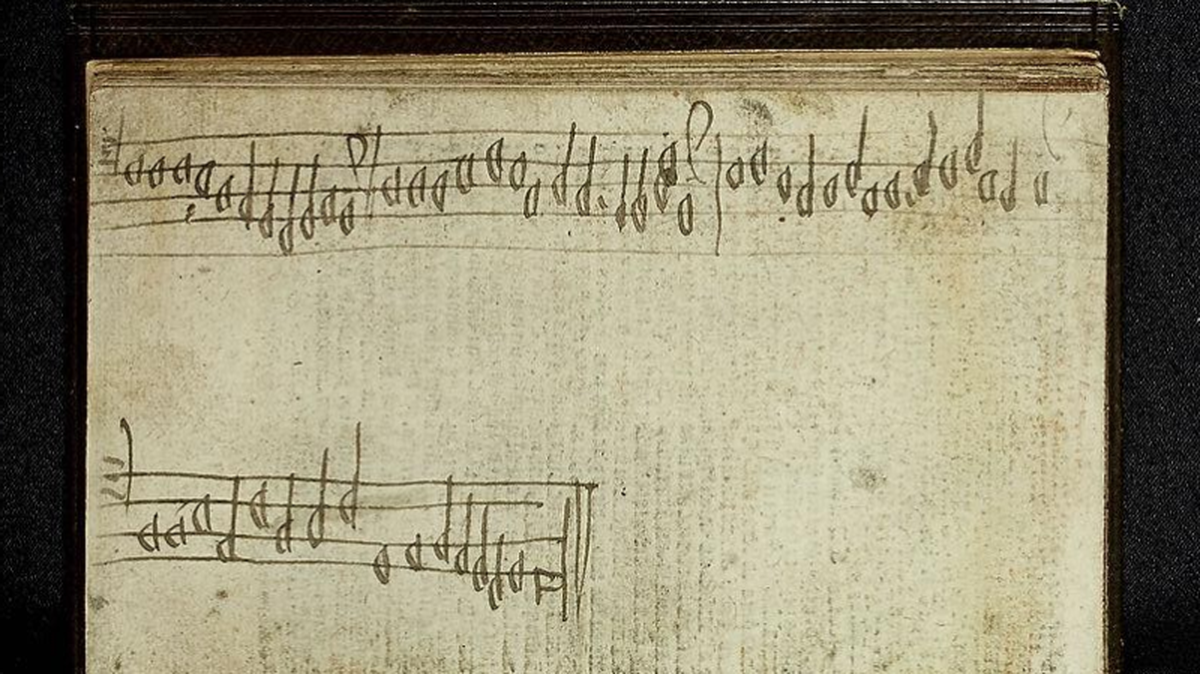
A single page containing just 55 notes has been discovered in the Aberdeen Breviary of 1510, according to a Dec. 18 news release from The University of Edinburgh.
The Aberdeen Breviary is “a collection of prayers, hymns, psalms and readings used for daily worship in Scotland, including detailed writings on the lives of Scottish saints,” researchers said. It’s also the first full-length printed book ever made in Scotland.
“The presence of the music was a puzzle for the team,” according to the university. “It was not part of the original printed book, yet it was written on a page bound into (the) structure of the book, not slipped in at a later date, which suggests that the writer wanted to keep the music and book together.”
There were no annotations with the notes, researchers said, so it’s unclear whether the song was religious in nature, or whether it was sung with voices at all.
With the help of musicians and historians, the research team was able to not only determine the kind of song the notes represent, but also how it would have sounded.
“After investigation they deduced it was polyphonic — when two or more lines of independent melody are sung or played at the same time. Sources from the time say this technique was common in Scottish religious institutions, however very few examples have survived to the present day,” according to the university. “Looking closer, one of the team members realized that the music was a perfect fit with a Gregorian chant melody, specifically that it was the tenor part from a faburden, a three- or four-voice musical harmonization, on the hymn Cultor Dei.”
The researchers reached out to singers, wrote up the score and recorded the audio to bring the centuries-old tune to life. You can listen to it in the video below.
“Identifying a piece of music is a real ‘Eureka’ moment for musicologists. Better still, the fact that our tenor part is a harmony to a well-known melody means we can reconstruct the other missing parts. As a result, from just one line of music scrawled on a blank page, we can hear a hymn that had lain silent for nearly five centuries, a small but precious artifact of Scotland’s musical and religious traditions,” David Coney, from the Edinburgh College of Art, said.
Coney, along with Paul Newton-Jackson and James Cook, published their findings in the peer-reviewed journal Music & Letters on Nov. 12.
The researchers called the song a “tantalizing discovery” because of its rarity, and because it serves as one of the only surviving scores from the early 16th century in this region of Scotland.
By investigating the Aberdeen Breviary itself, the research team has also been able to reconstruct who may have used the book over time, possibly the songwriter.
A rural priest and illegitimate son of a high-ranking Aberdeen Cathedral chaplain used the book in his private service at one point, while it was later used by a Scottish Catholic as he traveled through post-Reformation Scotland, Habsburg and the Ottoman Empires, becoming a family heirloom, researchers said.
“For a long time, it was thought that pre-Reformation Scotland was a barren wasteland when it comes to sacred music,” Cook said. “Our work demonstrates that, despite the upheavals of the Reformation which destroyed much of the more obvious evidence of it, there was a strong tradition of high-quality music-making in Scotland’s cathedrals, churches and chapels, just as anywhere else in Europe.”
The book, called the “Glamis copy” because of its discovery in Glamis Castle in Angus, Scotland, is currently held in the National Library of Scotland in Edinburgh.
The score originates from Aberdeenshire, in northeastern Scotland near the North Sea.
This story was originally published December 19, 2024 at 2:39 PM with the headline "‘Lost’ music discovered in 500-year-old book in Scotland. Now, you can hear the song."