Flying creature — with ‘spade-shaped’ nose for hunting — is new species in Kenya. See it

To discover new species, you don’t have to go into the depths of the rainforest or bottom of the ocean. Sometimes, you just have to take a closer look at previous discoveries.
That is where museum collections can help.
Dozens of specimens of horseshoe bats were spread across four natural history museums around the world when a group of researchers began reexamining how the different species were related, according to a study published Sept. 13 in the peer-reviewed Journal of Mammalogy.
Horseshoe bats are a group of bats that include over 100 different species, and nearly one-third of them have been identified in the past two decades, researchers said.
Now, researchers believe one species of horseshoe bat may have been misidentified for decades.
The team compared morphology, or the physical appearance of the bats, genetics and vocalizations of bats from the genus Rhinolophus captured in Kenya and South Sudan, according to the study.
They found bats that had been identified as R. landeri actually had different traits between the two countries, researchers said.
The differences were great enough to establish the Kenya population as a new species — Rhinolophus webalai, or Webala’s horseshoe bat, named after ”one of Africa’s foremost bat biologists,” Paul Waswa Webala.
Photos show the Webala’s horseshoe bat, covered in gray and “honey brown” fur.
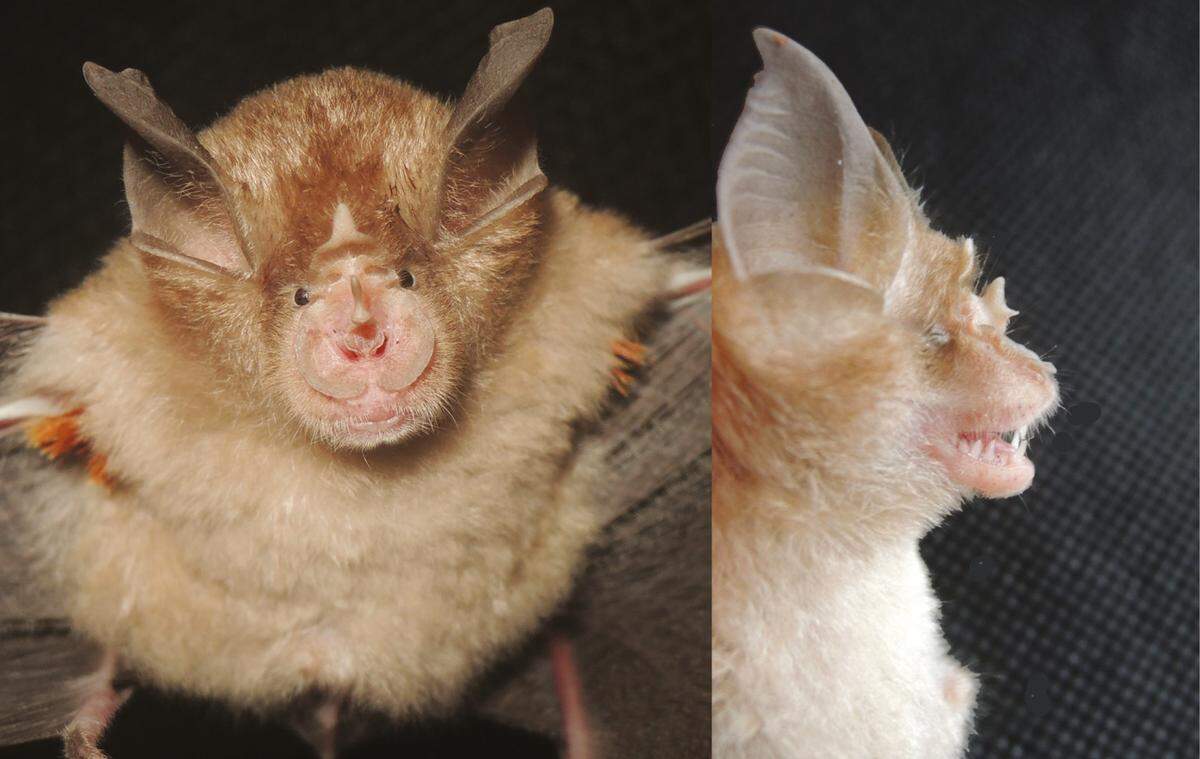
The bat is “a small member of the R. landeri species complex,” researchers said, with a “ naked spade-shaped sella” or the protrusion above the nose used in echolocation.
“Echolocation calls of R. webalai sp. Nov. are dominated by a long constant-frequency signal,” researchers said, with a mean frequency of 109.76 kilohertz, higher than the 102.7 kilohertz of other closely related species.
The kilohertz of a call is similar to a radio station. Certain frequencies are used in different environments or to hunt different prey, according to Scientific American. Changing the frequency of the call is like changing a radio station and picking up different songs.
The new species also had different tooth shapes than other previously described species, according to the study.
“I think the case we make for the new East African species (webalai) is incontrovertible,” study author Bruce Patterson told McClatchy News in an email.
Researchers suggested there may be two more new species from the same group that could be identified but “the case for the two others is circumstantial” based on the genetics and morphology of those bat specimens.
“Altering their taxonomic status should focus the attention of other scientists on validating or refuting our conclusions,” Patterson said.
The new species is found in multiple different habitats, some of which had been altered by humans, according to the study. They can be found in both Kenya and South Sudan, and researchers believe they are likely to also live in neighboring Uganda and Tanzania.
Their extensive range suggests their species is not threatened, researchers said.
The research team includes Patterson, Terrence Demos, Laura Torrent, Amanda Grunwald, Cecilia Montauban, Julian Kerbis Peterhans, Molly McDonough, Carl Dick, Michael Bartonjo, M. Corrie Schoeman, Luis Ruedas and Javier Juste.
This story was originally published September 30, 2024 at 12:58 PM with the headline "Flying creature — with ‘spade-shaped’ nose for hunting — is new species in Kenya. See it."