
Scuba-diving creature uses air bubbles to stay alive underwater. See the odd technique
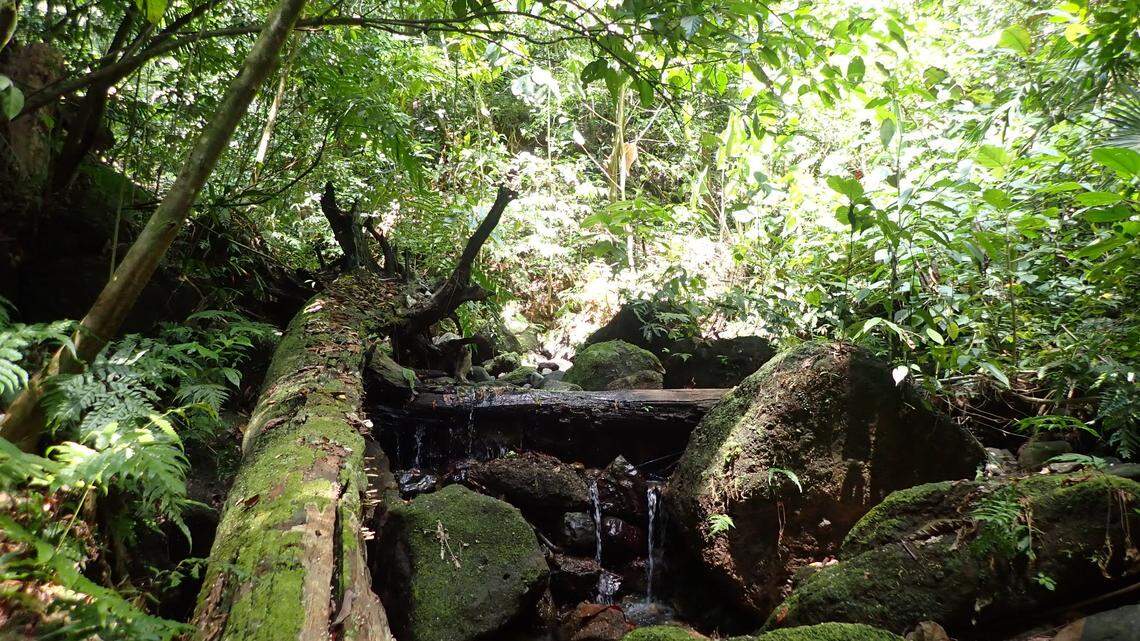
For an animal not much larger than a pencil, there should be plenty of places to hide from predators in the forests of Costa Rica.
But sometimes, creatures like water anole lizards need to have a backup plan.
“Water anoles have excellent camouflage, and their first line of defense after detecting a predator is to remain really still so that they’re overlooked,” Lindsey Swierk, biologist and assistant research professor at Binghamton University, told McClatchy News in an email. “If a predator pursues them, then they go for plan B — retreat. Water anoles prefer perches on streamside rock walls that are near small crevices, so often they’ll escape successfully that way.”
If that still doesn’t work, the lizards are forced to pull out a plan C, Swierk said — diving into the water.
Not only are the lizards able to stay underwater for an extended period of time, they do so by creating air bubbles on their snouts that they “rebreathe,” Swierk said in a study published Sept. 18 in the peer-reviewed journal Biology Letters.
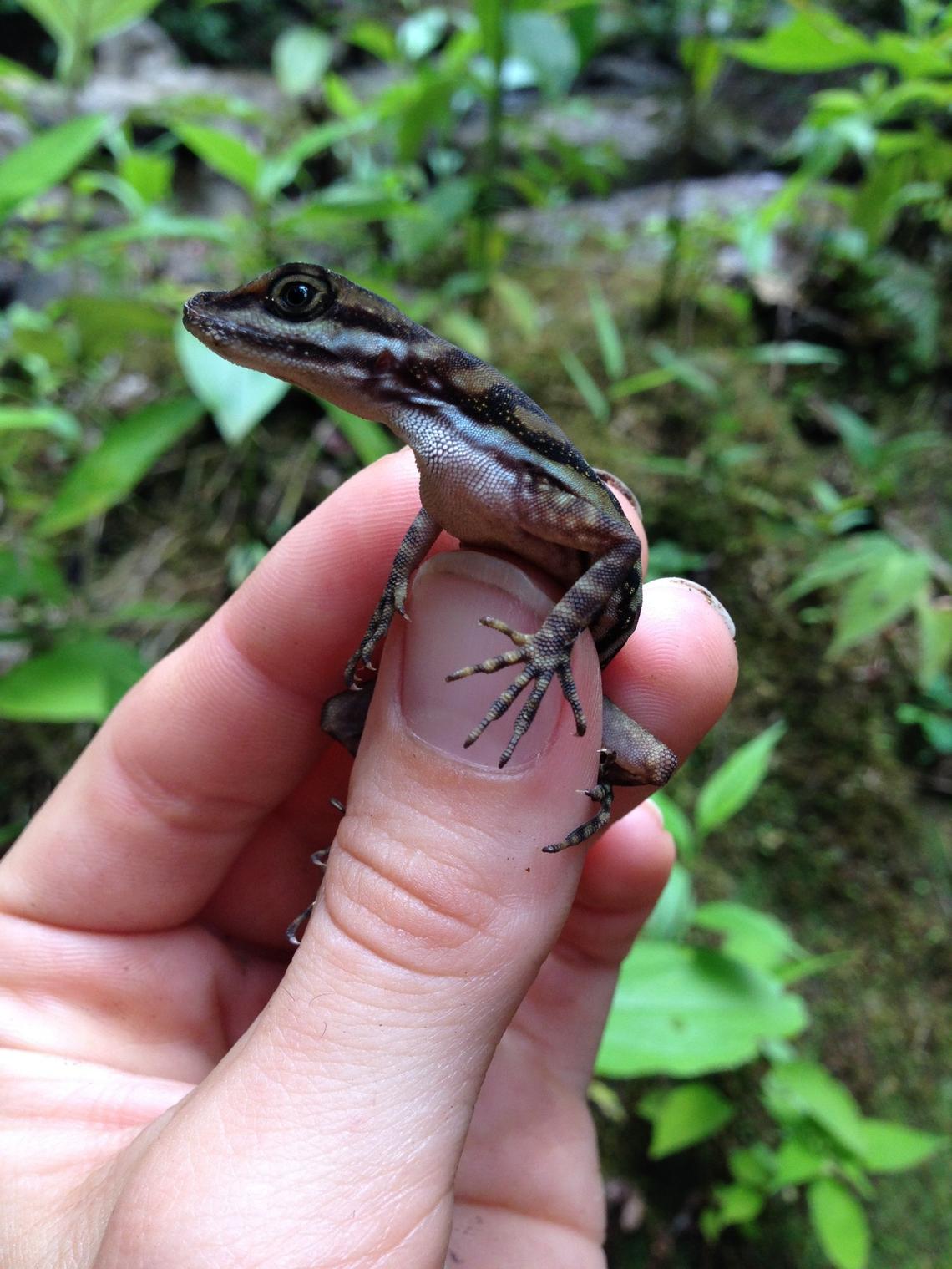
Researchers previously learned the lizards were able to create air bubbles — the first vertebrates known to use the technique — in 2021, but Swierk’s new research shows the anoles are reusing the bubbles to be able to stay underwater longer.
“When water anoles dive, their hydrophobic (‘water repelling’) skin keeps a slick of air over the body surface. Sometimes bubbles from the skin surface join up with the bubble that an anole exhales after diving,” Swierk said. “We believe that rebreathing works to redistribute different volumes of air on and in an anole’s body, permitting it to have sufficient oxygen for long dives.”
Swierk and Ph.D. student Allie Martin from Binghamton University collected anoles “by hand or lasso” along rocks and river banks at Las Cruces Biological Station in Costa Rica, then painted a hydrophilic, or water attracting, moisturizer on the heads of some of the lizards, according to the study.
.JPG "Swierk-P6260101 (1).JPG")
The moisturizer didn’t hurt the lizards but prevented larger air bubbles from forming on their skin. The lizards were placed near water and then dove in, and Swierk and Martin counted the depth and length of their dives, according to the study.
They found that the lizards without moisturizer were able to rebreathe from the large air bubbles formed from an exhale, while the ones with moisturizer could not and were forced back to the surface in a shorter amount of time, Swierk said.
The researchers recorded the dives and observed the lizards breathing in and out.
Swierk called the technique a “last resort” because it “comes with a cost,” she said.
They “found that diving in cool premontane streams can reduce anole body temperature,” Swierk said. “Because lizards are ectotherms, they have to recoup body heat from their environment. Until they can do so, it could reduce their ability to run quickly, defend their territories against invaders, court mates or digest their food.”
Water anoles are a common meal for birds, snakes, larger lizards and some smaller mammals, Swierk said.
“So, there are a lot of threats in their environment, and it makes sense that they would evolve a unique way of dealing with them using the resource — water — that they have available,” Swierk said.
The anoles were collected in Puntarenas Province on the Pacific coast of Costa Rica.
This story was originally published September 19, 2024 at 12:55 PM with the headline "Scuba-diving creature uses air bubbles to stay alive underwater. See the odd technique."
