Submerged log in Poland river turns out to be something much more historic. See it
While searching a river in Poland, a group of volunteers noticed a submerged log. Something about it seemed unique — and rightly so. It turned out to be a historic find.
Sławomir Kaliński led the group as they searched the Narew River near the Modlin Fortress, according to an Aug. 1 news release from Science in Poland. There, they noticed a long, unusually shaped log.
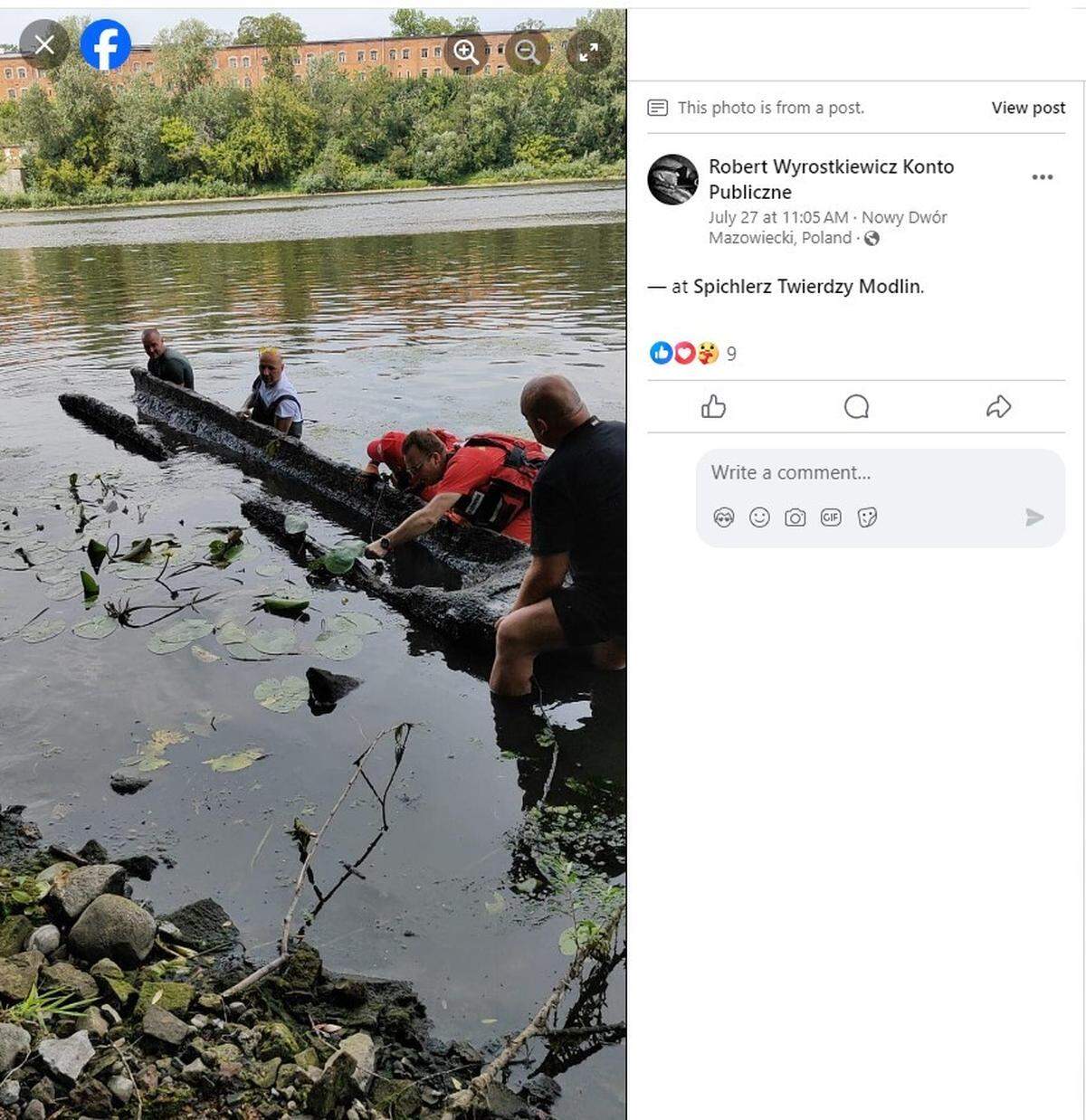
Intrigued, the group called in Robert Wyrostkiewicz, an archaeologist with PogotowieArcheologiczne, to take a look. Photos show the group hauling the log to the surface and inspecting it.
Wyrostkiewicz identified the find as a dugout canoe dating back roughly 200 to 300 years, he told Science in Poland. The historic boat was abnormally large, measuring about 25 feet in length, and incomplete, as it was missing a piece of the bow.
Wyrostkiewicz shared photos of the canoe in a July 27 Facebook post. One photo shows the hollowed-out side of the log, still partially filled with water.
The 200-year-old canoe was well-built and had a hole at the stern where a steering mechanism may have sat, the archaeologist said.
Dugout canoes are considered the oldest type of boat, Wyrostkiewicz said. Carved from a single tree trunk, the canoes typically held two rowers and measured about 6 to 14 feet in length.
People made and used dugout canoes beginning in the Neolithic period, throughout the Roman era and into the 19th century, Wyrostkiewicz said in the release.
The exact age of the canoe found near the Modlin Fortress remains unknown until experts use more precise dating techniques.
After the initial inspection, the group hid the canoe along the riverbank, using stones to submerge it and keep it from floating away. The river water will help preserve the fragile wood until officials have figured out where to take it.
The Modlin Fortress is on the outskirts of Warsaw, a roughly 25-mile drive northwest from the city center.
Google Translate was used to translate the news release from Science in Poland and Facebook post from Robert Wyrostkiewicz.
This story was originally published August 1, 2024 at 1:04 PM with the headline "Submerged log in Poland river turns out to be something much more historic. See it."