Humans having sex with Neanderthals was more common than previously thought, study says
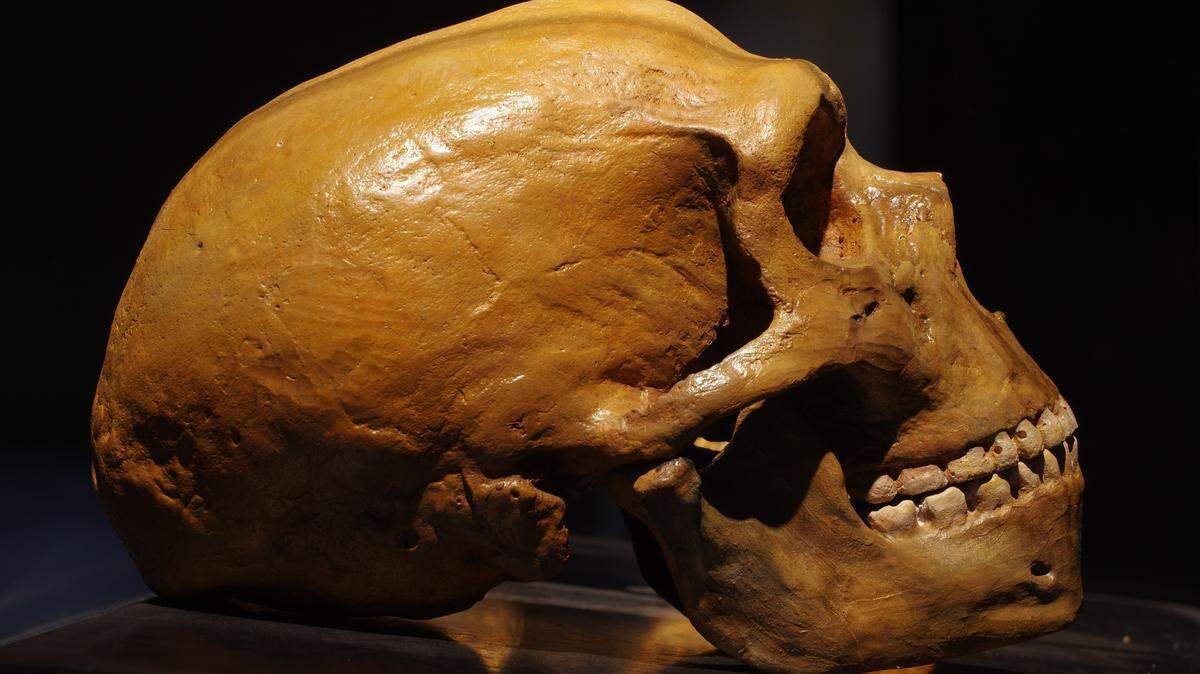
The word “Neanderthal” is often synonymous with mindless, simple, bulky and slow.
Images of cavemen huddled over a fire with thick, protruding brows portray Neanderthals more like the Flintstones than a close relative of modern-day humans.
But in the century and a half since the first Neanderthal bones were discovered, researchers have learned that they were not muscly oafs, but rather effective hunters, skilled tool-makers and nurturers as they helped the sick and wounded.
Modern DNA shows they also may have been active sexual partners of our ancestors across space and time.
Thousands of miles apart
Neanderthals, or homo neanderthalensis, split from what became modern humans around 600,000 years ago, according to a study published July 12 in the journal Science.
About 400,000 years later, Neanderthals and us, homo sapiens, still had many of the same physical characteristics, study author and geneticist Joshua Akey said in a July 11 news release from Princeton University.
The two related species coexisted for 200,000 years, Akey said, but were geographically separated by thousands of miles as Neanderthals occupied northern Europe and homo sapiens were confined to Africa.
Akey and a team of international genetics experts wanted to know how often these two ancient groups actually saw one another — and if it turned sexual.
To do this, they analyzed the DNA of 2,000 living people and compared it to the DNA of three Neanderthals and a Denisovan, another ancient hominin species, according to the study.
Not only did they look for Neanderthal DNA in the genetic code of modern humans, but also human DNA in the code of the other ancient species.
What they found was that not only were there shared DNA between homo sapiens and Neanderthals, but sexual interactions between the groups that led to shared DNA happened multiple times over a period of 200,000 years, according to the study.
“To date, most genetic data suggests that modern humans evolved in Africa 250,000 years ago, stayed put for the next 200,000 years, and then decided to disperse out of Africa 50,000 years ago and go on to people the rest of the world,” Akey said. “Our models show that there wasn’t a long period of stasis, but that shortly after modern humans arose, we’ve been migrating out of Africa and coming back to Africa, too.”
Akey said the genetic evidence shows that homo sapiens traveled north in multiple waves, making first contact with Neanderthals around 200,000 to 250,000 years ago, then again around 100,000 to 120,000 years ago, and then the largest migration out of Africa occurred between 50,000 and 60,000 years ago, according to the release.
Humans like ‘waves crashing on a beach’
In each wave, homo sapiens and Neanderthals had sex, leaving babies with shared DNA behind in the Neanderthals populations, according to the study.
Previous studies have primarily searched for Neanderthal DNA present in modern humans, researchers said, which would only catch the babies that came back to human populations. It completely misses babies that were born to Neanderthals and who stayed in the north, they said.
The researchers said 2% of Neanderthal DNA had been found in human DNA previously, but in their study there was between 2.5 and 3.7% human DNA in Neanderthal genetic code, according to the study.
Since Neanderthals disappeared around 30,000 years ago, these connections were lost, according to the release. A lack of genetic diversity in the DNA suggests the number of Neanderthals were already small, and as homo sapiens flourished, the species eventually vanished.
“I don’t like to say ‘extinction’ because I think Neanderthals were largely absorbed,” Akey said. He believes the last survivors of the species were likely taken in by homo sapien populations and therefore never truly died out on their own.
“Modern humans were essentially like waves crashing on a beach, slowly but steadily eroding the beach away. Eventually, we just demographically overwhelmed Neanderthals and incorporated them into modern human populations,” Akey said.
This story was originally published July 15, 2024 at 4:09 PM with the headline "Humans having sex with Neanderthals was more common than previously thought, study says."