Mummified crocodile was hunted by ancient Egypt cult — and still holds its last meal
At an oasis south of Cairo, Egypt, archaeologists discovered small rock tombs.
The tombs were filled with mummies, but instead of kings, queens and noble people wrapped in cloth, the mummies belonged to reptiles.
Mummified crocodiles were pulled from the tombs, mostly in parts, but one mummy was complete.
About 7 feet long, the crocodile’s soft tissue was preserved along with its skin and bones, according to the study.
It was wrapped in linen, palm leaves and rope, and may hold the key to understanding an ancient cult.
In a new study, published July 6 in the journal Digital Applications in Archaeology and Cultural Heritage, researchers use modern technology to “reconstruct the final hours” of the holy crocodile.
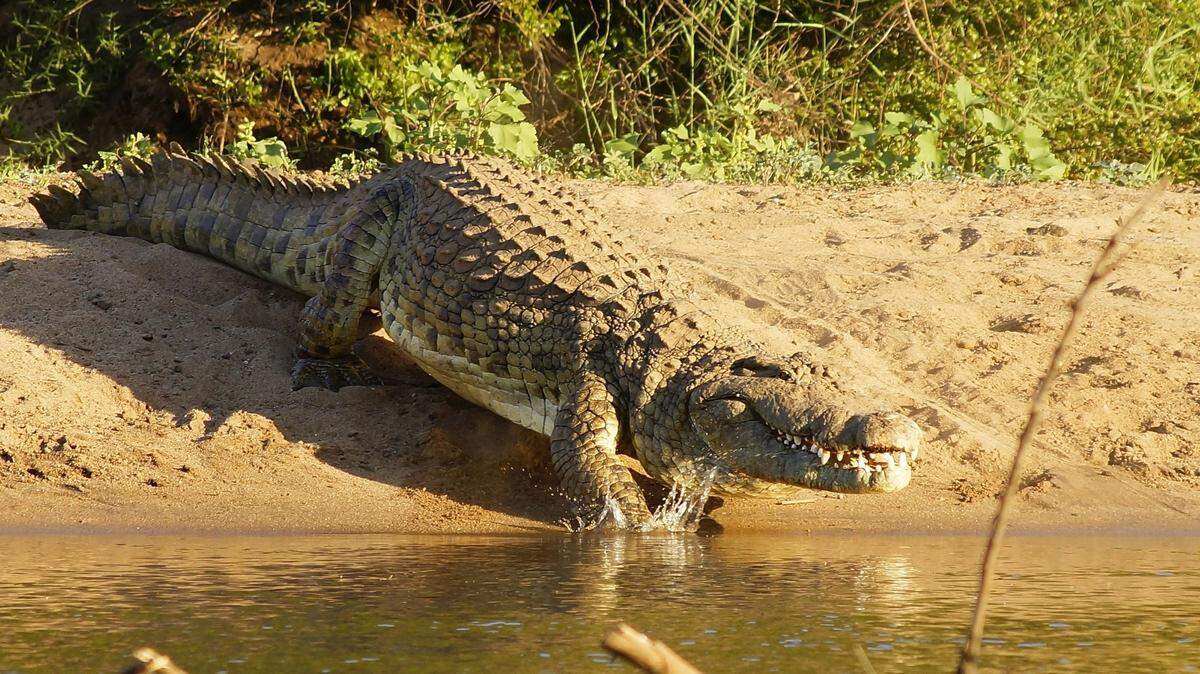
“The ancient Egyptians venerated crocodiles as avatars of Sobek, Lord of the Nile and of the primeval swamp from which they believed the earth was created,” according to the study. “Resting overnight in the dark, murky waters of the River Nile, emerging every morning to bask open-mouthed on the sun-soaked banks, crocodiles appeared to move seamlessly between opposing worlds.”
Crocodiles became a symbol of strength, their populations were signs of healthy crops to come, and their attention to their young was a model for how parents should protect their children, according to the study.
The idolized species became the icon of Crocodilopolis in the first century B.C., researchers said, and a cult of people who worshiped Sobek raised a “tame” crocodile named Suchus in the city’s center.
“Believed to be the living incarnation of Sobek, Suchus was provided with a dedicated pond within the temple complex where he received a lavish diet of bread, meat and wine delivered by the priests, and adornments of precious metals and jewels,” according to the study. “As a cult animal, Suchus received levels of care befitting a god on earth and upon his natural death a successor was selected to replace him as the cult animal.”
The cult was incredibly popular, and over time thousands of mummified crocodiles have been discovered, researchers said. It then begged the question of how the ancient Egyptians were acquiring so many of the dangerous animal. Were the animals being bred like livestock and sacrificed? Were the animals hunted from the Nile?
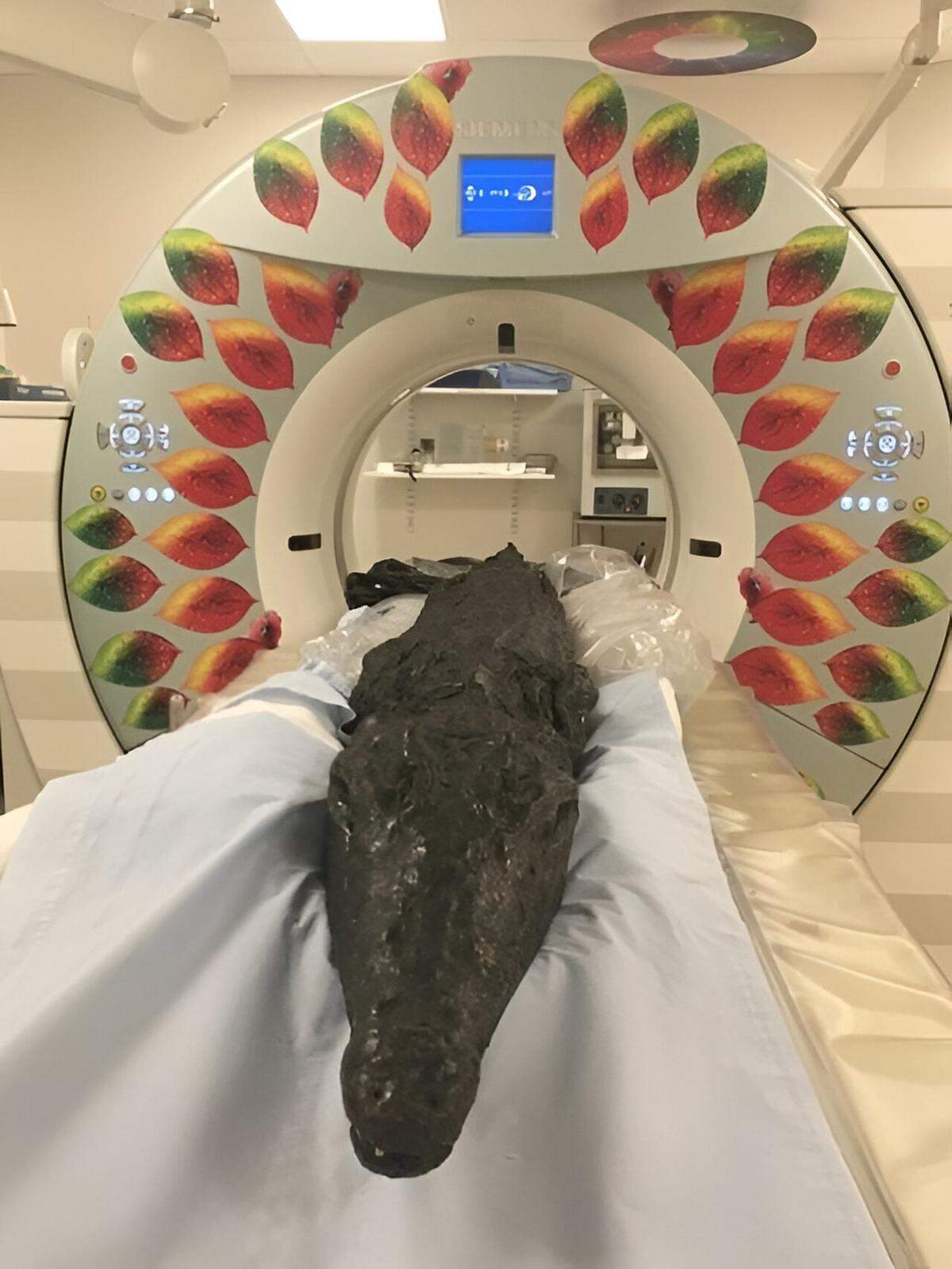
To search for an answer, researchers went to the Birmingham Museum and Art Gallery in the United Kingdom to take a closer look at the “sizeable and visibly impressive” mummified crocodile stored there.
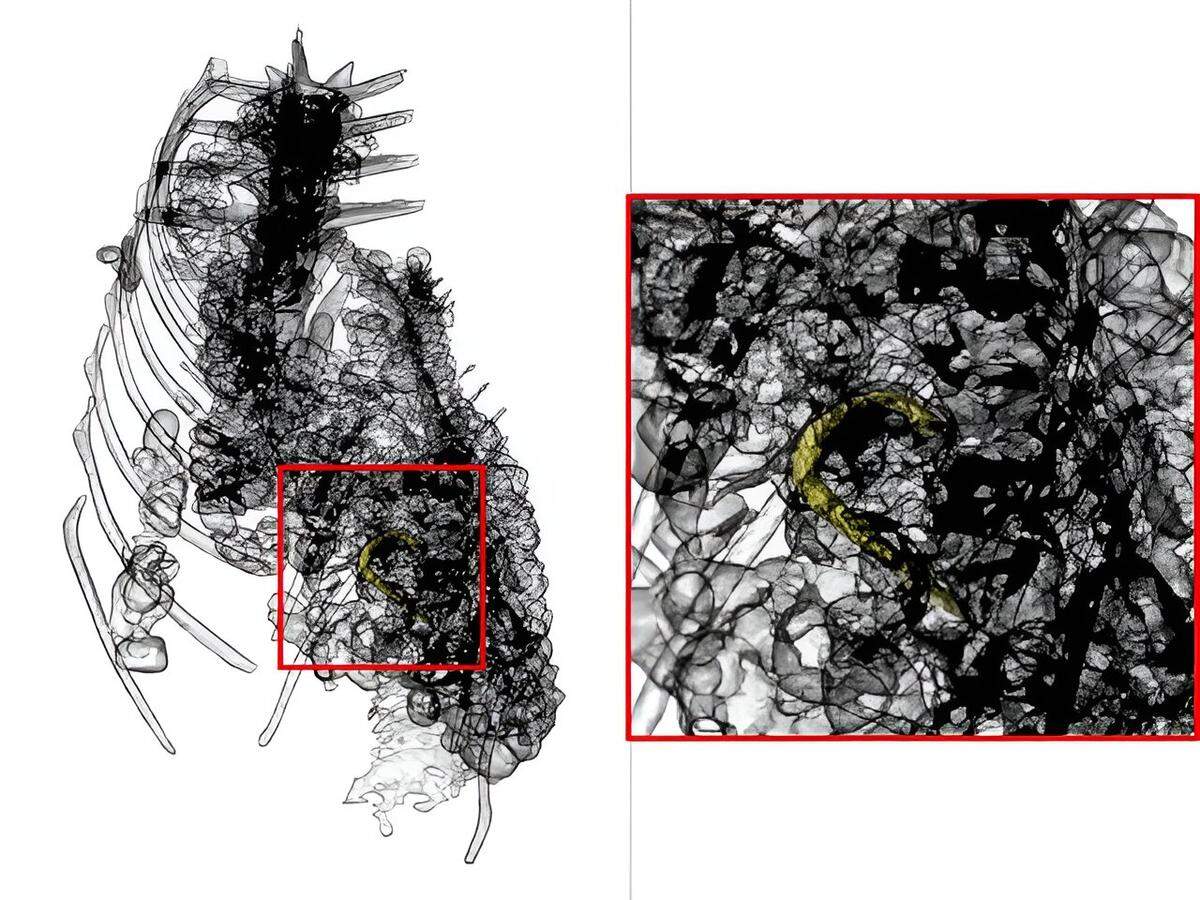
Using a computed tomography (CT) scan and digital radiography, the researchers could look under the wrapped exterior for the first time, according to the study.
Inside the crocodile, lots of small stones known as gastroliths were high up in the digestive tract, suggesting the crocodile had consumed the rocks to help break down something it had just eaten, according to the study.
Then, researchers found an undigested fish that never made it to the crocodile’s stomach, suggesting the fish was its last meal.
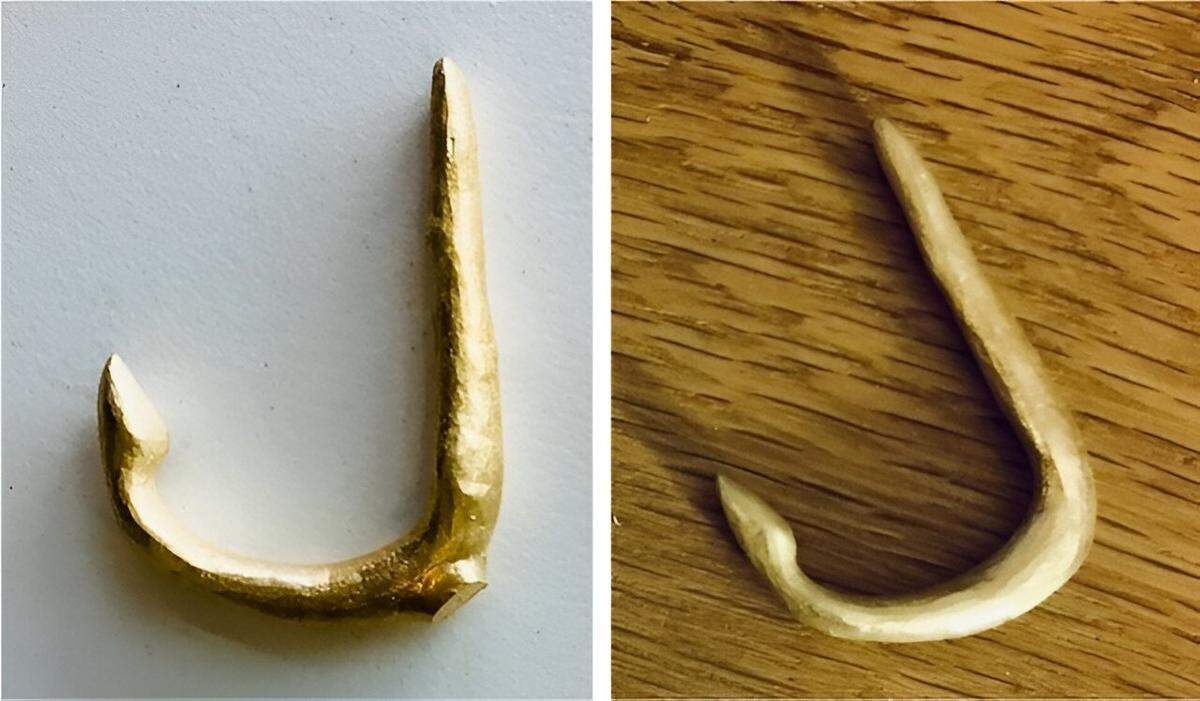
In the fish was a large hook. This crocodile had been hunted.
“Crocodile mummy 2005.335 was a unique opportunity to apply scientific analysis to a large animal mummy,” study author Lidija Mcknight said in a July 12 news release from the University of Manchester. “... The Egyptians probably used a hardened clay mold into which the molten metal, melted over a charcoal-based heat source, would have been poured.”
The hook, despite being thousands of years old, looks surprisingly similar to hooks made in the modern era, Mcknight said.
Researchers recreated the hook outside of the crocodile’s body.
“The apparent short time span between the ingestion of the fish and the death of the animal suggests that the crocodile was wild caught and the carcass processed for mummification shortly after,” according to the study. “The extensive application of resin to the body, including filling of a depressed fracture in the cranium, and the subsequent wrapping of the body in linen suggests the ready availability of mummification products leading the authors to hypothesize that the animal was deliberately hunted to procure an animal for mummification.”
In writings from the fifth century B.C., author Herodotus said “hooks baited with pork” were put in the Nile “whilst a live pig was beaten on the riverbank in order to attract the predators and facilitate capture,” according to the study.
Hooks were mentioned in writing for centuries afterward, researchers said, until 400 years later when nets and spears were described, suggesting hooks were no longer used.
The context means this crocodile was likely between 2,000 and 3,000 years old, according to the release.
Despite the crocodile appearing “wild caught,” it may have come from a type of protected area where crocodiles were regularly hunted for sacrifices, researchers said. Unhatched eggs and young crocodiles were regularly trapped from known crocodile zones and then reared in the temples as small crocodiles were easier to handle.
“Our work revealed a great amount of information, both about the life of the crocodile and the post-mortem treatment of its remains,” Mcknight said. “Mummies have long been a source of fascination for museum visitors of all ages. Our work provides a unique opportunity to connect visitors to the story of this animal.”
This story was originally published July 15, 2024 at 12:40 PM with the headline "Mummified crocodile was hunted by ancient Egypt cult — and still holds its last meal."