Mountain creature with no ears and ‘long’ snout seen playing dead. It’s a new species

In the thinning air atop a mountain in Colombia lived a “rare” — and unusual — creature. It had a “sharp” snout but no ears and a coy defense mechanism but few threats.
The “cryptic” animal turned out to be a new species.
Scientists had encountered the “rare” toad several times over the years, but no one had studied it in depth, according to a study published March 25 in the peer-reviewed journal ZooKeys.
Intrigued by this poorly understood animal, researchers ventured into the Andes mountains, the study said. Scientists had trouble locating the earless toads but eventually found several.
Taking a closer look at the toads, researchers realized that they’d discovered a new species: Rhinella kumanday, or the kumanday beaked toad.
Kumanday beaked toads are considered “moderate-sized,” reaching about 1.6 inches in length, the study said. They have “triangular” heads with a “long” snout, “golden” eyes and a “robust” tongue but no ears. Their bodies are covered in warts and lumps of various sizes and shapes.
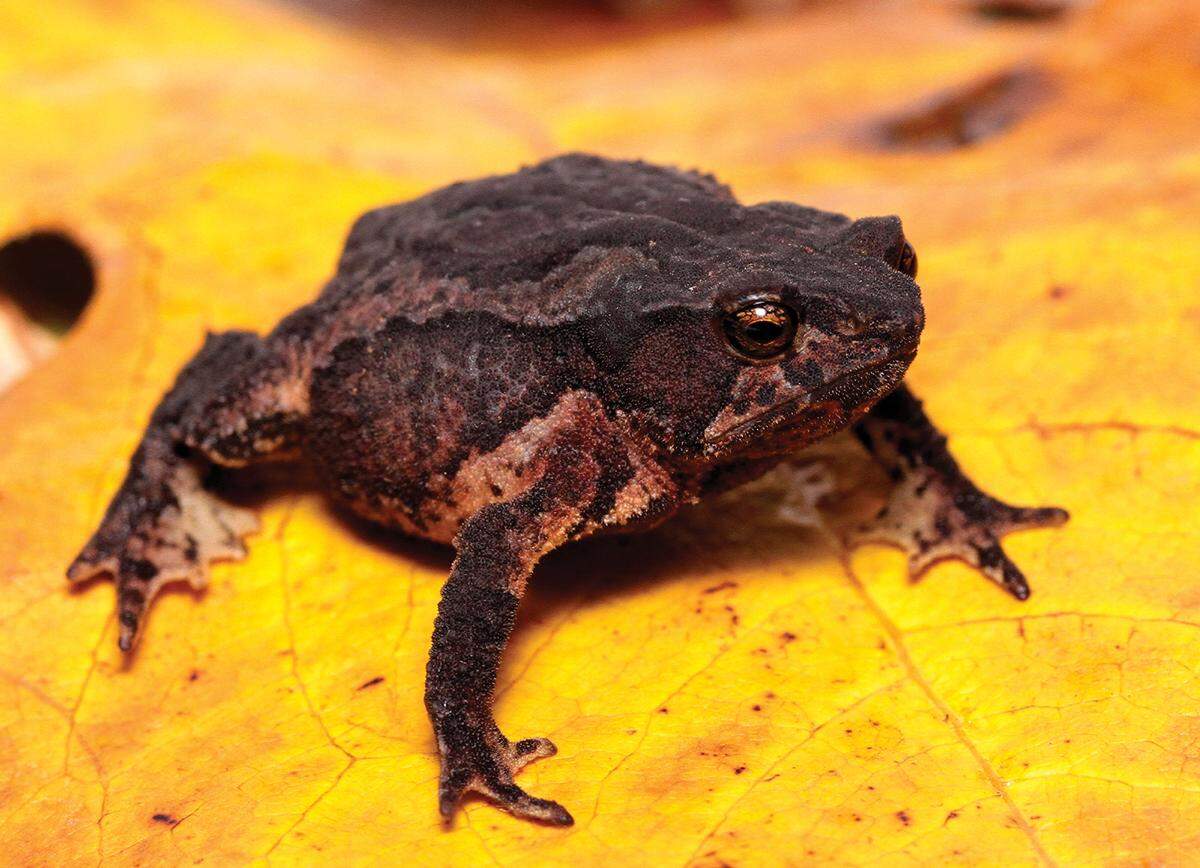
A photo shows the dark brown coloring of a kumanday beaked toad. On its sides and limbs the toad has lighter orange-brown patches. Overall, it looks like it would blend in with some dirt clods.
Kumanday beaked toads are ground-dwelling animals most active during twilight, the study said. The toads live in the forest leaves, under rotting logs and near creeks or streams. Three toads were found pregnant with between 38 and 96 eggs.
Researchers observed the kumanday beaked toad playing dead as a defense mechanism and noted that its only known predator was a snake.
Like other species of earless toads, the new species likely used “a communication mechanism based on the reception of environmental vibrations,” the study said. Much about the toad’s lifestyle and mating behavior remains unknown.

Researchers said they named the new species after “the snow-covered volcano that towers over” its preferred mountain habitat. This volcano is referred to as “kumanday,” meaning “white beautiful,” by the indigenous Quimbaya people.
So far, kumanday beaked toads have been found at 12 sites in the Andes mountains of northern and central Colombia, the study said.
The new species was identified by its body shape, lack of ears, skeleton, nose shape and other subtle physical features, the study said. DNA analysis found the new species had “substantial genetic divergence” from other Rhinella toads.
The research team included Luis Santiago Caicedo-Martínez, Jose Henao-Osorio, Héctor Fabio Arias-Monsalve, Julián Andrés Rojas-Morales, Paula Ossa-López, Fredy Rivera-Páez and Héctor Ramírez-Chaves.
This story was originally published March 27, 2024 at 2:52 PM with the headline "Mountain creature with no ears and ‘long’ snout seen playing dead. It’s a new species."