
Romans had dinner party 2,000 years ago — and metal detectorist found what’s left

While crossing the fields of Suffolk, England, with a metal detector in hand, Martin White started to get a read on his machine.
White, a 10-year detecting veteran, took a closer look and realized what was buried in the ground.
He had found an ancient Roman hoard.
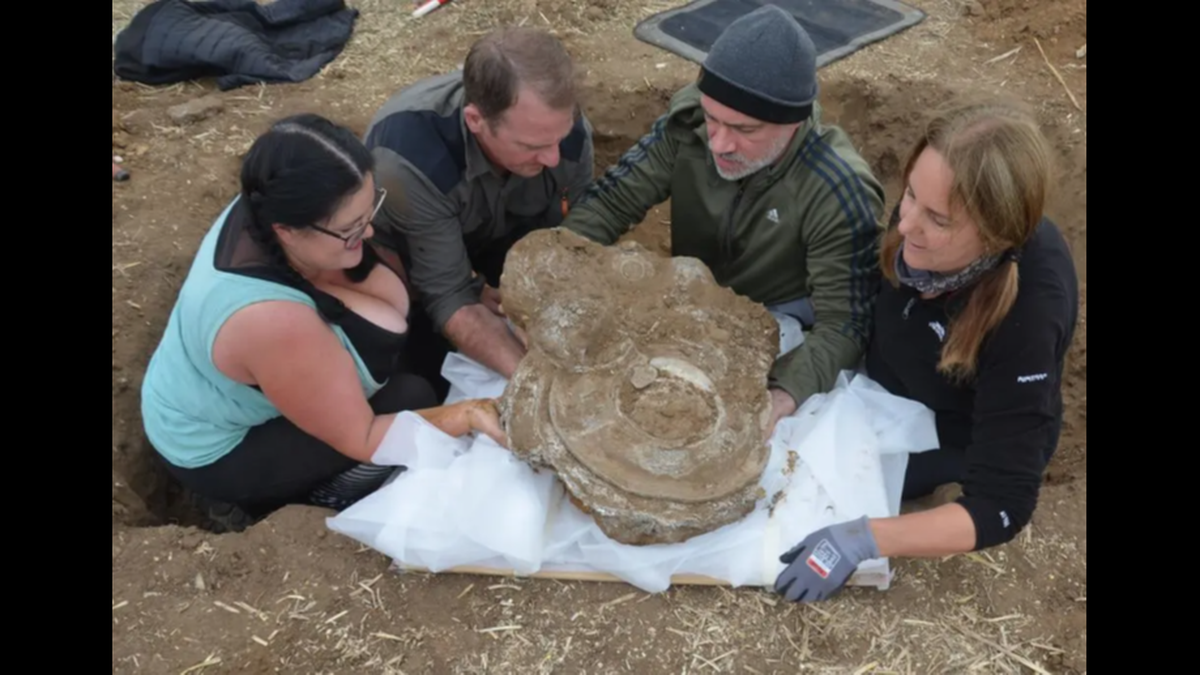
Buried in a pit, perfectly stacked together, were pewter plates, platters, bowls and a cup, estimated to be 2,000 years old, according to a June 29 news release from the Suffolk County Council.
“This is the most high profile find I’ve made so far, it was very exciting!” White told officials about his fall 2022 discovery at a detecting event. “We quickly consulted with the Archaeological Service so that the items could be removed and recorded, without being damaged.”
The find was considered “significant” by Suffolk County Council’s Archaeological Archives and Projects Manager Faye Minter.
“The larger plates and platters were used to allow food to be served communally and the octagonal bowls may have a Christian reference,” Minter said in the release.
The pieces were found “carefully stacked” together, suggesting they had been intentionally placed together for safekeeping or as an offering, officials said.
Each piece was delicately excavated and preserved, now on display at the West Stow Anglo-Saxon Village and Museum.
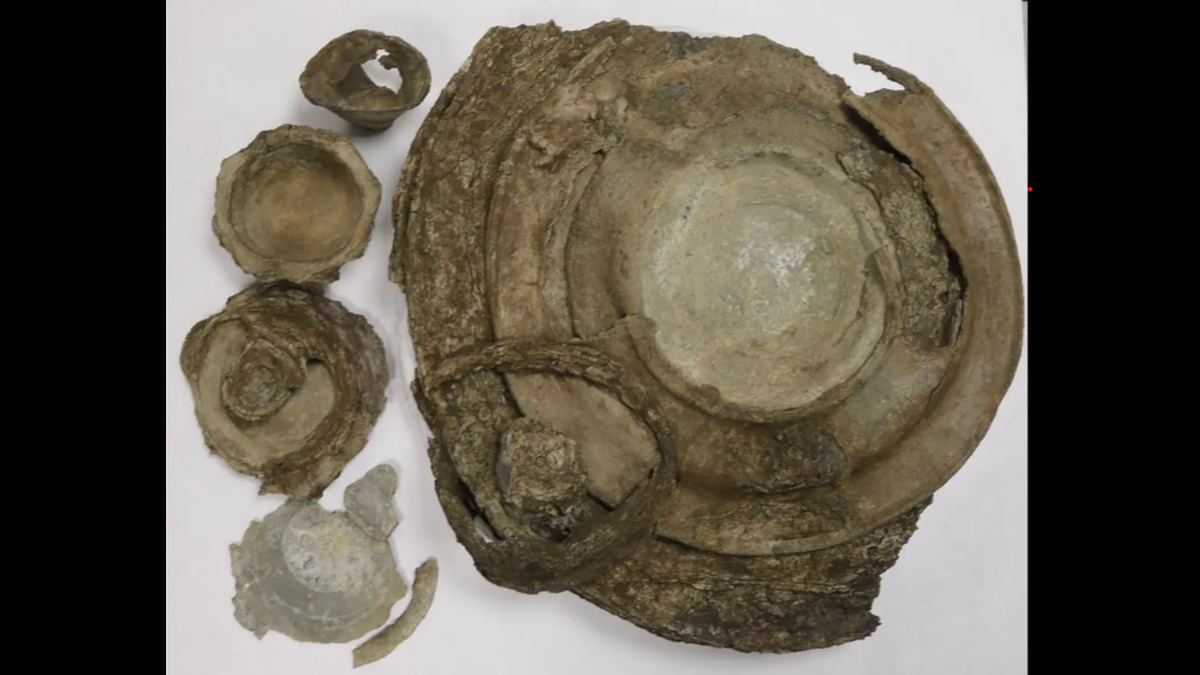
The pieces were dated to the late Roman period, roughly 250 to 450 A.D., known for its transition from regional political power to a centralized state and the rise of Christianity, according to the University of Oxford.
They were also made of pewter, a common alloy made primarily of tin with a small amount of copper, lead or antimony, according to the Pewter Society. Pewter wasn’t commonly used after the fall of the Roman empire before being reintroduced in the 12th century, likely by Cistercian monks, the society said.
“It is amazing to think that this fragile hoard has survived thousands of years, and being discovered by Martin, that adds to the Suffolk story,” Councillor Melanie Vigo di Gallidoro said in the release.
Suffolk is in the eastern region of England, about 95 miles northeast of London.
This story was originally published July 5, 2023 at 4:27 PM with the headline "Romans had dinner party 2,000 years ago — and metal detectorist found what’s left."
