Golden mountain creature — with copper eyes — turns out to be new species in Venezuela
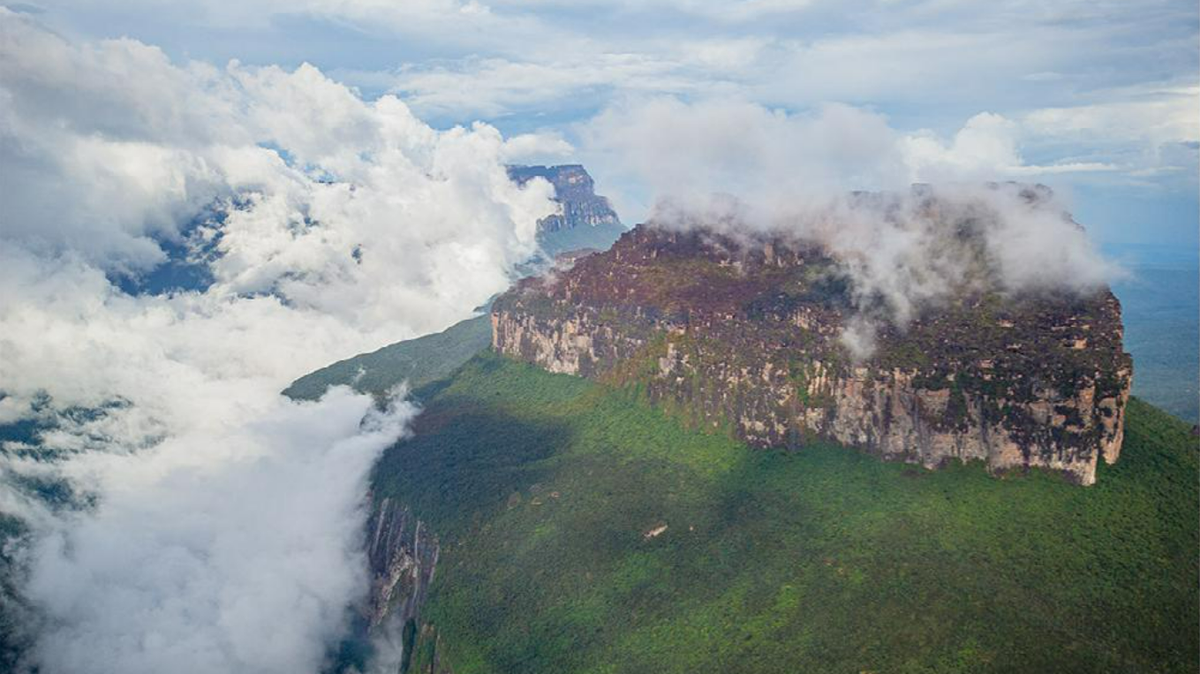
Tucked under a rock atop a mountain in Venezuela sat a bumpy creature. From its hiding spot, the animal watched the nearby lagoon through copper-colored eyes.
Despite its attempt to hide, the animal caught the attention of a scientist — who recognized it was a new species.
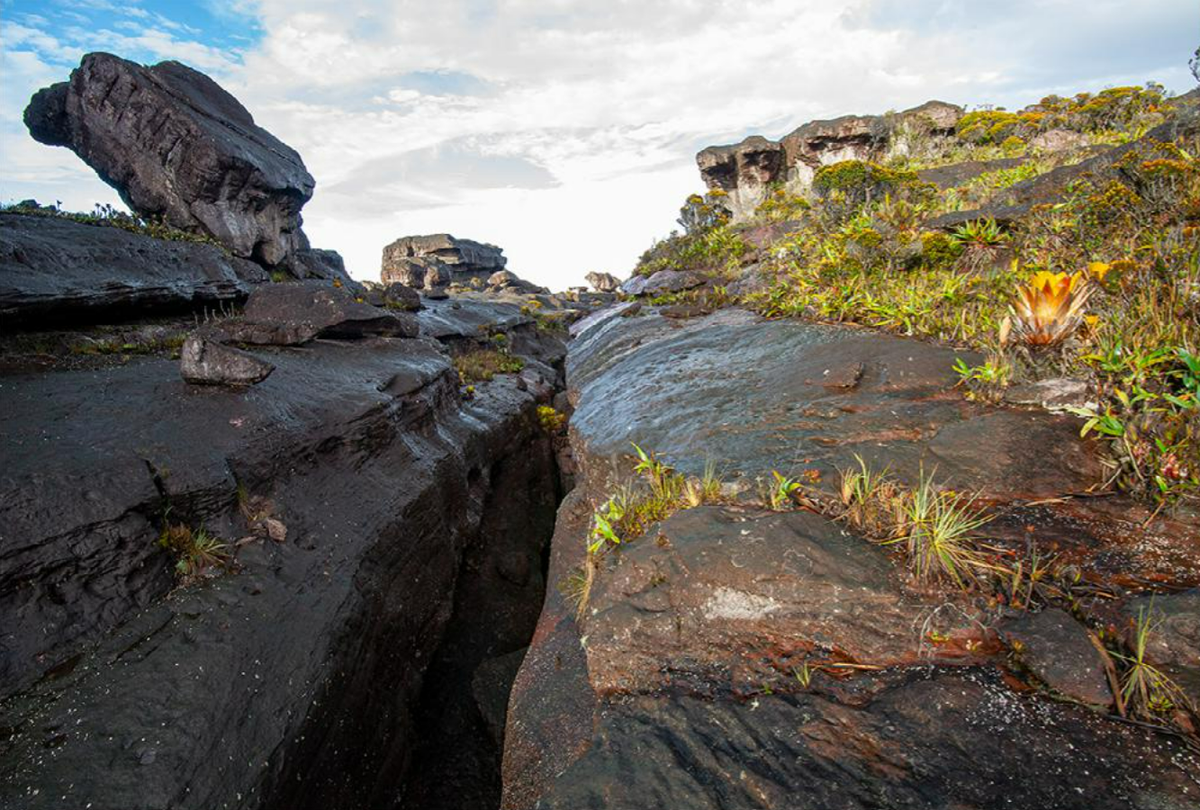
Philippe Kok summited Murisipán-tepui, “a poorly explored table-top mountain,” for a four-day animal survey in 2012, he wrote in a study published June 16 in the Journal of Vertebrate Biology. The mountain reaches about 8,000 feet in elevation and can only be reached by helicopter or “technical climbs” because of its cliff-like sides.
The mountaintop is a mixture of barren, exposed rock and shrub-like plants, Kok wrote. A deep crevice divides the summit in two, and a “seasonal lagoon” forms on the highest section.
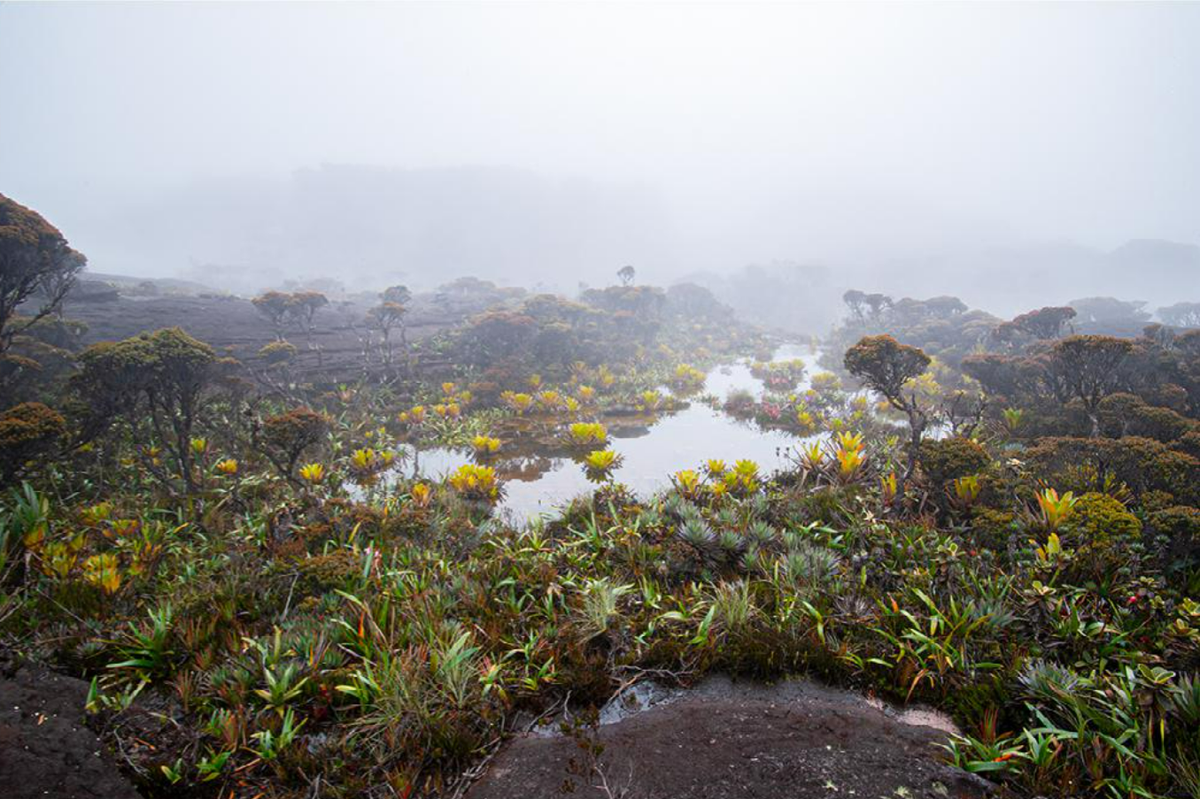
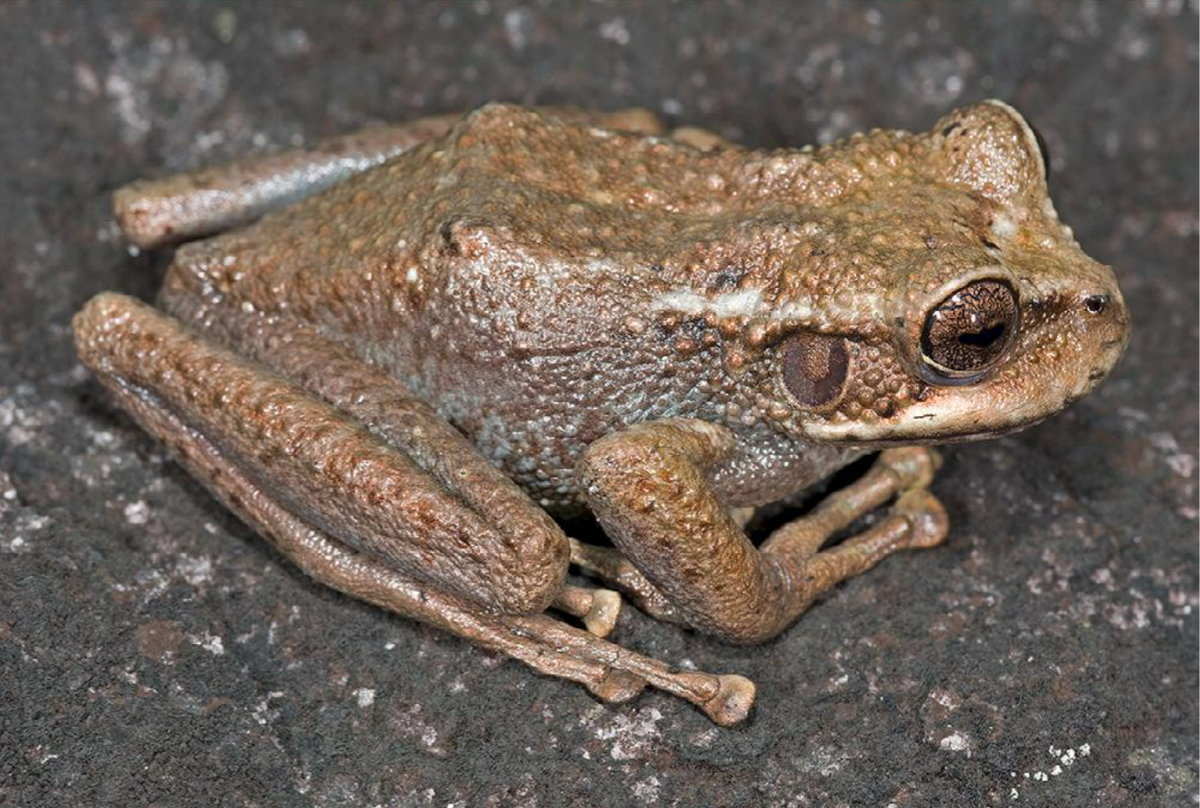
While exploring the mountain, Kok spotted five small animals hiding under rocks near the lagoon and crevices. He took a closer look at the golden animal and discovered a new species of frog: Stefania lathropae, the study said.
Stefania lathropae frogs are small, reaching just over 2 inches in size, Kok wrote. They have a bumpy texture, “large, round” tongue and copper-colored eyes.
The frog has a “golden brown” coloring that can range from “plain” brown to copper, the study said. Photos show the various colors of Stefania lathropae frogs.
One Stefania lathropae frog has an almost metallic orange-brown color. Another looks glossy and golden with a blue-tinged pattern on its side. A third frog has a deeper oily, copper look, photos show.
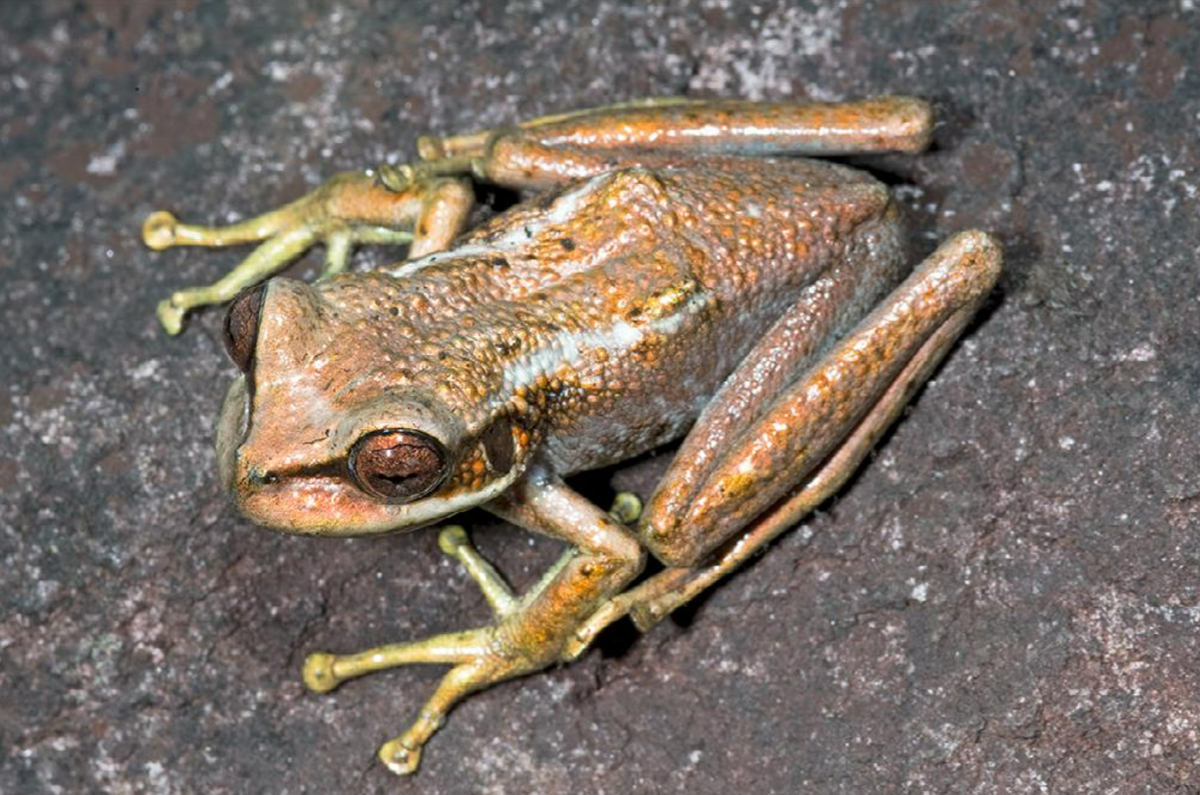
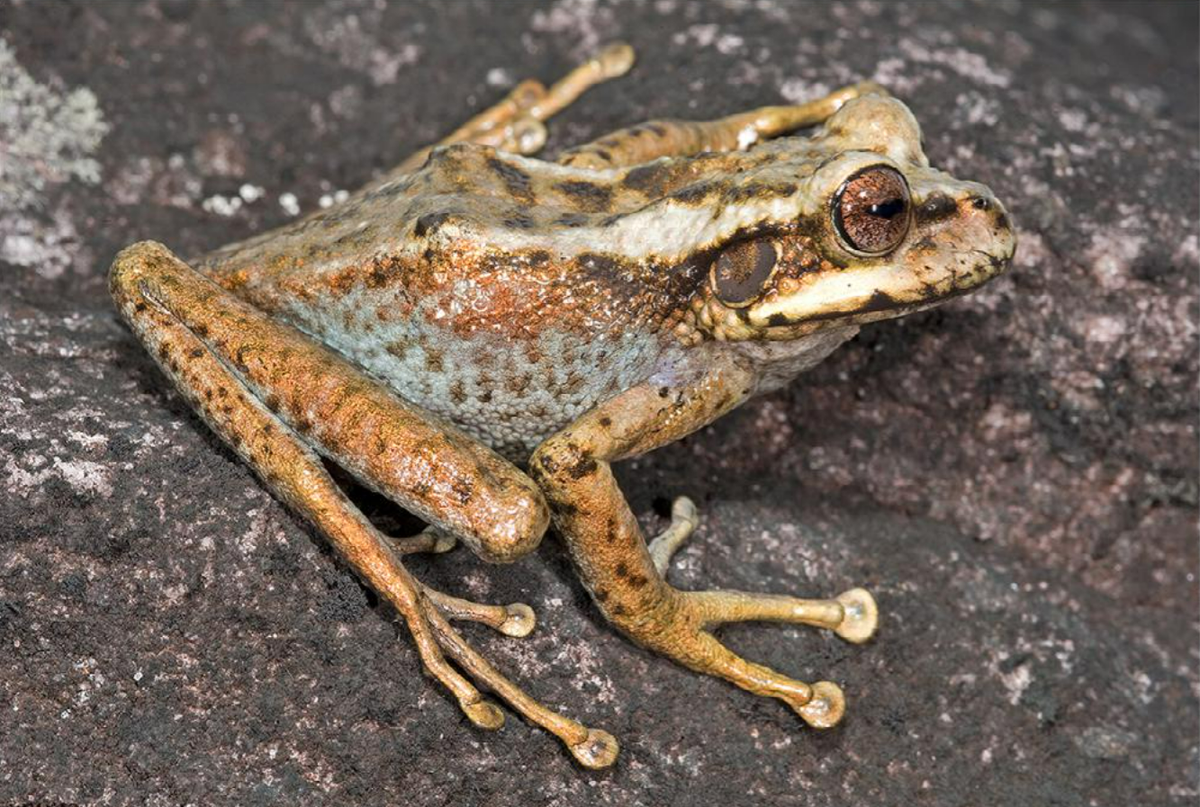
The Stefania lathropae frog was mistaken as another species for about 20 years. The two species look relatively similar but have about 8.5% genetic divergence and live on different mountains with no overlap in their range, Kok said.
The new species was also recognized as distinct based on its skull and other subtle body features, the study said.
As part of the Stefania frog group, Stefania lathropae probably carries its babies on its back until the young have matured, the study said. However, Kok did not find any female frogs carrying their young.
The new frog species was named after Amy Lathrop, a Canadian herpetologist who “was likely the first scientist to put her hands on several new Stefania species collected in the Pakaraima Mountains of Guyana,” Kok said. These frog species were later formally described by Lathrop and her colleague Ross MacCulloch.
Stefania lathropae frogs have only been found on Murisipán-tepui mountain in eastern Venezuela, about 460 miles southeast of Caracas, the capital city, the study said. Because of this limited distribution range and negative effects of climate change, the species is likely critically endangered.
Kok also discovered a new species of frog on a nearby tabletop mountain along the Guyana-Brazil border.
CORRECTION (7/6): The researchers who described earlier Stefania frogs were misidentified in a previous version of this article. The species were described by Lathrop and MacCulloch.
This story was originally published July 5, 2023 at 2:18 PM with the headline "Golden mountain creature — with copper eyes — turns out to be new species in Venezuela."